

US inflation rises further in October
This reinforces expectations that the central bank may continue raising rates into early 2027
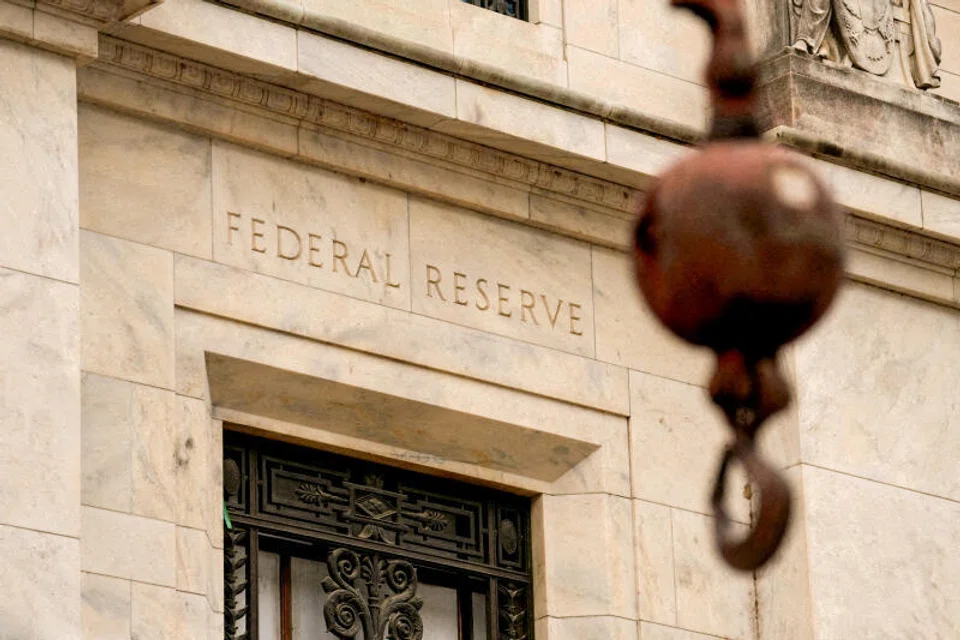
[WASHINGTON] US inflation increased further in October, reinforcing expectations that the US Federal Reserve could continue raising interest rates into early 2027.
The Personal Consumption Expenditures (PCE) Price Index rose 0.3 per cent in October after an unrevised 0.5 per cent gain in September, the Commerce Department’s Bureau of Economic Analysis (BEA) said on Wednesday (Nov 25).
Economists polled by Reuters had forecast PCE inflation climbing 0.3 per cent. In the 12 months through October, PCE inflation increased 3.8 per cent after advancing 3.6 per cent in September.
Excluding the volatile food and energy components, the PCE Price Index increased 0.3 per cent over the month after an unrevised 0.3 per cent rise in September. The so-called core PCE inflation increased 3.3 per cent year-on-year in October after climbing 3.1 per cent in September.
The US central bank tracks the PCE price measures for its 2 per cent inflation target.
Financial markets have priced in a quarter-percentage-point rate hike at the Fed’s Dec 8 to 9 meeting from the current 3.75 to 4 per cent range, and expected another increase in January, CME’s FedWatch tool showed.

Fed governor Christopher Waller has signalled he could support a bigger half-percentage-point increase to quell inflation.
Robust consumer spending and aggressive business investment in artificial intelligence are fuelling inflation.
Consumer spending, which accounts for more than two-thirds of economic activity, rose 0.3 per cent in October after an upwardly revised 0.6 per cent increase in September, the BEA said.


It was previously reported to have increased 0.5 per cent in September.
Spending is being driven mostly by higher-income households, whose wealth was boosted by the stock market, before the recent AI-led sell-off.
Historically low layoffs and moderate hiring are also helping other households to sustain spending, though inflation is eroding wage gains.
Households are also saving less and dipping into their nest eggs. Economists expect consumer spending to slow into 2027 because of inflation. REUTERS
Decoding Asia newsletter: your guide to navigating Asia in a new global order. Sign up here to get Decoding Asia newsletter. Delivered to your inbox. Free.
Share with us your feedback on BT's products and services
TRENDING NOW

StarHub-M1 deal could add to Keppel’s special dividends but analysts flag potential wait

Could Jensen Huang work for Elon Musk? It would be ‘a titanic ego death match’, says biographer

Why Singapore, Johor and Riau Islands should build a cross-border ecosystem for AI

Alice Huang-linked firms listed US$270 million in AI servers in China, records show

