

US March employment growth rebounds; jobless rate falls to 4.3%
Nonfarm payrolls increased by 178,000 jobs last month after a downwardly revised 133,000 drop in February
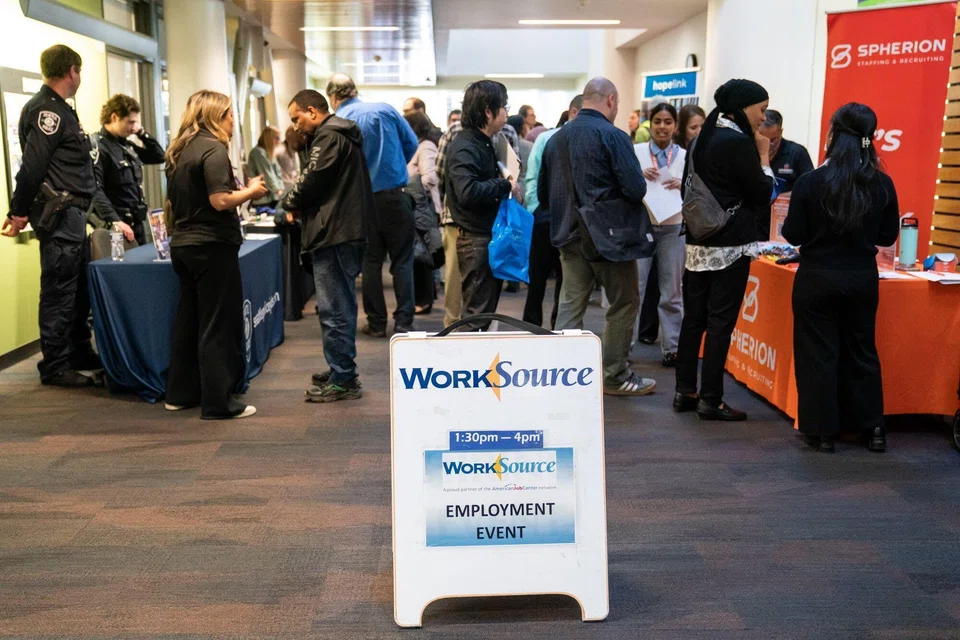
[WASHINGTON] US job growth rebounded more than expected in March as a strike by healthcare workers ended and temperatures warmed up, and the unemployment rate fell to 4.3 per cent, but downside risks to the labour market are mounting from a war with Iran that has no clear end in sight.
Nonfarm payrolls increased by 178,000 jobs last month after a downwardly revised 133,000 drop in February, the Labor Department’s Bureau of Labor Statistics (BLS) said in its closely watched employment report on Friday (Apr 3). Economists polled by Reuters had forecast payrolls rising by 60,000 jobs after a previously reported 92,000 decrease in February.
Estimates ranged from a loss of 25,000 positions to a gain of 125,000 jobs. The unemployment rate was at 4.4 per cent in February.
The labour market has been buffeted by uncertainty, starting with President Donald Trump’s aggressive import tariffs. Just as some of the clouds were starting to clear, the US Supreme Court in February struck down the duties, which Trump had pursued under a law meant for use in national emergencies.
Trump, however, responded by imposing a global tariff for up to 150 days. Data from the BLS this week showed job openings decreased by the most in nearly 1½ years in February, pointing to slipping labour demand.
At the end of February, the US and Israel launched strikes against Iran, sending global oil prices soaring more than 50 per cent, and boosting domestic petrol prices. Economists said the war, now in its second month, was another layer of uncertainty for businesses, and they expected a hit on the labour market in the just-started second quarter.
Mass deportations by the Trump administration have also contributed to labour market paralysis, economists said, by reducing supply, which ultimately hurts demand for goods and services, and workers.
Historically low labour supply growth means less than 50,000 jobs per month were needed to keep up with growth in the working-age population, economists estimated. Some estimates have put the breakeven rate at zero or even negative.
Economists at JPMorgan cautioned that “negative payroll readings in any given month will become more common”, adding that “even with job growth sufficient to stabilise the unemployment rate, there could be negative payroll readings at least a third of the time”.

While March was probably too early to capture the fallout from the Middle East conflict, some economists said that could become evident as soon as April’s employment report. The national average retail petrol price this week topped US$4 a gallon for the first time in more than three years.
This will feed through to higher inflation and erode households’ purchasing power, offsetting some of the strength in wage growth, and slowing spending. The war wiped off about US$3.2 trillion from the stock market in March. Trump on Wednesday vowed more aggressive strikes on Iran.
March’s employment report likely has no impact on the interest rate outlook, with the effects of supply chain disruptions from the conflict still to work their way through the economy. The odds of a rate cut this year have greatly diminished. The Federal Reserve left its benchmark overnight interest rate in the 3.50 to 3.75 per cent range last month. REUTERS
Decoding Asia newsletter: your guide to navigating Asia in a new global order. Sign up here to get Decoding Asia newsletter. Delivered to your inbox. Free.
Share with us your feedback on BT's products and services
TRENDING NOW

Once staunchly pro-China, Malaysian Chinese businesses are now distancing themselves from Beijing

Cliff Tan has 7 million followers and a 4-month waitlist. Why won’t he expand his business?

Could stablecoins be the future of money?

Grab CEO’s wife Chloe Tong on life with Anthony Tan and finding her purpose

