US moves to deepen minerals supply chain in AI race with China
The Asian nation is home to more than 90% of global rare earths and permanent magnets refining capacity
[WASHINGTON] The US will seek agreements with eight nations as part of a fresh effort to strengthen supply chains for the computer chips and critical minerals needed for artificial intelligence (AI) technology, according to the top State Department official for economic affairs.
The initiative, which builds on efforts dating back to the first Trump administration, unfolds as the US looks to cut dependence on China. It will begin with a meeting at the White House on Dec 12 between the US and counterparts from Japan, South Korea, Singapore, the Netherlands, the UK, Israel, the United Arab Emirates and Australia, Jacob Helberg, the undersecretary of state for economic affairs, said.
Helberg, a former adviser at Palantir Technologies, said that the summit will focus on reaching agreements across the areas of energy, critical minerals, advanced manufacturing semiconductors, AI infrastructure, and transportation logistics.
Helberg said that the countries were chosen for reasons that range from being home to some of the most important semiconductor companies to their critical minerals resources.
“It’s clear that right now in AI, it’s a two-horse race – it’s the US and China,” Helberg said. “We want to have a positive, stable relationship with China, but we are also ready to compete, and we want to make sure that our companies can continue building transformative technologies without being subject to coercive dependencies.”
Helberg’s initiative builds upon years of efforts on critical minerals supply chains by prior administrations, largely aimed at helping reduce western dependence on China. The State Department in the first Trump administration launched the US Energy Resource Governance Initiative with the aim of securing supply chains for critical minerals such as lithium and cobalt.
The Biden administration launched a Minerals Security Partnership that aimed to funnel foreign investment and western expertise to the mining sectors of developing nations.
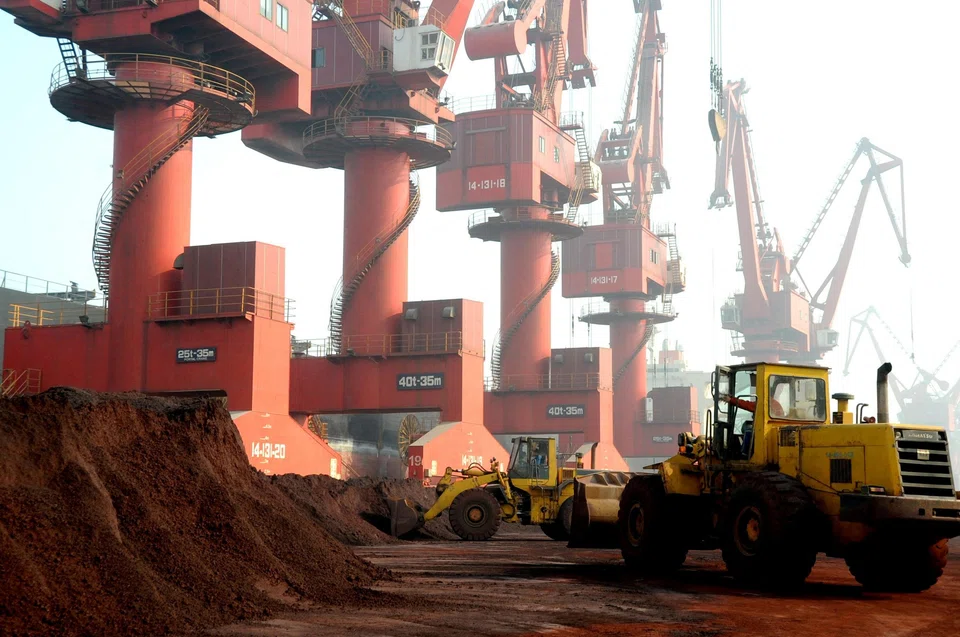
Even so, the US and other countries have been unable to break China’s stranglehold over rare earths supplies. China is home to more than 90 per cent of global rare earths and permanent magnets refining capacity, compared with just 4 per cent for second-place Malaysia, according to the International Energy Agency, a Paris-based intergovernmental organisation.
China announced tighter rare earths export controls in early October, only to agree to a one-year suspension after a meeting between Trump and President Xi Jinping.


Helberg said, unlike the Biden-era initiative, which had more than a dozen core countries, his focus is on producer countries. While the first Trump administration initiative focused on critical minerals, it came before the public release of AI platforms such as ChatGPT, and the new plan focuses across all layers of the technology involved in AI, not just one, Helberg said.
Helberg, 36, was previously senior adviser to Palantir chief executive officer Alex Karp and also co-founded the Hill and Valley Forum, a gathering of tech leaders and US lawmakers focused on national security challenges, especially those related to competition with China and the advancement of AI and other technologies.
He framed the work with trusted allies for his AI initiative as an “America centric” strategy, rather than one that’s reactive to China.
“Countries who are participating understand the transformative impact of AI, both for the size of a country’s economy, as well as the strengths of a country’s military,” he said. “They want to be a part of the AI boom.” BLOOMBERG
Decoding Asia newsletter: your guide to navigating Asia in a new global order. Sign up here to get Decoding Asia newsletter. Delivered to your inbox. Free.
Share with us your feedback on BT's products and services