

US Pentagon awards mega contracts to defence firms as Iran war strains US weapons stockpiles
Among them is a US$59 billion, seven-year agreement with Lockheed Martin to bolster production of Patriot interceptors
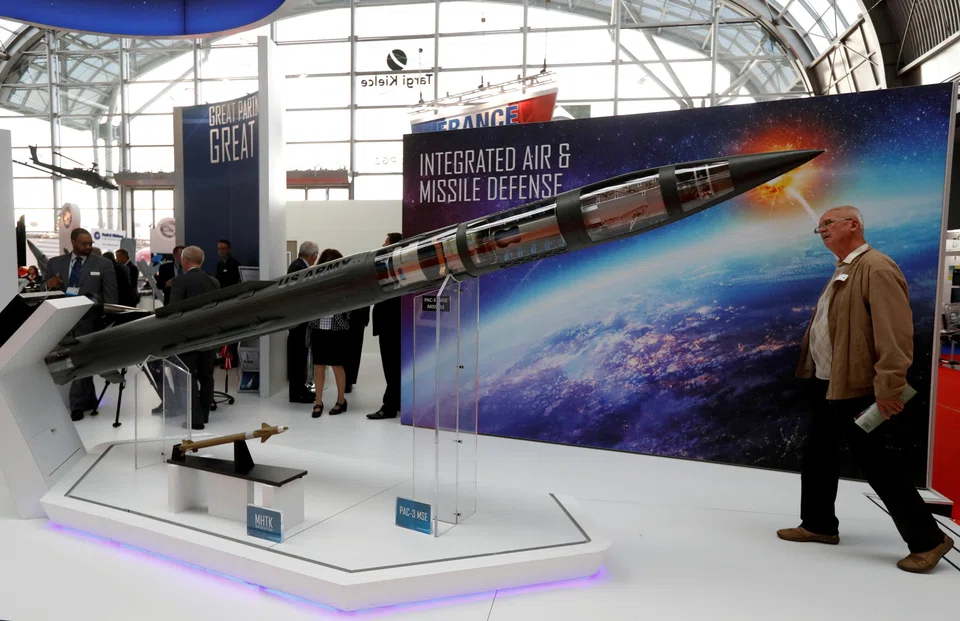
THE US Pentagon is accelerating defence production with multi-year mega contracts as the Trump administration seeks to enhance the armed forces and the Iran war intensifies demands on a dwindling US weapons stockpile.
On Wednesday (Jul 29) alone, the US Defence Department announced two massive contracts worth about US$135 billion to major US defence companies. The administration has more broadly requested US$1.5 trillion for an unprecedented defence budget amid what it calls a necessary generational investment to prepare for future conflicts.
The US Army reported a US$59 billion, seven-year agreement with Lockheed Martin to bolster production of in-demand but hard-to-replace Patriot interceptors that have been crucial to the Middle East conflict.
At the same time, the Pentagon unveiled contracts worth as much as US$76.6 billion for General Dynamics and Huntington Ingalls Industries to expand construction of the US’ top nuclear submarines and make shipyard infrastructure improvements.
The awards include nine new latest model “Block VI” Virginia-class attack submarines, equipped with an expanded capacity for Tomahawk cruise missiles. The contracts also cover five additional Columbia-class nuclear-missile submarines in the planned fleet of 12.
Shares of General Dynamics rose 2.6 per cent in after-hours trading in New York, while Huntington Ingalls’ stock gained 3.9 per cent. Lockheed’s shares advanced 0.5 per cent after the announcement of its award following the close of regular trading.
The multi-year deals help lock in arms suppliers and give defence contractors the confidence to increase capacity on production lines. There have been numerous contracts announced after the Pentagon’s top officials, including Defence Secretary Pete Hegseth, complained that major contractors were delivering products late and over budget.
The Iran war has only heightened concerns about the American defence industry. US forces in the Middle East are using up vast amounts of high-value interceptors – costing around US$4 million each – to defend against Iran’s ballistic missiles and one-way attack drones.
Persian Gulf nations have also deployed Patriot missiles to defend themselves against hundreds of missile and drone attacks on energy facilities and other critical infrastructure as the conflict expanded across the Middle East.


The agreement announced on Wednesday is Lockheed’s second major long-term missile production deal. Earlier in 2026, the company was awarded a contract that could be worth as much as US$35 billion from the Pentagon to quadruple production of the Terminal High Altitude Area Defence, or Thaad, interceptors, over seven years.
The new Lockheed contract will help the firm step up from roughly 600 missiles a year to about 2,000 annually by 2030. But even that may not be enough for a US war effort in an extended conflict, particularly against a more powerful country than Iran, such as China. BLOOMBERG
Decoding Asia newsletter: your guide to navigating Asia in a new global order. Sign up here to get Decoding Asia newsletter. Delivered to your inbox. Free.
Share with us your feedback on BT's products and services
TRENDING NOW
Singapore identifies 7 firms responsible for haze fires, notices issued urging action: Grace Fu

Philippine power giant First Gen rebuffs foreign offers, plans up to US$2.6 billion in expansion

DBS remains analysts’ pick ahead of Q3 earnings after Singapore banks’ share slump

Indonesia imposes US$116 million in fines over manipulation of Sinar Mas, Prajogo-linked stocks

