

US puts pressure on South Korea to let won rise
It also criticises Germany's widening trade surplus, says global growth too reliant on US
Washington
THE US Treasury has criticised South Korea's currency intervention and Germany's widening trade surplus in a report that called global growth unbalanced and too reliant on the strength of the American economy.
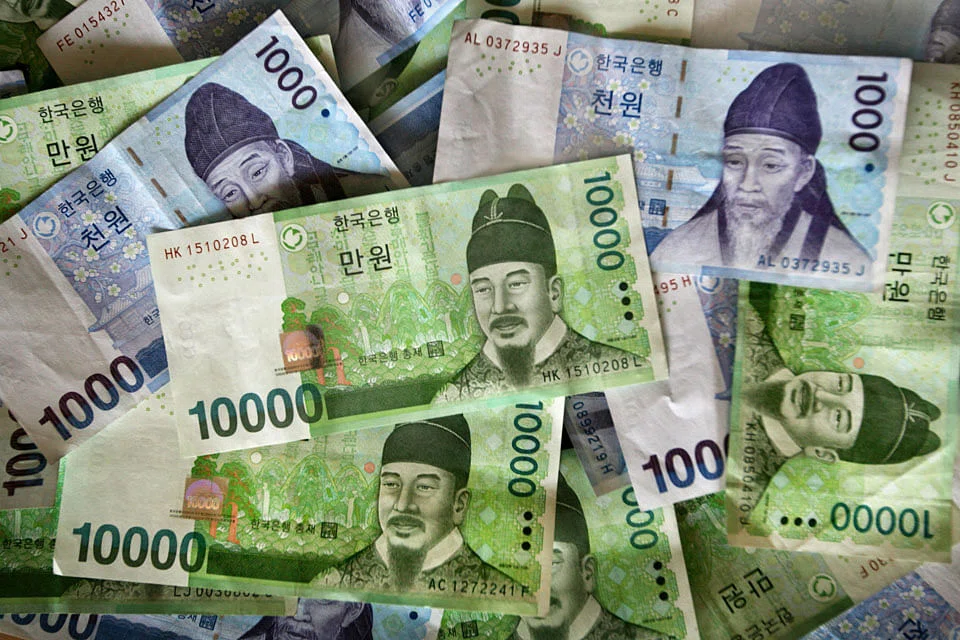
In a semi-annual report on foreign exchange policies, the department said it has stepped up pressure on South Korea to stop intervening and let the won rise. The currency weakened 8.8 per cent against the US dollar in the past three quarters.
"Korean authorities appear to have substantially increased intervention in December and January," the department said in the report to Congress. "Treasury has intensified its engagement with Korea on these issues."
South Korea has rebuffed US pressure, with an official in Seoul saying that there would be no change to the principle that it conducts smoothing operations in times of heightened volatility in the currency market.
The report also singled out Europe's biggest economy, saying "stronger demand growth in Germany is absolutely essential, as it has been persistently weak".
Policymakers in the euro area need to use fiscal policies to complement the monetary stimulus that the European Central Bank is providing, the report said.
While the Treasury concluded that no major trading partner met the threshold to be called a currency manipulator, the department reiterated its view that China's yuan remains "significantly undervalued" even as the world's second-largest economy reduced intervention.
"China should allow the market to play a greater role in determining the exchange rate and build on the recent reduction in foreign exchange intervention," it said. "China's currency needs to appreciate further."
As finance ministers and central bankers from the Group of 20 economies prepare to meet in Washington next week, the US Treasury said weak domestic demand in Japan is an "ongoing concern".
"Over-reliance on monetary policy without appropriate support from fiscal policy and structural reforms will put Japan's recovery and escape from deflation at risk and could generate negative spillovers," said the report.
The US is putting pressure on other countries to rebalance their economies at a time when a strong dollar is making US exports more expensive abroad and eroding the overseas profits of American companies.
The greenback has appreciated 20 per cent over the last year, according to the Bloomberg Dollar Spot Index.
The yuan is little changed against the dollar over the same period.
Treasury Secretary Jacob Lew last month urged China to ease restrictions on the flow of capital and the setting of interest rates to ensure that the yuan is increasingly used as an international currency.
Mr Lew made the remarks after meeting Chinese Premier Li Keqiang and Vice-Premier Wang Yang ahead of the US-China Strategic and Economic Dialogue, to be held in Washington later this year.
In its report, the Treasury said the eurozone's current account surplus exceeds US$300 billion, or 2.3 per cent of gross domestic product (GDP), nearly all of which was accounted for by Germany. "It remains vital that the euro area contribute to global demand by taking all the necessary steps to build its own domestic demand momentum," the Treasury said.
More balanced approaches to economic policy are needed in countries with large surpluses, it said, citing Germany, China, Japan and South Korea.
"The global economy should not again rely on the United States to be the only engine of demand," the department said in its report, which covers the second half of 2014 through March. Bloomberg
TRENDING NOW

South-east Asia has lost Nvidia’s best salesman

Demand, tech capabilities position Apac and AI as Skyscanner’s next growth frontiers: CEO Bryan Batista

Peter Kwee’s Ridley Park bungalow on the market with S$100 million asking price

Beyond the greenback, Vietnam’s big borrowers turn to Asian-currency bonds

