US retail sales fall more than expected in March
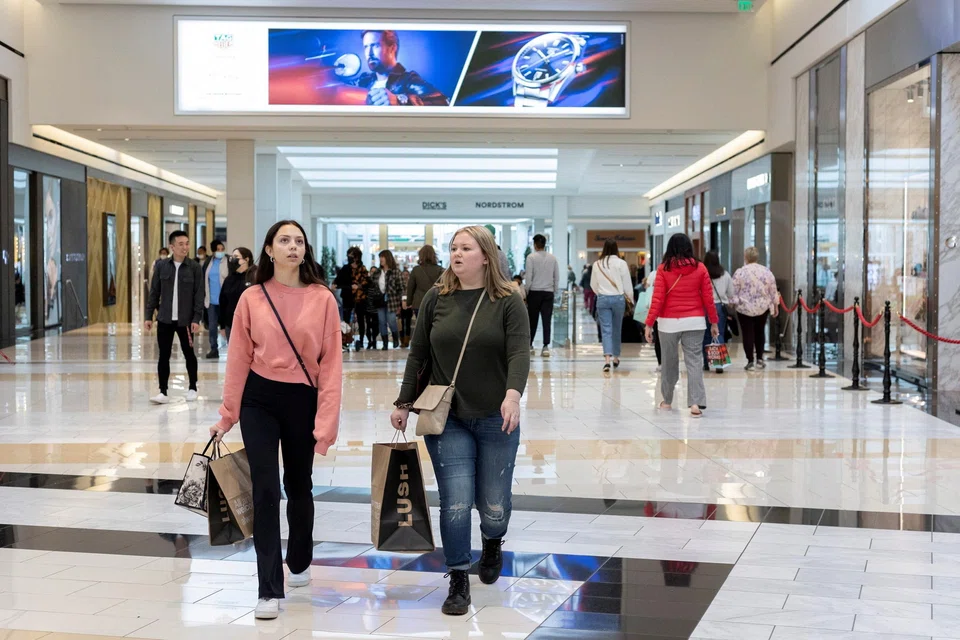
US RETAIL sales fell more than expected in March as consumers cut back on purchases of motor vehicles and other big ticket items, suggesting that the economy was losing steam at the end of the first quarter because of higher interest rates.
Retail sales dropped 1.0 per cent last month, the Commerce Department said on Friday (Apr 14). Data for February was revised up to show retail sales falling 0.2 per cent instead of 0.4 per cent as previously reported. Economists polled by Reuters had forecast sales slipping 0.4 per cent, with estimates ranging from a 0.3 per cent gain to a 1.5 per cent decline.
Retail sales are mostly goods, which are typically bought on credit, and are not adjusted for inflation. The second straight monthly decrease followed a sharp surge in January.
Economists said shifts in spending patterns at the end and start of the year as well as higher prices had made it harder to get a clear read of the data.
There is no consensus that a tightening in credit conditions in March following the failure of two regional banks had impacted retail sales, though data from Citi Credit Cards showed a decline in retail spending during the month.
The pullback in retail sales is mostly attributed to the Federal Reserve’s year-long interest rate hiking campaign, which is slowing inflation by cooling domestic demand. Reports last week showed employment growth and services sector activity slowing in March, while manufacturing continued to slump.
Still, the economy is not slowing fast enough to prevent the US central bank from raising rates one more time in May, before an anticipated pause in June in the Fed’s fastest monetary policy tightening cycle since the 1980s. The Fed has hiked its policy rate by 475 basis points since last March from the near-zero level to the current 4.75 per cent-5.00 per cent range.
Excluding automobiles, gasoline, building materials and food services, retail sales slipped 0.3 per cent last month. These so-called core retail sales increased by an unrevised 0.5 per cent in February.
Core retail sales correspond most closely with the consumer spending component of gross domestic product. Despite March’s fall, the gains in January and February firmly put consumer spending on track to accelerate in the first quarter.

Consumer spending, which accounts for more than two-thirds of US economic activity, grew at its slowest pace in 2½ years in the fourth quarter. Economic growth estimates for the first quarter are mostly below a 2 per cent annualised rate. The economy expanded at a 2.6 per cent pace in the October-December quarter. REUTERS
Decoding Asia newsletter: your guide to navigating Asia in a new global order. Sign up here to get Decoding Asia newsletter. Delivered to your inbox. Free.
Share with us your feedback on BT's products and services