US retail sales increase more than expected in July
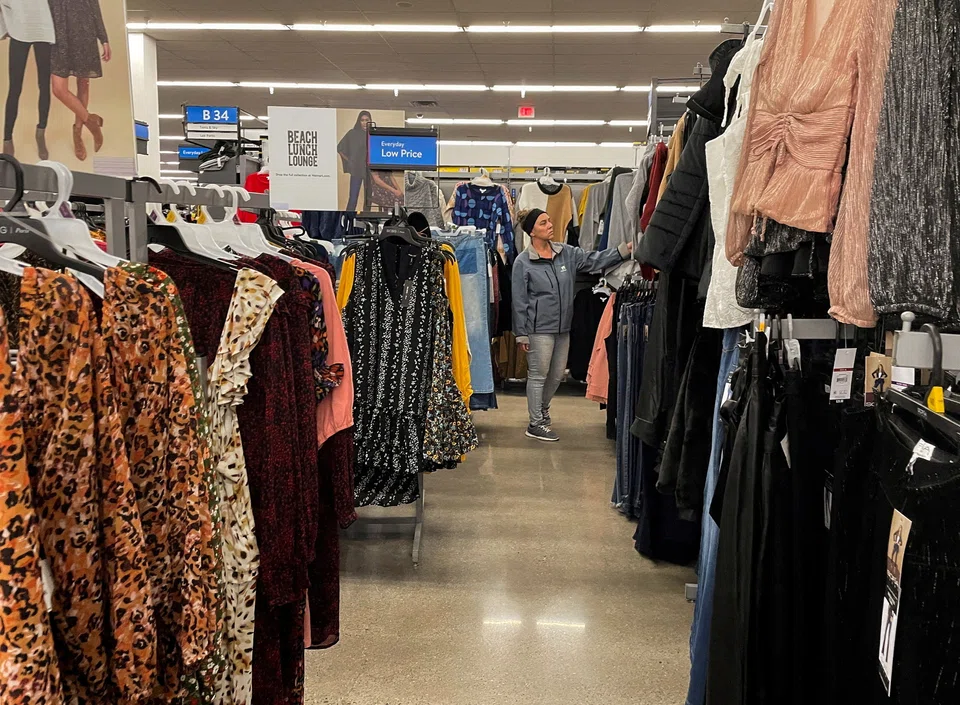
US RETAIL sales increased more than expected in July as Americans boosted online purchases and dined out more, suggesting the economy continued to expand early in the third quarter and keeping a recession at bay.
The report from the Commerce Department on Tuesday (Aug 15) also showing consumers splurging on hobbies, sporting goods and clothing, underscoring their resilience despite the Federal Reserve’s aggressive interest rate hikes to tame inflation.
Demand is being underpinned by strong wage gains from a tight labour market. Despite the signs of persistent strength in consumer spending, economists did not expect the Fed to raise interest rates next month, with inflation retreating.
“As long as core inflation continues to fall rapidly, resilient growth won’t in itself be enough to prompt further rate hikes from the Fed,” said Andrew Hunter, deputy chief US economist at Capital Economics.
Retail sales jumped 0.7 per cent last month. Data for June was revised higher to show sales rising 0.3 per cent instead of the previously reported 0.2 per cent. Economists polled by Reuters had forecast retail sales would climb 0.4 per cent. Sales increased 3.2 per cent on year-on-year basis in July.
Retail sales are mostly goods and are not adjusted for inflation. They likely received a boost from Amazon’s Prime Day promotion last month, which was the biggest on record. Online sales accelerated 1.9 per cent after rising 1.5 per cent in June.
Receipts at building material and garden equipment supplies dealers rebounded 0.7 per cent. Clothing store sales increased 1.0 per cent.
Consumers spent more on sporting goods, hobbies, books and musical instruments, boosting sales by 1.5 per cent. Grocery store sales rose as did receipts at department stores. Sales at service stations gained 0.4 per cent.
Sales at food services and drinking places, the only services category in the retail sales report, shot up 1.4 per cent after rising 0.8 per cent in June. Economists view dining out as a key indicator of household finances.


But the value of sales at auto dealerships fell 0.3 per cent after rising 0.7 per cent in June. Receipts at furniture stores dropped 1.8 per cent and electronics and appliance store sales declined 1.3 per cent.
Receding inflation is lifting consumers’ purchasing power. Households are also taking on debt to fund purchases.
Though lower-income households have exhausted excess savings accumulated during the Covid-19 pandemic, there remains a decent chunk of money stashed away to support consumer spending.
While a separate report from the Labor Department on Tuesday showed import prices rebounding strongly in July, underlying imported inflation pressures remained subdued. The government reported last week that consumer prices rose moderately in July.
With inflation ebbing, most economists believe the Fed is probably done raising rates, and they are increasingly warming up to the idea that the US central bank could steer the economy towards a “soft landing” rather than the recession that they had been forecasting since last year. The Fed has since March 2022 raised its benchmark overnight interest rate by 525 basis points to the current 5.25 per cent-5.50 per cent range.
Excluding automobiles, petrol, building materials and food services, retail sales surged 1.0 per cent in July. Data for June was revised lower to show these so-called core retail sales increasing 0.5 per cent instead of the previously reported 0.6 per cent.
Core retail sales correspond most closely with the consumer spending component of gross domestic product.
Consumer spending accounts for more than two-thirds of the US economy. Though consumer spending slowed in the second quarter from the robust pace of the first quarter, the increase was enough to help guide the economy to a 2.4 per cent annualised growth rate in the April-June period. REUTERS
Decoding Asia newsletter: your guide to navigating Asia in a new global order. Sign up here to get Decoding Asia newsletter. Delivered to your inbox. Free.
Share with us your feedback on BT's products and services