

US retail sales surge in March due to motor vehicle buying ahead of tariffs
Retail sales increased 1.4% last month after an unrevised 0.2% rise in February
 Add BT as a preferred source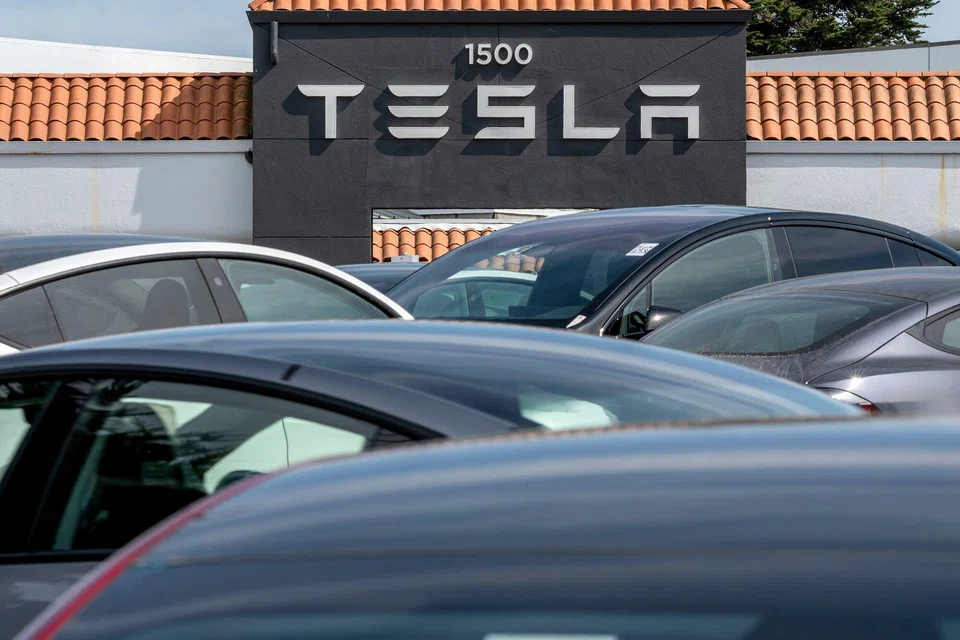
DeeperDive is a beta AI feature. Refer to full articles for the facts.
[WASHINGTON] US retail sales surged in March as households boosted purchases of motor vehicles ahead of tariffs, though concerns about the economic outlook are hurting discretionary spending.
Retail sales increased 1.4 per cent last month after an unrevised 0.2 per cent rise in February, the Commerce Department’s Census Bureau said on Wednesday (Apr 16). Economists polled by Reuters had forecast retail sales, which are mostly goods and are not adjusted for inflation, accelerating 1.3 per cent.
President Donald Trump’s 25 per cent global car and truck tariffs came into effect in early April, with industry analysts and manufacturers warning that the duties would significantly raise motor vehicle prices.
Motor vehicle manufacturers reported a big jump in auto sales in March, attributed by some to a rush by buyers “to try and beat the tariffs.”
Consumers are also stocking up on other imported goods. Bank credit and debit card data suggest spending continues to be driven by high-income households with low-income consumers struggling. There is less discretionary spending, which is mostly on services, the main engine of the economy.
With the stock market selling off as the import duties stoke fears of inflation and stagnation in economic growth or even a recession, there are concerns high-income households could start retrenching if the values of their investment portfolios continue to shrink.
Navigate Asia in
a new global order
Get the insights delivered to your inbox.
Consumer sentiment is near three-year lows, with 12-month inflation expectations the highest since 1981. Mass layoffs of public workers as part of an unprecedented campaign by the Trump administration to downsize the federal government are also weighing on morale and could be a potential drag on spending.
“Bank of America card data indicates that ‘nice-to-have’ discretionary services spending eased in March, while more inflation-driven spending on necessities such as insurance, rent and utilities continues to rise,” Bank of America Institute said in a note.
Retail sales excluding automobiles, gasoline, building materials and food services rose 0.4 per cent in March after an upwardly revised 1.3 per cent advance in February. These so-called core retail sales correspond most closely with the consumer spending component of gross domestic product.

Economists had forecast core retail sales rising 0.6 per cent after a previously reported 1.0 per cent jump in February.
Despite the strength in core retail sales in the last two months, economists expect consumer spending slowed considerably in the first quarter because of sluggish outlays on services.
Consumer spending, which accounts for more than two-thirds of the economy, grew at a 4.0 per cent annualised rate in the October-December quarter.
Economic growth estimates for the first quarter are mostly below a 0.5 per cent rate. The Atlanta Federal Reserve is currently forecasting GDP contracting at a 0.3 per cent pace after adjusting for imports and exports of gold. The economy grew at a 2.4 per cent pace in the fourth quarter. REUTERS
Decoding Asia newsletter: your guide to navigating Asia in a new global order. Sign up here to get Decoding Asia newsletter. Delivered to your inbox. Free.
Share with us your feedback on BT's products and services
TRENDING NOW

From 1MDB to ‘corporate mafia’: Is Malaysia facing a new governance test?

Middle East-linked energy supply shocks put Asean Power Grid back in focus

Beijing’s calculated silence on the Iran war

DPM Gan warns of 3 structural shifts to the global system that will bring greater challenges – and opportunities

