

US retail sales unexpectedly unchanged in October
Lower- and middle-income households are disproportionately impacted by the soaring cost of living
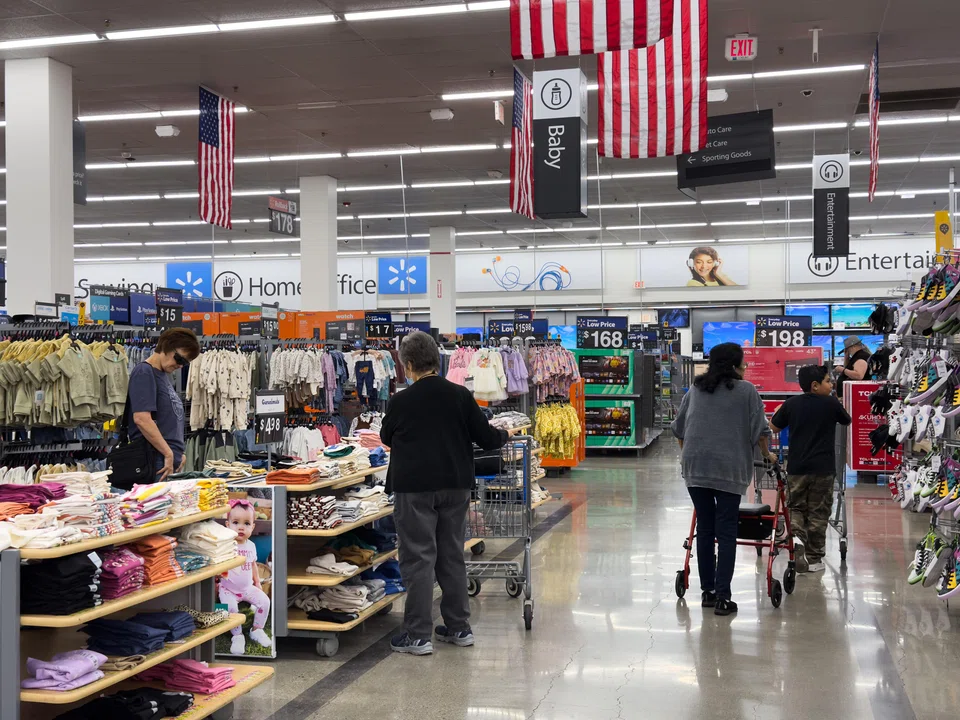
[WASHINGTON] US retail sales were unexpectedly flat in October, though consumer spending appears to have remained on a solid footing at the start of the fourth quarter despite the rising cost of living that is forcing some households to scale back.
The unchanged reading in retail sales reported by the Commerce Department’s Census Bureau on Tuesday (Dec 16) followed a downwardly revised 0.1 per cent gain in September. Economists polled by Reuters had forecast retail sales, which are mostly goods and are not adjusted for inflation, edging up 0.1 per cent after a previously reported 0.2 per cent rise in September.
The report, originally due in mid-November, was delayed by the 43-day shutdown of the government. Americans are facing higher prices for food, furniture and a range of other imported goods, the result of President Donald Trump’s sweeping import duties. Healthcare and housing costs have also surged.
Economists say lower- and middle-income households have been disproportionately impacted by the soaring cost of living. Trump, who last year swept to election victory on promises to tame inflation, has in recent weeks alternated between dismissing affordability problems as a hoax, blaming former President Joe Biden, and promising his economic policies will benefit Americans next year.
A Bank of America Institute report showed higher-income households continuing to fuel discretionary spending growth, creating what economists have termed a K-shaped economy.
It noted that households making an annual income of US$100,000 and above were spending on entertainment. Top income earners were spending more on clothing as well as on airline travel and stays at hotels.

“However, for lower-income households ... travel and clothing are seeing stronger pullbacks, underscoring the growing gap in income groups’ economic experiences,” Bank of America Institute said.
Retail sales excluding automobiles, petrol, building materials and food services surged 0.8 per cent in October after an unrevised 0.1 per cent dip in September. These so-called core retail sales correspond most closely with the consumer spending component of gross domestic product.
Economists still expect that consumer spending supported gross domestic product growth in the third quarter. Prior to the report, the Atlanta Federal Reserve estimated GDP increased at a 3.6 per cent annualised rate last quarter. The economy grew at a 3.8 per cent pace in the April-June quarter. The government will release the delayed first estimate for third-quarter GDP next Tuesday. REUTERS
Decoding Asia newsletter: your guide to navigating Asia in a new global order. Sign up here to get Decoding Asia newsletter. Delivered to your inbox. Free.
Share with us your feedback on BT's products and services
TRENDING NOW

Once staunchly pro-China, Malaysian Chinese businesses are now distancing themselves from Beijing

Britain’s mansion tax shows the difficulty of targeting wealth

Three hats, one goal: How Ng Kian Swan runs sustainability at NUHS

COE review: The gap between luxury and mass-market cars isn’t the only one worth bridging

