

US scrutinises political donations from Bankman-Fried, allies
 Add BT as a preferred source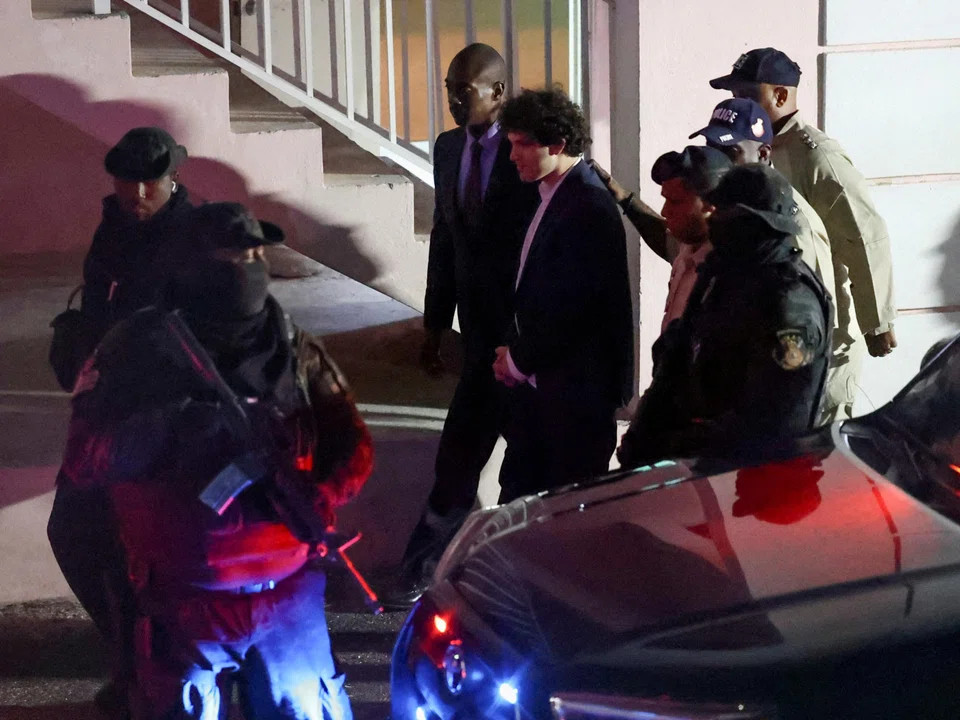
DeeperDive is a beta AI feature. Refer to full articles for the facts.
FEDERAL prosecutors in Manhattan, New York, are seeking information from Democrats and Republicans about donations from disgraced cryptocurrency entrepreneur Sam Bankman-Fried and two former executives at the companies he co-founded.
After Bankman-Fried was arrested last Monday (Dec 12) and charged with violations including a major campaign finance scheme, prosecutors contacted representatives for campaigns and committees that had received millions of dollars from him, his colleagues and their companies.
A law firm representing some of the most important Democratic political organisations – including the party’s official campaign arms, its biggest super political action committees (PACs) and the campaigns of high-profile politicians such as Representative Hakeem Jeffries of New York – received an e-mail from a prosecutor in the US attorney’s office for the Southern District of New York. The e-mail sought information about donations from Bankman-Fried, his colleagues and companies, according to people familiar with the request, who insisted on anonymity in discussing an ongoing law enforcement matter.
Prosecutors have contacted to representatives of other Democratic campaigns that received money linked to the cryptocurrency exchange FTX, which Bankman-Fried co-founded, said two other people familiar with the matter. Prosecutors are also investigating donations to Republican campaigns and committees by another FTX executive who was a top financier on the right, said a person familiar with the situation.
So far, Bankman-Fried is the only executive to face charges. Since emerging as a leading political megadonor in the months before the 2020 election, he has donated nearly US$45 million, primarily to Democratic campaigns and committees that are now scrambling to distance themselves.
There has not been any suggestion that political campaigns and groups engaged in wrongdoing related to the donations they received. The Justice Department’s inquiries appear to be an effort to gather evidence against Bankman-Fried and other former FTX executives, rather than against their political beneficiaries.
Navigate Asia in
a new global order
Get the insights delivered to your inbox.
But the prosecutors’ requests widened what has quickly become one of the biggest campaign finance scandals in years as both Democrats and Republicans grapple with questions about their eagerness to tap into a stream of cash from a murky and largely unregulated industry that emerged suddenly as a powerful political player.
The fallout has been swift and is only growing as lawmakers, operatives for PACs and their lawyers try to minimise the damage.
Some politicians – including Jeffries, the incoming Democratic leader in the House, and Representative-elect Aaron Bean – either returned donations linked to FTX or gave the money to charity after the company became embroiled in scandal. Other groups said they are setting the cash aside for possible restitution to victims of the alleged scheme.

Prosecutors said FTX was a “house of cards” through which Bankman-Fried and others diverted customer money to buy expensive real estate in the Bahamas, invest in other cryptocurrency firms, provide themselves with personal loans and make political contributions of tens of millions of dollars intended to influence policy decisions on cryptocurrency and other issues.
The indictment of Bankman-Fried accuses him of conspiring with unnamed others to violate campaign finance laws that prohibit corporate donations to candidates’ campaigns and bar donations “in the names of other persons”, commonly known as straw donations. He is also charged with wire fraud, money laundering and securities fraud related to his management of FTX and another company he co-founded, Alameda Research.
At a news conference last Tuesday, Damian Williams, the US attorney for the Southern District of New York, called on “any person, entity or political campaign that has received stolen customer money” to “work with us to return that money to innocent victims”.
Federal Election Commission (FEC) regulations require political campaigns and committees to return donations that are later determined to be illegal, even if the funds have been spent and new money needs to be raised to pay for the refunds.
The idea behind the law “is to essentially get tainted money out of the system, even when the committees that accepted it are not at fault”, said Sean Cooksey, an FEC commissioner.
But that could be difficult for some political campaigns and committees, because the donations were among their biggest and because such groups typically spend almost all of their cash in the run-up to major elections.
More revelations are expected as previously undisclosed donations linked to Bankman-Fried, FTX and Alameda are exposed. For instance, a Joe Biden-allied nonprofit group called Future Forward USA Action – which is registered under a section of the tax code that does not require it to disclose its donors – received US$1.65 million that was linked to FTX, said a person familiar with the funding.
The group’s PAC arm, which is required to report its donors, previously disclosed that in 2020, it received US$5 million from Bankman-Fried and US$1 million from another former FTX executive, Nishad Singh, out of a total of more than US$150 million raised before that year’s election.
Critics of the outsized role of big money in politics, as well as sceptics of cryptocurrency, have seized on the donations as further evidence that the campaign finance regulatory landscape is riddled with loopholes that create what is essentially a pay-to-play system with only the veneer of transparency.
“It shows fundamental weakness in our campaign finance laws,” said Craig Holman, an official at the watchdog group Public Citizen who focuses on ethics, lobbying and campaign finance rules. “And on the receiving end, you’ve got candidates and officeholders who should have been suspicious of the sudden influx of funds from the crypto industry.”
Prosecutors are seeking information related to donations to dozens of campaigns and political committees, not just from Bankman-Fried but also from FTX and Alameda as well as from Singh and Ryan Salame, another former FTX executive, according to the people familiar with the request.
The e-mail was sent to the Elias Law Group, a firm started last year by one of the Democratic Party’s top lawyers, Marc Elias, that has quickly emerged as the leading political law firm on the left.
Elias’ firm did not respond to requests for comment.
The e-mail asks for records that could be used to determine whether FTX executives lied in their responses to disclaimers commonly featured on political committee websites. The disclaimers ask donors to attest that the money they are giving is their own, and that they are not being reimbursed by a corporation or another person – which would be illegal.
FTX executives had given few donations before they burst onto the big-money political scene in the weeks before the 2020 election, as their company was expanding. Since then, Bankman-Fried’s donations went primarily to Democratic campaigns and committees, while Singh gave nearly US$9.7 million, mostly to the party’s candidates and groups.
Salame donated US$24 million, primarily to Republican candidates and committees. Even as a group linked to Salame promoted him as a “budding Republican megadonor” this year, he told an activist who raised money from the cryptocurrency industry that he was not particularly interested in politics and suggested that his donations had been encouraged by others at FTX, the activist said.
Other people who worked with FTX executives had privately expressed concern in an encrypted group chat, images of which were reviewed by The New York Times, about whether donations from Bankman-Fried and Singh were made in compliance with campaign finance rules.
Salame and his lawyer did not respond to requests for comment. Neither did Singh nor a spokesperson for Bankman-Fried.
Groups funded by Bankman-Fried or his associates donated to at least one nonprofit organisation focused on reducing the role of money in politics and increasing its transparency. That group, the Campaign Legal Center, received a total of US$2.5 million last year from groups linked to Bankman-Fried. The centre’s board voted last Friday to put the money into a separate account “until instructions are received from bankruptcy courts”, Brendan Quinn, a spokesperson for the center, said in a statement.
Quinn said the centre had accepted the funding “after careful vetting”, including conferring with other nonprofit organisations that “vouched for his apparent legitimacy at the time”, but he added that the allegations against Bankman-Fried “betray CLC’s mission”.
The political groups represented by Elias’ firm that received funding from FTX executives include the Democratic National Committee (DNC), which received hundreds of thousands of dollars from Bankman-Fried; the Democratic Congressional Campaign Committee, which received US$250,000 from him; and the Democratic Senatorial Campaign Committee (DSCC), which received more than US$100,000 from him and Singh.
The DNC and DSCC said in separate statements that they were setting aside the money, and intended to return it “as soon as we receive proper direction in the legal proceedings”.
Returning the money could be easier said than done for some of the groups that received larger donations from FTX officials. For instance, House Majority PAC, a leading super PAC that supports Democratic House candidates and is represented by the Elias Law Group, received US$6 million from Bankman-Fried, but the group ended last month with less than US$500,000 in the bank.
In a statement, the group, which spent more than US$180 million on this year’s elections, said it was “watching and waiting for guidance from the government in the ongoing legal proceedings, and maintains our fullest commitment to complying with the law”.
Precedent for the current campaign finance controversy are limited.
A much smaller-scale example occurred when, from 2002-14, the company Cancer Treatment Centers of America reimbursed its executives for political contributions totalling about US$700,000 to more than 30 campaigns. Even though the FEC found no evidence that the recipient committees knew of the scheme, they were nonetheless required to give up the money after the company acknowledged the violations in 2017 and paid a civil penalty of US$288,000. It took several years for all the committees that received the illegal cash to get rid of it.
Karl Sandstrom, a former member of the FEC, said the FTX case had the potential to be “the largest corporate conduit case we have had”.
Sandstrom, who advises Democratic campaigns and committees for the law firm Perkins Coie, where Elias was previously a partner, said he was advising clients to put money in escrow matching the amounts they received from Bankman-Fried.
Sandstrom said he had not received any inquiries from the Justice Department “yet”. NYTIMES
Decoding Asia newsletter: your guide to navigating Asia in a new global order. Sign up here to get Decoding Asia newsletter. Delivered to your inbox. Free.
Share with us your feedback on BT's products and services
TRENDING NOW
Singaporeans can now buy record amount of yen per Singdollar

Beijing’s calculated silence on the Iran war
China pips the US if Asean is forced to choose, but analysts warn against reading it like a sports result

StarHub hands Ensign InfoSecurity control back to Temasek in S$115 million deal, books S$200 million gain

