

US to spend billions to power army bases with nuclear reactors
The move is to make US military bases more resilient to adversaries
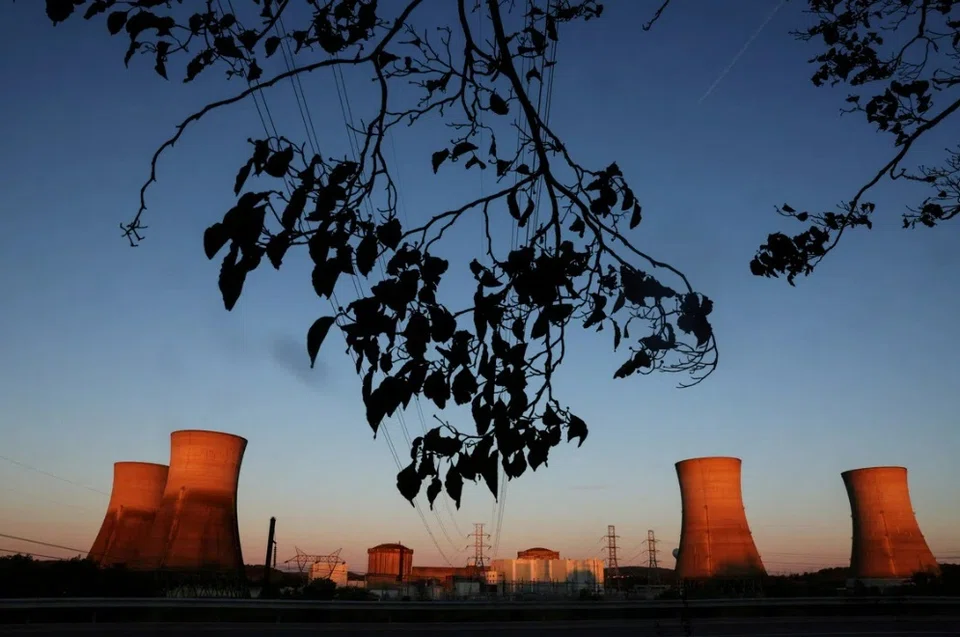
THE US Army is planning to deploy small reactors to power five bases across the country, investing US$2.2 billion to accelerate the Trump Administration’s efforts to boost America’s nuclear industry.
Under the Janus Programme, the Army has tapped five suppliers that will each be working at a single site, according to a statement on Wednesday (Aug 26).
The effort is expected to lead to a total of more than 20 reactors being installed within five years, with at least one going into service by the end of September 2028.
The initiative is part of the Trump administration’s broader push to revive a US nuclear industry that has regained momentum but added little capacity in decades.
The White House aims to quadruple US reactor capacity by 2050, while the Air Force in April announced plans to power three sites with reactors. But the military projects will rely on untested designs and some suppliers that have little or no track record of building power plants, creating a risk that some of these projects could fall behind schedule or miss key milestones.
“There are no companies that have complete microreactor designs,” Jeff Waksman, principal deputy assistant secretary of the Army for installations, energy and environment, said during a conference call. “We know that this is going to be very difficult and that there’s a very real chance that one or more of these companies will fail.”
These are the nuclear suppliers that will be responsible for building, owning and operating power plants at the sites:
- Antares Nuclear — Fort Bragg, North Carolina
- Radiant Industries — Fort Benning, Georgia
- Westinghouse Electric — Fort Drum, New York
- BWX Technologies — Fort Campbell, Kentucky
- General Atomics — Fort Hood, Texas
The companies are pursuing a broad range of technologies and sizes, though all are developing so-called microreactors: power plants that typically have less than 20 megawatts of capacity. That’s much smaller than the conventional nuclear plants that are widely used today and usually have about 1 gigawatt of capacity.
The smaller size is better suited for a base or campus, and are designed to supply reliable electricity even if the facility is isolated or cut off from the local power grid.



Westinghouse is known for its large nuclear plants, but the Janus Programme involves a new design that has never been built.
BWXT has a long history of supplying reactors for US Navy vessels and has been involved in an earlier military project, but this effort involves a larger design. General Atomics is a defense contractor with a strong background in nuclear energy, but it’s also developing a new reactor for the Army programme. Antares and Radiant are both startups that have yet to deliver completed systems to a customer.
The efforts to install nuclear reactors at Department of Defense sites is designed to make US military bases more resilient as adversaries target the power grid, according to Lucian Niemeyer, a former assistant secretary for defence who served during Trump’s first administration.
“We realise the grid is prime target,” said Niemeyer, who is now a principal at The United Coalition for Advanced Nuclear. “There are cyber threats facing our grid, there are drone threats. What the DOD is trying to do is get those targets off the grid.”
The programme is also aimed at advancing the US nuclear industry, Waksman said. Having reactors in service at military bases will help the suppliers move forward with developing and licensing civilian projects.
“There’s always that big first-of-a-kind risk with any new reactor technology,” he said. “We believe that this will be the spear tip, not just for microreactors, but for all advanced reactors in the United States.” BLOOMBERG
Decoding Asia newsletter: your guide to navigating Asia in a new global order. Sign up here to get Decoding Asia newsletter. Delivered to your inbox. Free.
Share with us your feedback on BT's products and services






