

US to initiate new Indo-Pac framework in 2022: Commerce Secretary
 Add BT as a preferred source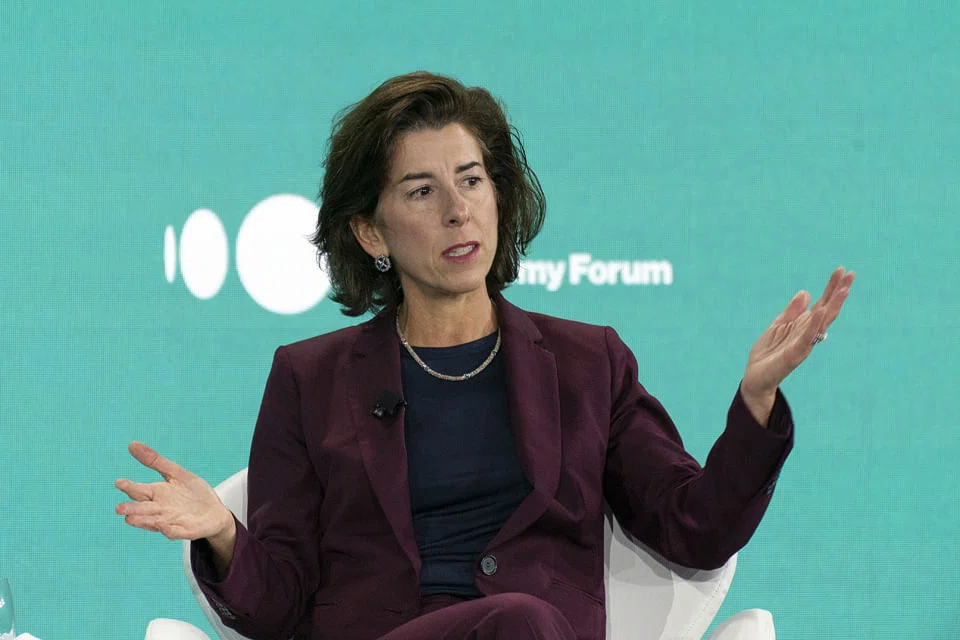
Singapore
THE US intends to initiate a new economic framework for the Indo-Pacific in 2022, Commerce Secretary Gina Raimondo said, as the Biden administration aims to reinvigorate America's standing in the region.
"We are likely to launch a more formal process in the beginning of next year which will culminate in a proper economic framework" in Asia, she said at the Bloomberg New Economy Forum in Singapore on Wednesday (Nov 17). "I am here in the region beginning the discussions, laying the groundwork."
It is clear that many people in the region want the US to rejoin the Comprehensive and Progressive Agreement for Trans-Pacific Partnership (CPTPP), Raimondo said, while adding that "for various reasons that is not going to happen now".
President Joe Biden has pledged to step up US engagement in Asia after years of ceding influence to China.
Yet the administration has also been accused of lacking an economic vision for the region nearly 5 years after former president Donald Trump withdrew from the 11-nation CPTPP.
Navigate Asia in
a new global order
Get the insights delivered to your inbox.
In Tokyo earlier this week, Raimondo agreed to begin talks on resolving disputes over tariffs imposed on Japanese steel and aluminium under Trump. That came on the heels of a similar deal with European nations.
The US and Japan also agreed to establish a Commercial and Industrial Partnership, aimed at maintaining a free and fair economic order, improving industrial competitiveness, shoring up supply chains and tackling climate change.
The current US administration is focused on creating good jobs at home, but "we are equally focused on re-strengthening our relationships with our allies - in Europe, in the Indo-Pacific and around the world", Raimondo said at the forum. "We are talking about onshoring, but we are also talking about friend-shoring."
"Take semiconductors - it is a global, complex supply chain," she said. "That won't change, and that's OK. We don't think everything can be domestically produced, so we want to work with our allies and friend-shore."
However, along with that collaboration, the administration wants to increase the domestic supply of chips, both from American firms and also from foreign companies, she said.
A chip shortage has hobbled the tech and auto industries, cost companies billions in lost revenue and forced plants to furlough workers.
The Biden administration is scrambling to address constraints, but it is also trying to bring production of vital components back to the US.
One way the US is trying to ameliorate that shortage is to request supply chain information from top chipmakers.
Raimondo reiterated that the data request from her department is voluntary and the US will keep information it received "strictly and completely confidential".
"Increasing transparency will reduce the bottlenecks," she said in an earlier appearance on Bloomberg Television. However, Raimondo did not comment on whether the US is concerned that foreign governments may adopt similar measures and request information from American companies.
Major chipmakers including Taiwan Semiconductor Manufacturing Co, Samsung Electronics and Intel have complied with the request, as have chip users including Apple and Amazon.
Raimondo also called on China to live up to its commitments, including in a trade deal between the 2 nations.
"China needs to play by the rules, they need to respect our intellectual property (IP), they need to live up to their commitments," she said. "Right now, for example, in the so-called Phase 1 deal where the Chinese committed to purchase a certain amount of aircraft and agricultural products, they are not doing that. They are not living up to their commitments." BLOOMBERG
Decoding Asia newsletter: your guide to navigating Asia in a new global order. Sign up here to get Decoding Asia newsletter. Delivered to your inbox. Free.
Share with us your feedback on BT's products and services
TRENDING NOW

US-China rivalry and the Kindleberger Trap: Why inaction – not escalation – is the biggest risk

Middle East-linked energy supply shocks put Asean Power Grid back in focus
Thai and Vietnamese farmers may stop planting rice because of the Iran war. Here’s why
Strengthening Asean’s economic resilience through RCEP’s 2027 review

