

US trade deficit narrows slightly in March
The trade deficit contracted 0.1 per cent to US$69.4 billion
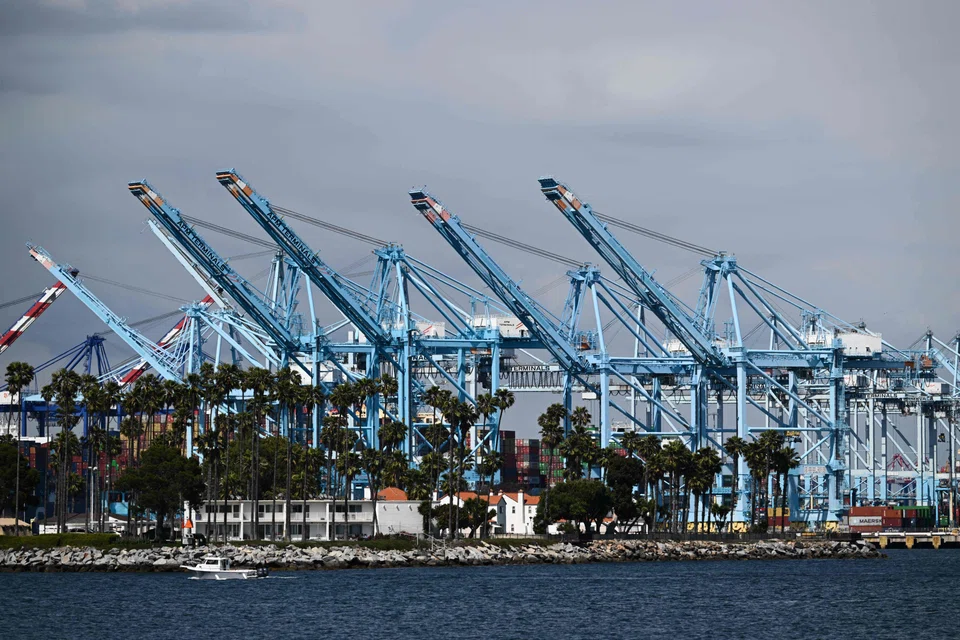
THE US trade deficit narrowed slightly in March, as a decline in imports was tempered somewhat by a plunge in exports.
The trade deficit contracted 0.1 per cent to US$69.4 billion, the Commerce Department’s Bureau of Economic Analysis said on Thursday (May 2). Data for February was revised to show the trade gap widening to US$69.5 billion instead of US$68.9 billion as previously reported. Economists polled by Reuters had forecast the deficit climbing to US$69.1 billion in March.
Trade, through a surge in imports, was a large drag on gross domestic product in the first quarter. The economy grew at a 1.6 per cent annualised rate last quarter, after expanding at a 3.4 per cent pace in the October-December period.
Imports dropped 1.6 per cent in March to US$327.0 billion. Goods imports fell 1.6 per cent to US$263.8 billion. There were decreases in imports of motor vehicles and parts as well as industrial supplies and materials, which include crude oil.
But imports of consumer goods increased to US$3.0 billion, boosted by pharmaceutical preparations. Capital goods imports were the highest on record. Services imports fell US$1.1 billion to US$63.2 billion, pulled down by transport and travel.
Exports tumbled 2.0 per cent to US$257.6 billion. Goods exports plummeted 2.9 per cent to US$171.3 billion. There were decreases in exports of capital goods, industrial supplies and materials, and foods, feeds and beverages. Exports of services fell US$0.2 billion to US$86.4 billion. REUTERS
Decoding Asia newsletter: your guide to navigating Asia in a new global order. Sign up here to get Decoding Asia newsletter. Delivered to your inbox. Free.
Share with us your feedback on BT's products and services
TRENDING NOW

Britain’s mansion tax shows the difficulty of targeting wealth

Once staunchly pro-China, Malaysian Chinese businesses are now distancing themselves from Beijing

The only common thing in S-E Asia is that we all eat rice: Cisco’s Asean president

Singapore data centre operator DayOne opts for US IPO at likely US$20 billion valuation

