US, UK to cut Russia's access to dollar, pound if it invades Ukraine
Move could have stinging impact as Russia's oil, gas and metals exports largely priced and settled in US dollars
London
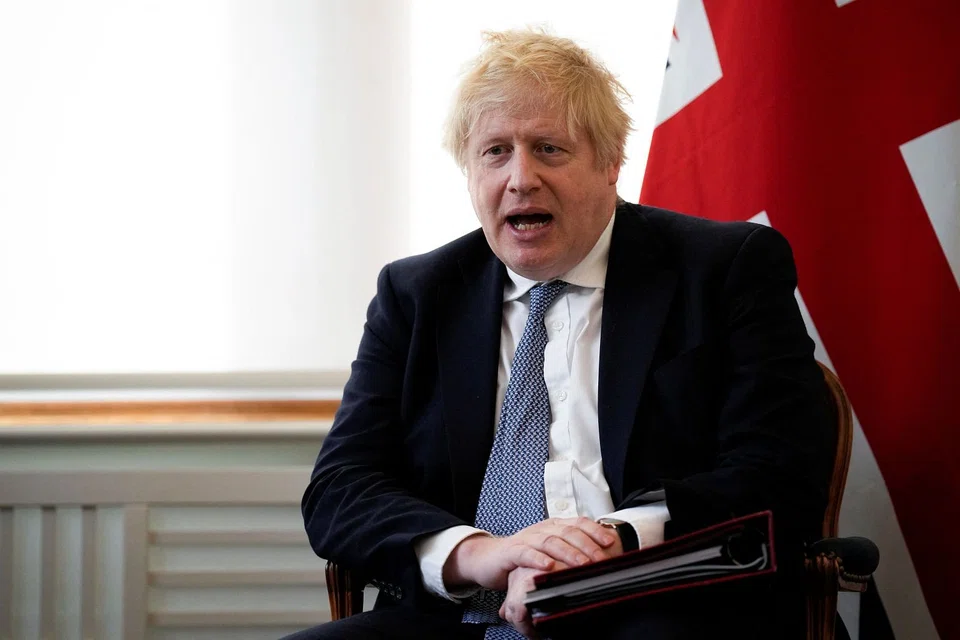
THE United States and Britain would cut off Russian companies' access to US dollars and British pounds if the Kremlin orders an invasion of Ukraine, British Prime Minister Boris Johnson said on Sunday (Feb 20).
Separately on Sunday, Belarus' Defence Ministry said that Russia and Belarus would extend joint military exercises that had been due to end that day, dashing Western hopes that Russia would swiftly withdraw forces that could be used in a potential invasion of Ukraine.
The US and Britain have repeatedly cautioned that Russia is about to invade Ukraine, a step Washington and London say would trigger the biggest conflict since the end of World War II. Russia denies that it plans to do so.
At the Munich Security Conference, Johnson said that Western sanctions on Russia in the event of an invasion would go much further than he had previously suggested in public. "We are even, with our American friends, going to stop them trading in pounds and dollars," Johnson told the BBC. "That will hit very, very hard."
But he questioned if the threat of sanctions would be enough to deter Russian President Vladimir Putin because the Kremlin chief might not be thinking logically.
Britain has previously threatened to block Russian companies from raising capital in London and to expose what Johnson calls the "Russian doll" of property and company ownership.
Britain has not spelled out who would fall under the sanctions, but has pledged that there would be nowhere for Russian oligarchs to hide. Johnson has said targets could include Russian banks.
On Friday, The Guardian reported that London-listed Russian oil, gas and mining companies paid the Russian government £39 billion (S$71.4 billion) in taxes in 2020.
In total, 31 Russian companies are listed on the London Stock Exchange, with a combined market value of £468 billion, said The Guardian, citing S&P Global.
Given Russia's position as one of the world's top exporters of oil, gas and metals - which are largely priced and settled in US dollars - blocking Russian companies from access to dollar markets could have a stinging impact.
Putin has repeatedly called for reducing reliance on the US dollar trade and recent major energy contracts with China have been priced in euros.
Hundreds of billions of dollars have flowed into London and Britain's overseas territories from Russia since the fall of the Soviet Union in 1991, and London has become the Western city of choice for the super-wealthy of Russia and other former Soviet republics.
Western intelligence services believe Putin may order an unconventional attack on Ukraine which might require the West to make a swift judgement call on the imposition of sanctions, a senior Western official said on Friday.
Putin says the West is sowing hysteria in a crude attempt to lure Russia into war after ignoring the Kremlin's concerns about Nato enlargement after the Cold War.
Russia, according to Western estimates, has more than 150,000 troops on the Ukrainian border.
Ukraine's Foreign Minister Dmytro Kuleba on Sunday said that it was time for the West to implement at least part of the sanctions it has prepared against Russia. REUTERS
Decoding Asia newsletter: your guide to navigating Asia in a new global order. Sign up here to get Decoding Asia newsletter. Delivered to your inbox. Free.
Share with us your feedback on BT's products and services