

US unveils crackdown on methane from oil and gas industry
About 100 nations have pledged to cut emissions as part of efforts to contain global warming, President Biden tells delegates at climate conference
 Add BT as a preferred source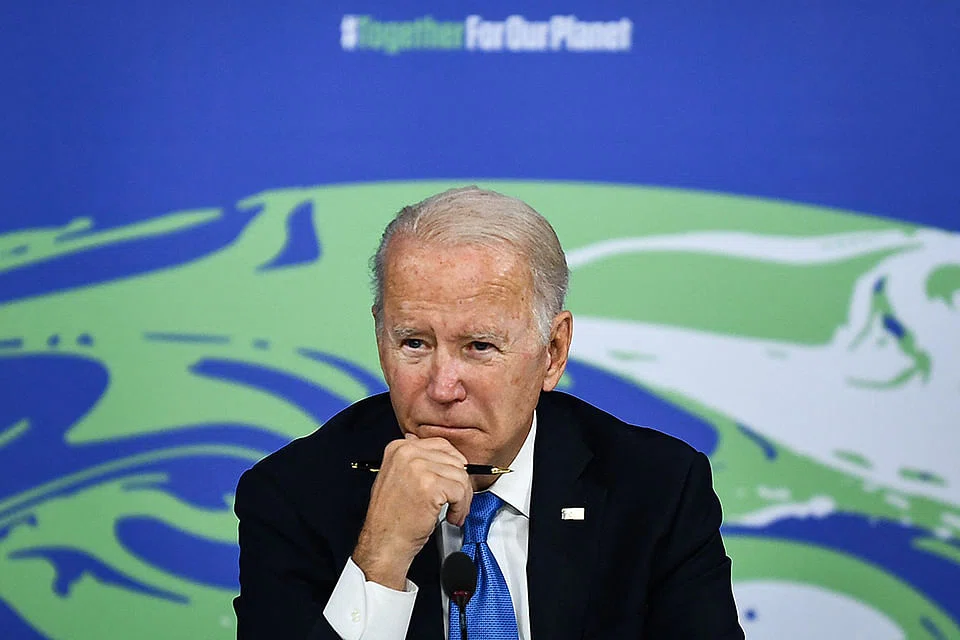
Glasgow
THE United States on Tuesday (Nov 2) unveiled a plan to slash emissions of the greenhouse gas methane from oil and gas operations as part of its broader strategy to crack down on climate change, drawing cautious support from both environmental groups and drillers.
The announcement coincided with the United Nations climate conference in Glasgow, where the US, the world's second-largest greenhouse gas emitter, is seeking to reclaim leadership on the world stage by demonstrating tangible steps to curb emissions at home.
US President Joe Biden has set a target to slash greenhouse gas emissions by more than 50 per cent by 2030, but is struggling to pass major climate legislation through a deeply divided Congress, making policies by federal agencies more crucial.
About 100 nations have pledged to cut emissions of methane as part of efforts to contain global warming, Biden told delegates at the conference.
"One of the most important things we can do in this decisive decade to keep 1.5 degrees in reach is reduce our methane emissions as quickly as possible," he said, referring to a target to contain global warming at 1.5 degrees Celsius. "It is one of the most potent greenhouse gases there is."
Navigate Asia in
a new global order
Get the insights delivered to your inbox.
Biden, who spelled out US commitments to reduce its own methane emissions, said "approaching 100 nations" were signing on to the global methane pledge.
At the centre of the US plan to tackle methane domestically is an Environmental Protection Agency (EPA) proposal that will, for the first time, require oil and gas operators to aggressively find and repair methane leaks. Oil and gas operations account for a third of methane emissions.
"The timing of this is critical. As we speak, world leaders are gathering right now in Glasgow and they are looking to the United States for true leadership," said US EPA Administrator Michael Regan. "This proposal is absolutely bold, aggressive and comprehensive."
Specifically, the proposal will require companies to monitor 300,000 of their biggest well sites every 3 months, would ban the venting of methane produced as a byproduct of crude oil into the atmosphere, and require upgrades to equipment such as storage tanks, compressors, and pneumatic pumps.
The EPA rules would most likely take effect in 2023 and would be aimed at slashing methane from oil and gas operations by 74 per cent from 2005 levels by 2035, an amount equivalent to the emissions created by all US passenger cars and planes in 2019, according to the summary.
The American Petroleum Institute, which represents the US oil and gas industry, said it was reviewing the proposals.
"We support the direct regulation of methane from new and existing sources and are committed to building on the progress we have achieved in reducing methane emissions," it said in a statement.
Major producer BP, which has been seeking to burnish its green credentials and is investing heavily in clean energy, said it applauded the EPA proposals.
Washington-based environmental group Earthworks also called the proposals a positive step, but added that it would "continue to advocate for the strongest possible standards" as the EPA seeks feedback on the plan.
Methane is the second-biggest cause of climate change after carbon dioxide. Its high heat-trapping potential and relatively short lifespan in the atmosphere means cutting its emissions can have an outsized impact on the trajectory of the world's climate.
The EPA's well monitoring proposal applies to sites emitting an estimated three tons of methane per year or more, a threshold the agency said would capture sites responsible for 86 per cent of leaks. Smaller sites will require less scrutiny.
Oil and gas industry groups had pressed the EPA to exclude smaller wells from the regulations, citing the sheer number of such wells and the costs of the monitoring and repairs.
Environmental advocates, meanwhile, had pushed for all well sites to be covered, and were also seeking limits on flaring: the practice of burning off methane that comes out of the ground as a by-product during crude oil drilling.
The Biden administration's methane strategy will also include a new proposal by the Pipeline and Hazardous Materials Safety Administration requiring companies to monitor and repair leaks on about 640,000 km of previously unregulated natural gas gathering lines.
The administration's plan also proposes new voluntary measures from the Agriculture and Interior departments to tackle methane emissions from other major sources, including landfills, agriculture and abandoned wells and coal mines. REUTERS
Decoding Asia newsletter: your guide to navigating Asia in a new global order. Sign up here to get Decoding Asia newsletter. Delivered to your inbox. Free.
Share with us your feedback on BT's products and services
TRENDING NOW

Family office for US$12 billion Tetra Pak Fortune exits Hong Kong
Thai and Vietnamese farmers may stop planting rice because of the Iran war. Here’s why

As more Asean states turn to Russia for fuel, will Moscow boost its influence in the region?

Deloitte’s Lee Boon Teck succeeds Teo Ser Luck as president of Singapore’s national accounting body

