

Vaccination a must for approval of new long-term passes, work passes and PRs from Feb 1
Vaccination will also be required when renewing existing work passes
 Add BT as a preferred source
DeeperDive is a beta AI feature. Refer to full articles for the facts.
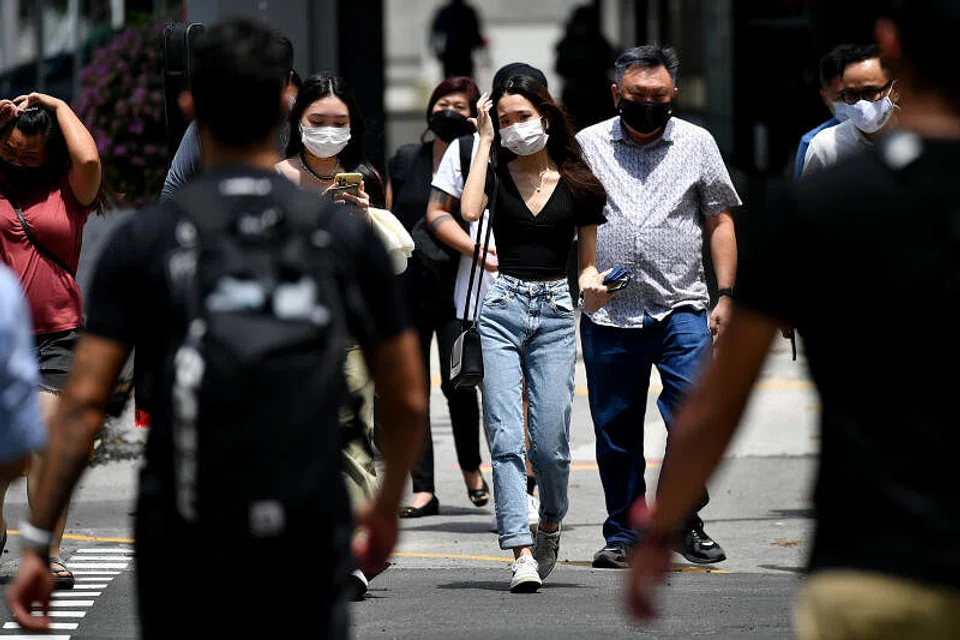
LATE Sunday (Dec 26) night, Singapore announced several updates to its approach to manage the Omicron variant of Covid-19, including making vaccination "a condition for the approval of new applications for and renewal of existing long-term passes, work passes, as well as permanent residences (PRs)" from Feb 1, 2022.
The authorities will also remove the pre-event testing (PET) concession for unvaccinated persons to go to work, starting Jan 15, 2022.
The Ministry of Health (MOH) noted that it had earlier introduced the requirement for long-term pass holders to be vaccinated as an entry requirement to Singapore, which has been in place since Nov 1, 2021.
From Feb 1 next year, Covid-19 vaccination will be a condition to approve or grant new long-term passes, work passes and PRs. Vaccination will also be required when renewing existing work passes.
At the point of application, employers are required to make a declaration that their work pass holders and dependants are fully vaccinated upon arrival in Singapore. Pass holders are also required to submit or present their vaccination certificates as part of the verification process.
This vaccination condition will not apply to the following 3 groups: children below 12 years old; individuals aged 12 to below 18, who can continue to make a declaration to complete the full vaccination regime after arriving in Singapore; and pass holders who are medically ineligible for vaccination.
Navigate Asia in
a new global order
Get the insights delivered to your inbox.
As for new applications for PRs, long-term visit passes and student's passes, the vaccination status of applicants will be verified during the pass issuance process. This vaccination condition will not apply to applicants aged below 12 years old, and those medically ineligible for vaccination.
MOH said in a press statement that these measures will help sustain the country's high vaccination rates and facilitate a safe reopening of the society and economy.
Meanwhile, from Jan 15 next year, unvaccinated employees will not be allowed to return to the workplace, even if they have tested negative for Covid-19.
Partially vaccinated workers - those who have taken at least 1 dose of the vaccine but are not yet fully vaccinated - will have a grace period until Jan 31, 2022 to complete their vaccination regime. During the grace period, they will continue to be able to enter the workplace with a negative PET result.
Previously, the government had intended to start the workforce vaccination measures on Jan 1 next year, and also indicated that it would be reviewing the PET concession for unvaccinated employees.
MOH on Sunday said this change will help protect unvaccinated individuals, "bolster our protection against a large wave of cases locally", and create safer workplaces for everyone.
Applications will also open for a second round of free antigen rapid test (ART) kit distribution for workplaces that are not on mandatory rostered routine testing, to implement voluntary weekly testing for 2 months.
And from Monday (Dec 27), Omicron cases will follow the same protocols as with other Covid-19 cases. Omicron patients will be placed on the home recovery programme or managed at community care facilities depending on their clinical presentation, instead of being isolated in dedicated facilities by default.
Close contacts of Omicron patients will be issued a 7-day health risk warning, instead of being quarantined for 10 days. Those currently in quarantine will be progressively discharged over the next few days, MOH said.
Singapore has also ended the travel restrictions on Botswana, Eswatini, Ghana, Lesotho, Malawi, Mozambique, Namibia, Nigeria, South Africa, and Zimbabwe from 11.59 pm on Dec 26, 2021. All passengers with a 14-day travel history to these countries will be allowed to enter and transit through Singapore and will be subject to border measures for Category IV countries and regions.
MOH noted that the travel restrictions that Singapore had put in place earlier will need to be updated, given the increasing global spread of Omicron.
The ministry said it has been 1 month since the Omicron variant emerged. Given the uncertainty around the variant's characteristics, the government had initially adopted a more cautious risk containment approach and introduced targeted measures to reduce the risk of spread of Omicron into and within Singapore.
"This strategy was effective in delaying the introduction of the variant into our community and slowing local spread. It bought us valuable time to learn about its nature and behaviour based on overseas and local data," MOH added.
Citing international evidence, it said the Omicron variant is likely to be more transmissible but less severe than the Delta variant, and that vaccines, especially boosters, retain substantial protection against hospitalisations caused by Omicron.
Singapore has had several unlinked Omicron cases and clusters in the community in the past week, which was "not unexpected given the high transmissibility of the variant", MOH said.
The latest changes to its approach in managing Omicron cases are based on an updated understanding of the variant.
Decoding Asia newsletter: your guide to navigating Asia in a new global order. Sign up here to get Decoding Asia newsletter. Delivered to your inbox. Free.
Copyright SPH Media. All rights reserved.
TRENDING NOW
Air India asks Tata, Singapore Airlines for funds after US$2.4 billion loss
‘Boring’ is the new black: The stars are aligning for a Singapore stock market revival

From 1MDB to ‘corporate mafia’: Is Malaysia facing a new governance test?
South-east Asian markets account for 8.8% of global capital inflows from 2021 to 2024: report

