
Vietnam e-commerce platform Sendo shoots for profits from online grocery amid stiff competition

The segment is now the company’s largest and fastest-growing, handling about 50 tonnes of goods and serving 10,000 customers daily
Published Mon, Jun 17, 2024 · 05:00 AM
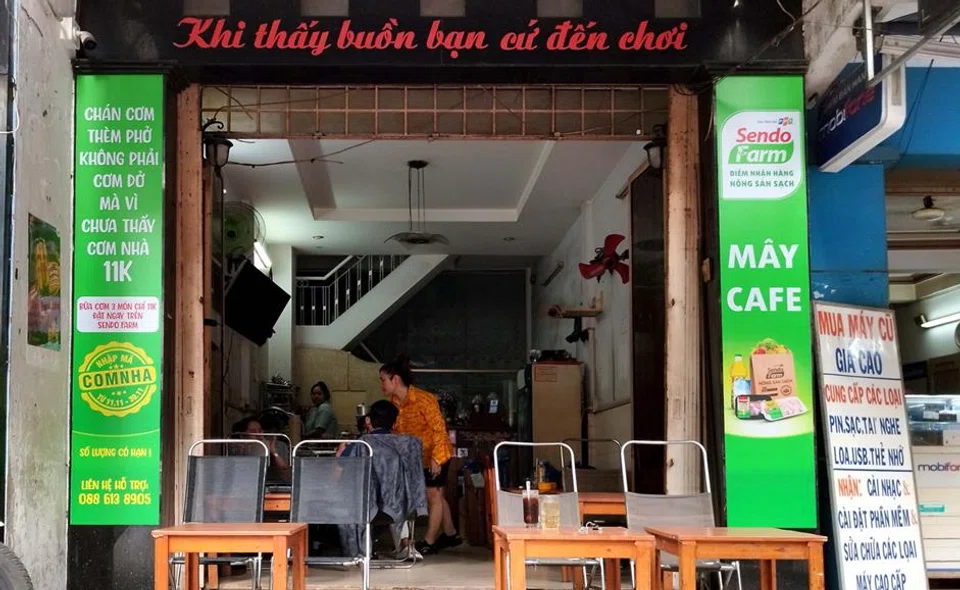
    • Sendo recruits households to become its pickup stations, where customers collect their groceries after placing an order online on Sendo Farm.
    • Sendo recruits households to become its pickup stations, where customers collect their groceries after placing an order online on Sendo Farm. PHOTO: SENDO

    [HO CHI MINH CITY] Facing stiff competition from well-capitalised regional marketplaces Shopee, TikTok Shop and Lazada, many of Vietnam’s e-commerce players have been forced to differentiate their offerings and focus on segments that general platforms often leave aside.

    For Sendo – a company founded in 2012 as part of Vietnam’s largest IT services company, FPT Corporation – its future growth and profitability lie in the realm of online grocery.

    “What we have seen is that e-commerce is a very competitive, ‘red-ocean’ type of business, where it’s very difficult to make money,” Tran Hai Linh, the chief executive and co-founder of Sendo, told The Business Times in an interview.

    Sendo was among the first movers in Vietnam’s e-commerce space and for several years competed to be one of the most popular marketplaces in the country.

    Venture capitalists were rushing to inject money into the local champion, which has raked in at least US$130 million from multiple fundraising rounds over the past decade.

    However, Sendo was unable to defend its leading position, trailing foreign players and its local rival, Tiki. 

    Based on figures from Metric, a Vietnamese e-commerce data platform, sales on Sendo’s marketplace in the first nine months of 2023 were just over 0.1 per cent of total revenue on the other four platforms.

    Linh acknowledged that the firm fell short in the race for the top spot and decided to instead embark on a new “profitable pathway” four years ago. 

    “We still do e-commerce, but we have to figure out a way for ourselves that is totally unique and defensible,” he said.

    Untapped segment

    While other e-commerce giants were still embroiled in a cash-burning battle to acquire customers in the marketplace arena, Sendo concentrated its efforts on the online grocery segment. 

    Linh viewed the segment as a “blue-ocean” market, which is much bigger than present-day e-commerce and “so difficult that nobody wants to compete”.

    For decades, millions of people in Vietnam purchased their groceries from street stalls or wet markets. The Covid-19 pandemic, which struck in 2020, forced shoppers to go online. Sendo latched on to this opportunity and launched Sendo Farm to provide fresh food and other necessities to customers with just a tap on their mobile phones.

    After multiple iterations, Sendo Farm started to experience the so-called “hockey-stick” growth in the number of customers and revenue last year – without spending a cent on marketing, said Linh.

    He added that customer frequency was 30 times higher than in Sendo’s previous marketplace business.

    The online grocery segment has become Sendo’s largest and fastest-growing, handling about 50 tonnes of goods and serving 10,000 customers daily.

    As at end-2023, Sendo Farm has a network of 5,000 individual partners that provide pickup points and deliver groceries to customers in the capital Hanoi and Ho Chi Minh City.

    Pivot to profitability

    The grocery business is known to have thin profit margins, requiring companies to achieve a large scale similar to that of a supermarket.

    Unlike the third-party model that Shopee and Lazada employ via their marketplaces to connect buyers and sellers, Sendo Farm leans towards the first-party model. It serves as a retailer that takes on the burden of complex processes for cold-chain logistics and inventory management to sell fresh products to end-customers.

    “The required scale poses a huge logistics challenge,” Linh said. “Without technology, there’s no way we are able to do that.”

    To optimise costs, the company adopts strategies such as next-day delivery, in-advance online payment, and click-and-collect at Sendo’s pickup stations. It also maintains a limited but diverse-enough list of stock-keeping units catering to the everyday needs of Vietnamese housewives.

    As things stand, Sendo has yet to be in the black, though Linh expects its marketplace business to be profitable by the end of this year.

    “If we are on the same trajectory, I think we will achieve (profitability) a lot sooner than if we just do marketplace,” he said.

    The company is not seeking venture money but instead plans to go for an initial public offering (IPO) – an ambition that its rival Tiki and Vietnam’s tech unicorns, such as Internet firm VNG and e-wallet operator M-Service, have strived towards for years. 

    “At the moment, the most realistic plan would be a local IPO,” Linh added. “It is a five- to seven-year game.”

    Beyond Vietnam, the shift from growth to profitability picked up speed across the regional e-commerce industry. Last year, Shopee attained consecutive profitable quarters for the first time, after conducting multiple layoffs and shutting operations in some markets in 2022. 

    Ongoing struggle to differentiate

    Similar to Sendo, single-country platforms such as Tiki, Tokopedia and Bukalapak have faced fierce competition from better-resourced regional competitors and have been forced to differentiate themselves meaningfully to survive, Singapore-based venture firm Momentum Works noted in a report last June.

    When observing the more mature market in China, Momentum Works pointed out that successful players have to distinguish themselves from the competition, such as operating as a retailer with its own inventories, or focusing on specific product categories like electronics, cosmetics and apparel. 

    “(However, South-east Asia players) need to build a much stronger business and dominate in more segments in a given market – as a single market in South-east Asia is usually not big enough,” it noted.

    Yorlin Ng, the chief operating officer of Momentum Works, said these smaller, single-country players may also need to move to omnichannel play for survival.

    This is because the majority of retail in South-east Asia is still taking place at brick-and-mortar stores, and major players such as Alibaba and Amazon continue to struggle to win the offline games, she told BT. 

    Sendo is now running both the marketplace and online grocery businesses, and ruling out the possibility of a merger with an e-commerce rival as each player is currently finding its footing in various niches and verticals.

    In 2020, Sendo and Tiki were in talks for a merger, but cancelled the deal after failing to reach a consensus among shareholders.

    “The current outlook exponentially widened the e-commerce market to so much more than just marketplaces,” Linh said. “I believe each firm needs to reach a certain scale, but it no longer needs to be No 1 to be very big and profitable.”



