Vietnam makes big inroads in global chip race
The country’s tech giants want larger slice of the trillion-dollar global semiconductor market by capitalising on the local supply chain
Jamille Tran
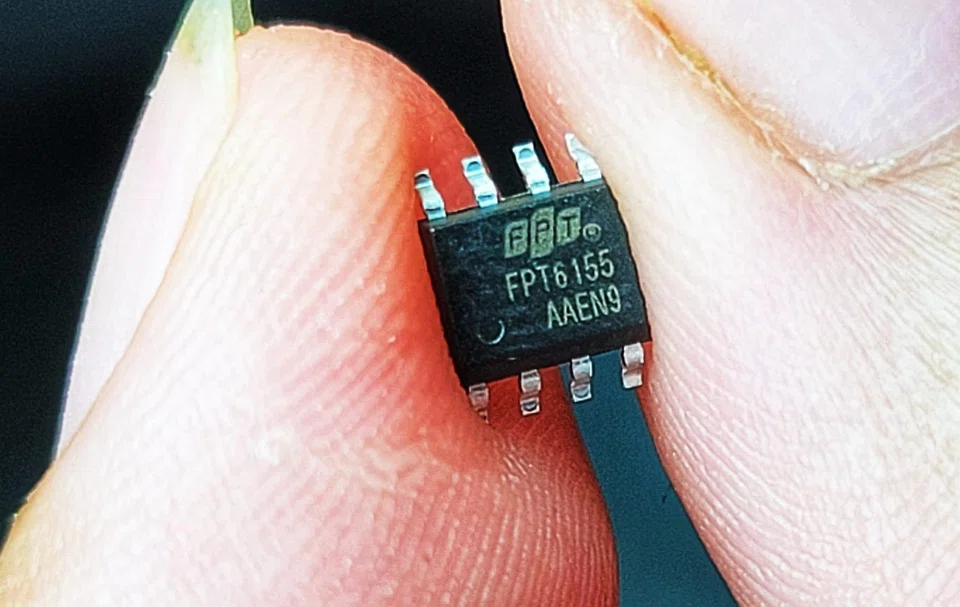
[HANOI] FPT Semiconductor, a unit of Vietnam’s leading tech company FPT Software, in September launched its first line of semiconductor chips used in medical devices, with a target to supply 25 million “Made in Vietnam” chips around the world.
An alliance made up of FPT Software and various local and international stakeholders plans to jointly build wafer fabrication plants in Vietnam – the missing piece in the local semiconductor supply chain, said FPT Semiconductor’s founder and CEO Nguyen Vinh Quang in a recent interview with The Business Times.
During a meeting with Vietnamese Prime Minister Pham Minh Chinh in August, state-owned telecommunications behemoth Viettel Military Industry and Telecoms Group asked the government to task the company with the research, design and production of semiconductor chips to serve domestic and international demand.
Since 2020, the group’s high-tech unit has been working with the Ho Chi Minh City University of Technology to develop integrated circuits used for fifth-generation mobile networks.
All these moves come amid a slew of vigorous investments by global semiconductor makers in Vietnam, in an effort to diversify their supply chains and reduce their exposure to the Chinese market.
Samsung, the world’s biggest memory chip maker, in August announced a US$850 million investment to manufacture semiconductor components in Thai Nguyen province. Last year, the US’ Intel Corporation and South Korea’s Amkor Technology announced major investments in chip assembly and test manufacturing facilities in the South-east Asian country.
Many other global tech giants, such as Apple, Luxshare, Pegatron and Wistron, have also decided to expand their production capacities in Vietnam in recent years.
“It is a prime time for us to (produce) ‘Made in Vietnam’ chips,” said Quang, adding that FPT Semiconductor wants to do its part to accelerate the production shift to Vietnam.
Vietnam, the world’s second-largest smartphone exporter after China, is among the biggest beneficiaries of the production shift away from China. It is regarded as the leading high-value manufacturing hub in the region with a huge advantage in electronics production, Savills Southeast Asia’s CEO Chris Marriott said in a note.
Vietnam’s electronics exports hit a record high of over US$108 billion in 2021 – more than 32 per cent of the country’s total exports that year. According to data by the Ministry of Trade and Industry, exports of phones and accessories rose by 12.4 per cent and exports of computers, electronic products and components increased by 14 per cent year on year.
Besides a favourable geographical position and strong policy incentives for high-tech businesses, observers say Vietnam is also attractive due to its extensive network of free trade deals, including the Comprehensive and Progressive Agreement for Trans-Pacific Partnership and the European Union-Vietnam Free Trade Agreement.
Vietnam is in dire need of a large supply of semiconductor chips, which are used in everything from laptops and automobiles to smartphones and home appliances. At a recent conference, experts noted that Vietnam is still fully reliant on chip imports, and they cited the lack of a systematic investment strategy at a national level as the main reason.
On its part, the Saigon Hi-Tech Park (SHTP) in Ho Chi Minh City has been busy putting the development of Vietnam’s semiconductor chip industry in the global spotlight.
At an event to celebrate the park’s 20th anniversary in October, it was announced that SHTP has attracted more than US$12 billion in domestic and foreign investment since its establishment. This includes more than 50 foreign direct investment projects including the Intel plant, collectively worth in excess of US$10 billion.
SHTP recently formed a partnership with the US chip software maker Synopsys in August to set up a foundation for an integrated circuit design talent pool in Vietnam.
However, only foreign-invested domestic companies are able to participate in the semiconductor assembly and test stages, which are also lower-value activities compared to the design and fabrication stages mostly done overseas.
FPT Semiconductor, though recognised as one of the first local chip makers, has yet to produce chips domestically so far. Its first line of integrated circuit chips was designed by the firm but manufactured in a foundry in South Korea and assembled and tested by their partners from Japan and Taiwan.
“FPT Software does not exclude the possibility of developing a packaging factory in Vietnam, but we are inclined to work with established foreign partners to jointly build an ecosystem for the local chip industry,” said Quang.
The firm will seek collaborations with wafer manufacturers in Japan, South Korea and Taiwan to build wafer fabrication plants, he added, highlighting the need to connect local stakeholders with foreign players to form a “sustainable alliance”.
“Market conditions are now favourable for the Vietnamese government to take the lead to form an alliance of local and international corporations and join hands to invest money, design support policies, and provide long-term incentives to gradually set up fabrication plants in Vietnam,” Quang said.
“The first and foremost task is to complete the local supply chain, though it’s not an easy task and will probably take time to implement.”