

Vietnam orders Covid tests for millions in Ho Chi Minh City
 Add BT as a preferred source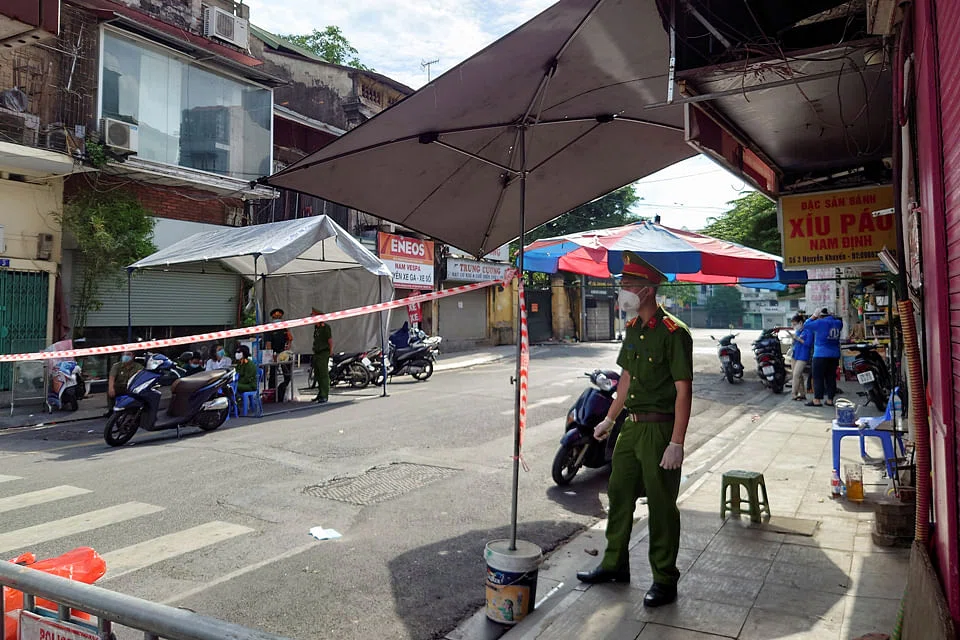
DeeperDive is a beta AI feature. Refer to full articles for the facts.
Ho Chi Minh City
VIETNAM'S Prime Minister Pham Minh Chinh ordered Covid-19 tests for all of Ho Chi Minh City after the government dispatched the military to dispense food in the nation's commercial hub amid new drastic measures to contain a worsening outbreak.
The benchmark VN Index of Vietnamese stocks, which tumbled
3.3 per cent on Friday in the wake of a rout sparked by increasingly tough measures to contain the virus, fell as much as 1.3 per cent on Monday.
Uncertainty swept across the city of almost 10 million through the weekend, triggered by conflicting information from authorities about food shopping restrictions. Local media depicted crowds of residents descending on food markets.
The curbs on shopping are set to be in place starting Aug 23 until
Navigate Asia in
a new global order
Get the insights delivered to your inbox.
Sept 6, said a government statement.
Officials estimate the city needs to provide 11,000 tonnes of goods to residents daily and the government is capable of doing that, an unnamed official from the city's trade department was cited as saying by newspaper Tuoi Tre.
The military will work with volunteers, veterans and some unions to deliver food to households, Vo Minh Luong, deputy minister of national defense, said in a meeting on Friday with city officials. His comments were made available on a government website, which did not give details on the scale of the distribution.
The South-east Asian country is battling its worst coronavirus wave with a record 11,299 domestic new virus cases reported on Saturday. Ho Chi Minh City is the nation's epicentre with more than 171,000 reported domestic patients out of the country's 332,626 local cases since April 27, the start of latest national outbreak. The city has recorded 80 per cent of the country's Covid-19 deaths.
Authorities are increasingly concerned that months of tough anti-virus measures have yet to contain the spread of Covid-19, and aim to further reduce movements by Ho Chi Minh City residents. They have already been restricted from leaving home and can do so for only essential reasons, such as getting food, seeking medical treatment or going to work-sites approved by the government.
The government aims to contain the virus to pockets in Ho Chi Minh City by Sept 15, it said on its website. Less than 2 per cent of the nation of 98 million people have been fully vaccinated as of Aug 19, said a statement posted on the website of the health ministry's publication Suc Khoe Doi Song.
Stricter movement restrictions are also being ordered in neighbouring provinces including Dong Nai and Binh Duong, said a statement on the government's website. That region is dotted with industrial parks - home to suppliers of global brands. Thousands of police officers and members of the military from different parts of the country are being sent to Ho Chi Minh City and Binh Duong province to assist with enforcement of the restrictions, said the government's website.
Likewise, thousands of doctors and other medical professionals have been arriving in the southern region to assist with the growing number of patients. The army will oversee the enforcement of stay-at-home orders that were extended till Sept 15 in Ho Chi Minh City and assist the city to ensure its food supply for the next 15 days, said a government posting.
Local officials must detail the number of stores in their areas and calculate the needs of households, the notice said. BLOOMBERG
Decoding Asia newsletter: your guide to navigating Asia in a new global order. Sign up here to get Decoding Asia newsletter. Delivered to your inbox. Free.
Share with us your feedback on BT's products and services
TRENDING NOW

Shelving S$5 billion office redevelopment plan proved ‘wise’ as geopolitical risks mount: OCBC chairman

China pips the US if Asean is forced to choose, but analysts warn against reading it like a sports result

Beijing’s calculated silence on the Iran war

Middle East-linked energy supply shocks put Asean Power Grid back in focus

