

Vietnam’s China ties loom large in US hearing on market economy upgrade
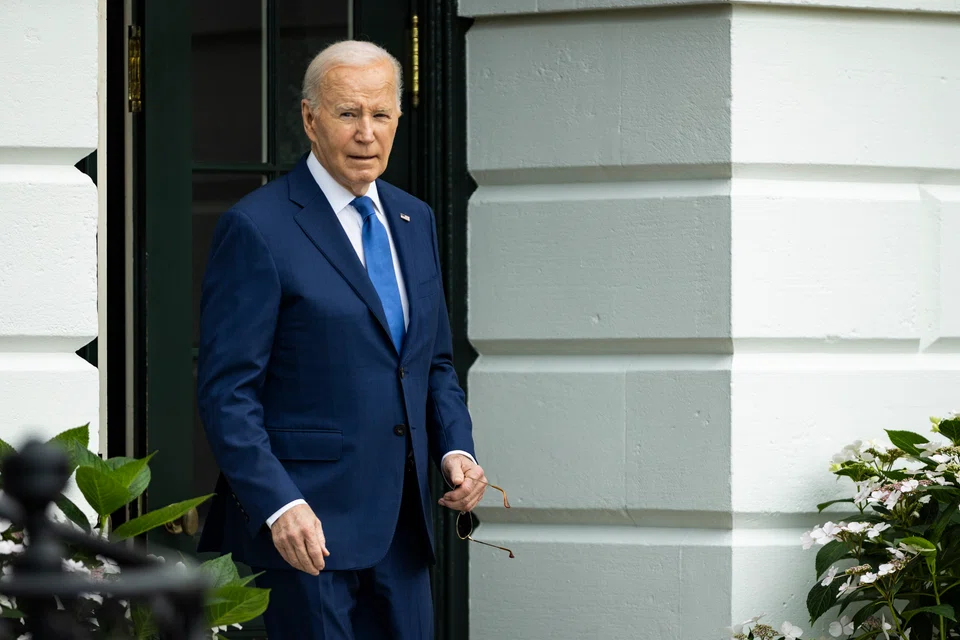
US President Joe Biden’s bid to draw Vietnam closer as a strategic ally clashed with his desire for union workers’ votes on Wednesday (May 8) as trade lawyers sparred over whether the Commerce Department should upgrade the communist-ruled country to market economy status.
The move, opposed by US steelmakers, Gulf Coast shrimpers and American honey farmers, but backed by retailers and some other business groups, would reduce the punitive anti-dumping duties set on Vietnamese imports because of its current status as a non-market economy marked by heavy state influence.
Vietnam’s deepening economic ties to China loomed large in arguments on both sides of the issue at a virtual public hearing hosted by the Commerce Department as part of a review and decision due on Jul 26.
Steptoe lawyer Eric Emerson, representing Vietnam’s Ministry of Industry and Trade, said Vietnam should be graduated to market economy status because it has satisfied the six criteria used by the Commerce Department to judge whether countries have a market-driven economy, from currency convertibility and labour rights to investment openness and resource allocation.
“Vietnam has demonstrated that its performance on these statutory factors is as good, or often better, than other countries that have previously been granted market economy status,” he said, citing less government support for state firms than India and more openness to foreign investment than Indonesia, Canada and the Philippines.
Vietnam has argued it should be freed of the non-market label because of recent economic reforms, saying retaining the moniker is bad for increasingly close two-way ties that Washington sees as a counterbalance to China.
During Biden’s visit to Hanoi last year, the two countries elevated ties to a comprehensive strategic partnership and US Treasury Secretary Janet Yellen has promoted Vietnam as a “friend-shoring” destination to shift US supply chains away from China.
Samsung in Vietnam
Upgrade proponent Samsung Electronics has become one of the biggest employers in Vietnam because of the country’s market-oriented changes, the South Korean firm’s US public policy head Scott Thompson told the hearing.
“Vietnam has emerged as a stable, secure supply chain partner of the United States ... to the ultimate benefit of the US economy,” Thompson said.

But opponents of upgrading Vietnam – one of 12 economies labelled by Washington as non-market, including China, Russia, North Korea and Azerbaijan – argued that Hanoi’s policy commitments have not been matched by concrete actions and it operates as a planned economy governed by the ruling Communist Party.
They also said Vietnam’s industries are highly dependent on investment and imports of inputs from China, many of which are already subject to US anti-dumping duties.
Jeffrey Gerrish, a former Trump administration trade official representing Steel Dynamics, said upgrading would unleash a flood of unfairly traded imports from Vietnam, which he said had become a platform for circumvention of US tariffs by China.
“Rather than countering Chinese influence, any such action would serve as a gift to China and Chinese interests,” Gerrish said.
Biden has heavily courted union votes in the looming November presidential election, particularly from steelworkers in the swing state of Pennsylvania.
He has opposed Nippon Steel’s proposed takeover of Pittsburgh-based US Steel, and called for sharply higher Section 301 tariffs on imports of Chinese steel.
Tariff cut
At the heart of the Commerce decision is whether to continue the higher tariff rates on Vietnamese goods in anti-dumping cases involving non-market economies. US anti-dumping duties on Vietnamese frozen farmed shrimp are currently 25.76 per cent, while similar duties on shrimp from Thailand, a market economy, are only 5.34 per cent.
Assertions of Vietnam’s lawyers that rising Vietnamese wages are the result of labour-management bargaining also came under challenge.
Human Rights Watch said that Vietnam did not meet basic labour rights standards that are required for reclassification and that it was false to say that Vietnamese workers can organise unions or that their wages are the result of free bargaining.
“Vietnam’s Trade Union Law only allows government-controlled ‘unions’,” it said in a statement after the hearing.
Nazak Nikakhtar, a former Commerce Department official in the Trump administration now with the Wiley Rein law firm, said Hanoi employed the same oppressive policies and predatory economic practices as China and was likely to side with its powerful next-door neighbour over the US.
Emerson, the lawyer representing Hanoi, said denial of market economy status would push Vietnam closer to China. REUTERS
Decoding Asia newsletter: your guide to navigating Asia in a new global order. Sign up here to get Decoding Asia newsletter. Delivered to your inbox. Free.
Share with us your feedback on BT's products and services
TRENDING NOW
Can a first-time homebuyer couple earning S$18,000 a month afford a new EC unit?

He built the Vingroup empire. Now South-east Asia’s richest man is handing some key roles to his sons

Asia needs new energy security architecture

Chagee, Mixue and Luckin won the market. Sustaining their edge is the harder part

