

Visa, Mastercard US$38 billion swipe fee settlement wins US judge’s approval
It covers more than 12 million merchants and is ‘fair, reasonable and adequate’, he says
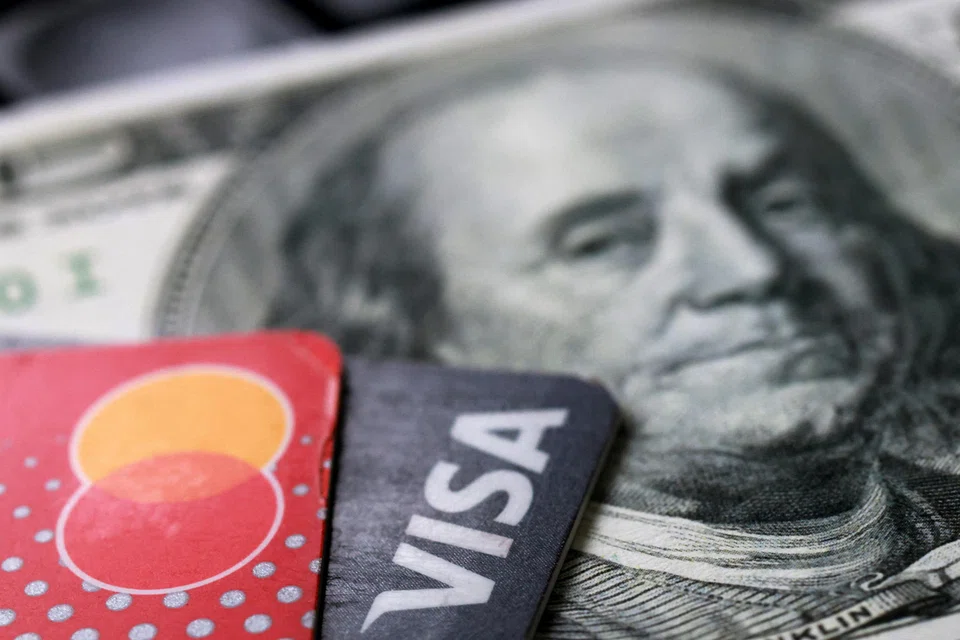
[NEW YORK] A US judge granted preliminary approval to Visa’s and Mastercard’s revised US$38 billion settlement with merchants who accused the card networks of charging too much to process payments on their credit cards.
US District Judge Brian Cogan in Brooklyn, New York, said the settlement covering more than 12 million merchants was “fair, reasonable, and adequate”, and that he was likely to eventually grant final approval.
He ruled on Tuesday (Jun 9), nearly two years after a different judge rejected a proposed US$30 billion settlement as too small.
Some groups, including the National Retail Federation, the world’s largest retail trade group, also opposed the new settlement and have planned further challenges.
The settlement announced in November was intended to end litigation that began in 2005, when merchants accused Visa, Mastercard and banks of conspiring to violate US antitrust laws, including through the collection of swipe fees.
Swipe fees will be cut
Also known as interchange fees, swipe fees totalled US$118.8 billion for Visa and Mastercard in the US in 2025, up from US$111.2 billion in 2024 and US$25.6 billion in 2009, the Merchants Payments Coalition said.
The average fee was 2.36 per cent.
Visa and Mastercard agreed to lower swipe fees by 0.1 percentage point for five years, while standard consumer rates would be lowered to no more than 1.25 per cent for eight years.
Merchants could also choose whether to accept cards in distinct categories: commercial cards, premium consumer cards – including the popular rewards cards that dominate the card market – and standard consumer cards.

That provision would effectively end the longstanding “Honor All Cards” rule requiring merchants to accept all Visa and Mastercard cards or none.
Merchants also received more options to impose surcharges on customers.
Visa shares rose 1.7 per cent on Tuesday, while Mastercard shares rose 2 per cent.
More objections predicted
In separate statements, the National Retail Federation and the National Association of Convenience Stores (Nacs) said the revised settlement failed to address a “broken” credit card market.
Doug Kantor, the general counsel of Nacs, predicted “many more objections” will be filed.
Objectors said merchants would still pay too much to accept rewards cards and be required to “honor all issuers” in a given network, meaning they could not accept one bank’s cards and reject those of another.
Cogan said many objections had merit, but the settlement did not need to be perfect.
“The objectors identify several things that they want to do but can’t (such as rejecting cards and surcharging at the level of the issuer), and that they theoretically can do but won’t (including rejecting premium cards),” he said.
“But the question is not whether the amended settlement constitutes the best possible recovery, end stop – it’s whether the amended settlement constitutes the best possible recovery in light of what can be gained and lost through trial.”
Other objectors included Walmart and the Merchants Payments Coalition. Neither immediately commented.
Nobel economist says consumers could benefit
The card networks welcomed Cogan’s decision. Visa said the settlement gives merchants more flexibility in accepting payments, while Mastercard said the accord “balances the interests of all parties”.
Supporters of the settlement involved the Electronic Payments Coalition, the members of which include the card networks, and large issuers such as the Bank of America, Capital One, Chase and Citibank.
Two experts hired by the plaintiffs, Nobel Prize-winning economist Joseph Stiglitz and University of Washington professor Keith Leffler, said the changes could save merchants US$38 billion by 2031 and provide US$224 billion of benefits overall, including to consumers.
The US$30 billion settlement would have lowered swipe fees by 0.07 percentage point over five years and also allowed more surcharges.
In rejecting that accord in June 2024, US District Judge Margo Brodie said fees would have still been above where they were while in the absence of any antitrust violations, and merchants would remain stuck with the “Honor All Cards” rule. REUTERS
Decoding Asia newsletter: your guide to navigating Asia in a new global order. Sign up here to get Decoding Asia newsletter. Delivered to your inbox. Free.
Share with us your feedback on BT's products and services
TRENDING NOW

DBS, OCBC, UOB rout lops billions off STI as inflation, rate concerns spook investors

Grab CEO’s wife Chloe Tong on life with Anthony Tan and finding her purpose

OCBC sheds S$8 billion in value as shares close nearly 6% down; analysts cautious on banks

Deal between tycoon friends sparks scrutiny of Philippine power sector

