Wall St rallies on Fed rate hike before pulling back on Powell-Trump spat
THERE were hardly any surprises when the US Federal Reserve raised interest rates on Wednesday, but the reality of rising rates still weighed on US stocks.
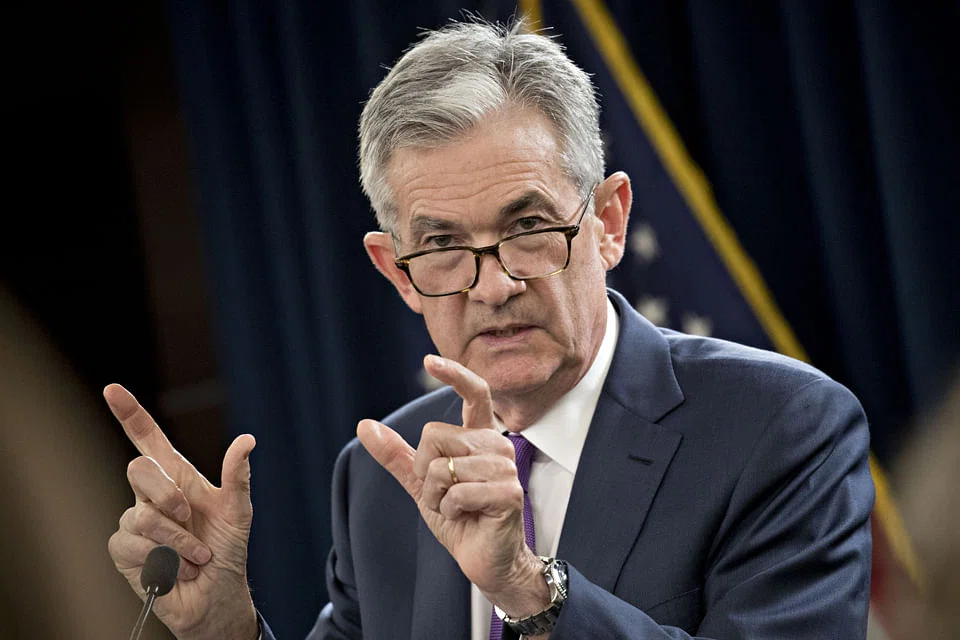
Subsequent press conferences from Fed chairman Jerome Powell and US President Donald Trump represented the closest thing the central-banking world has ever seen to a rap battle.
In a clearly telegraphed move, the Fed raised the benchmark overnight Fed funds rate by a quarter of a percentage point to between 2 per cent and 2.25 per cent, the eighth hike of the current cycle.
Mr Powell and the rate set a steady course for future rate hikes, leaving the "dot plot", or planned rate hikes more or less unchanged.
"It's clearly a good environment for equity investors," said James Ragan, director of wealth management at brokerage D A Davidson. "Clearly the Fed is seeing strength in the economy. Inflation has risen this year but seems to have stabilised since earlier meetings this year."
Indeed, stocks initially rallied after the Fed's policy statement and the Dow Jones Industrial Average rose more than 100 points to verge on new record highs.
Only when Mr Powell began answering questions at a press conference in the wake of the meeting did the shine come off the stock market.
By the end of the session, the blue-chip Dow had fallen more than 100 points. The mood change may have been related to Mr Powell's acknowledgment that tariffs would not be good for the US economy over the long term. Trade-sensitive sectors, including raw materials and industrials, were among the biggest losers on the session.
But the main impetus seemed to be the rate hike itself. While bond yields gave back some of their recent gains, the yield on the 10-year Treasury note, the benchmark for many consumer loans, remained above 3 per cent. Shares of utilities, which are sensitive to rising interest rates, fell sharply.
Mr Trump spoke at a press conference of his own shortly after Mr Powell's, and the two formed something of an economic duel.
They concurred on the current strength of the US economy but differed sharply on the risks to the growth outlook.
Mr Trump stated flatly that the trade dispute was not having an impact on the US economy. Perhaps irked by Mr Powell's comment on tariffs, which are a major tool in the administration's trade negotiations, Mr Trump rounded on the Fed.
"Unfortunately they just raised interest rates a little bit because we're doing so well," Mr Trump said. "I'm not happy about that."
The Fed was designed to be an independent body with complete control over the money supply. In modern times, presidents have recognised the independence of the Fed by limiting their interests to fiscal policy and refusing to comment on monetary policy.
If market participants feared political interference in the Fed, it could rattle global markets. For now, Mr Trump's comments are viewed as little more than hot air.
The president's analysis that higher interest rates could slow economic growth echo some strategists' warnings, however.
In a recent note titled Great Bull Dead, strategists at brokerage Bank of America Merrill Lynch Global Research recently predicted that the end of the Fed's accommodative policy (Mr Powell struck the phrase from the latest statement) would mean the end of "excess returns" on the stock market.
"Until this Fed hiking cycle ends we suspect absolute returns from financial assets will remain slim and volatile," the strategists warned.
Mr Powell's warning about the risks presented by tariffs also has its share of supporters on Wall Street.
The trade war has already taken a toll on some US and Chinese industries. On Wednesday, The Wall Street Journal reported that expected losses for grain farmers will outweigh the aid that the Trump administration has granted to soften the blow of Chinese tariffs on soybeans and other agricultural products.
One brokerage said the recent selloff in semiconductor stocks, sparked by a warning from Micron about inventory backlogs at some customers, could also be related to the trade war.
"We also believe there is a broader inventory build taking place as a result of the ongoing trade tensions with China," said analysts at brokerage Morgan Stanley in a research note.
"We have always viewed this skirmish as a bigger issue for global supply chains rather than top line risk. Companies are building inventory as a means to protect against this potential disruption which may be exaggerating orders in the near term. If so, there should be a payback perhaps as soon as the fourth quarter."
It's still unclear when or if the impact of tariffs and/or rising interest rates will be enough to cause an economic or stock-market slowdown.
Should that happen, though, both Mr Powell and Mr Trump will surely have different theories on whose fault it was.