

Warnings as South-east Asia's biggest economies ease Covid-19 curbs
 Add BT as a preferred source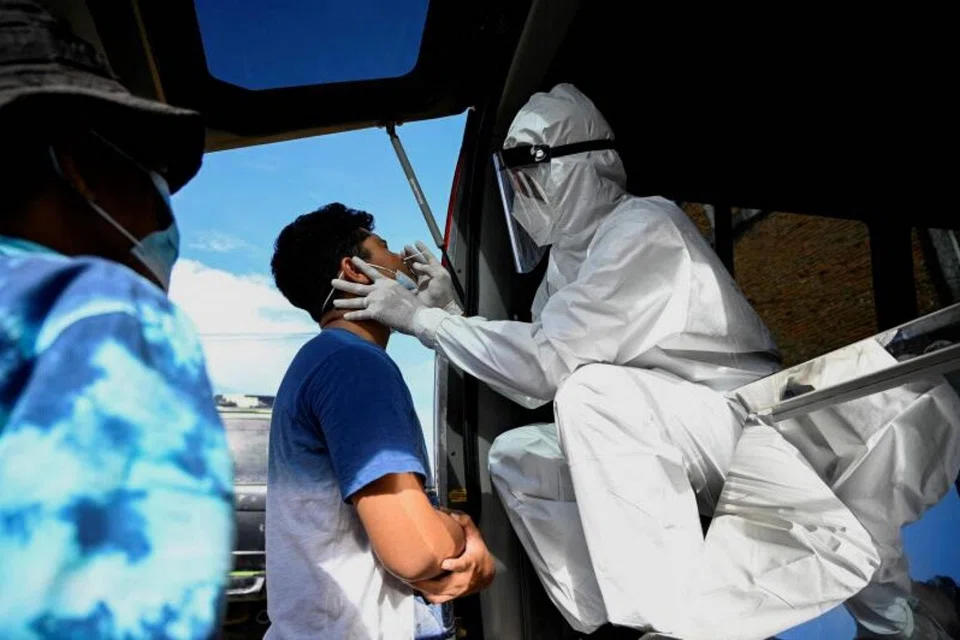
Bangkok
AS Indonesia and Thailand start to ease Covid-19 curbs after seeing case numbers fall, health experts say cases of new infections could rise again with vaccination rates still low.
After containing the coronavirus better than much of the world last year, South-east Asia has turned into a global epicentre in recent months with the arrival of the virulent Delta variant. Although case numbers are still rising fast in most of the region, Indonesia and Thailand, which have its largest economies, have started to lift curbs on dine-in restaurants and shopping malls to ease the economic pain of their lockdowns.
Indonesia reported 10,534 new cases on Tuesday, five times fewer than its peak in mid-July, while Thailand reported 14,802 new cases on Wednesday, down 37 per cent from its mid-August peak.
However, experts said relaxations carried dangers with a low level of vaccination and a shortage of testing, with rates of positive tests often above the 5 per cent recommended by the World Health Organisation (WHO).
"We are definitely concerned around the reopening without meeting all the criteria proposed by the WHO," Abhishek Rimal, Asia-Pacific emergency health coordinator at the International Federation of Red Cross and Red Crescent Societies, told Reuters. "Now with the Delta variant, which is highly transmissible, and the low vaccination rate, we could very well see a surge of Covid-19 in days to come."
Indonesia has recently had a positive test rate of 12 per cent and Thailand 34 per cent.
"Surveillance is not that great, we still need to be careful," said Tri Yunis Miko Wahyono, a University of Indonesia epidemiologist.
Indonesia has recorded more than four million coronavirus cases in total and more than 133,000 deaths from Covid-19 since the start of the pandemic. Thailand has reported 11,841 deaths and 1.2 million cases.
The two countries both have first vaccination rates at around 30 per cent with Indonesia having fully vaccinated 17 per cent and Thailand 11 per cent. Their capitals, Jakarta and Bangkok, have much higher levels of vaccination.
In Jakarta and some areas on the populous Java island, restaurants inside shopping malls could have a 50 per cent dine-in capacity, and shopping malls could stay open until 9pm, while factories are permitted to operate at 100 per cent capacity.
Bangkok and 28 other provinces listed as having the most severe outbreaks can similarly reopen dine-in restaurants at a capacity between 50 per cent to 75 per cent, with opening hours capped at 8pm, the same as shopping malls.
"The situation is getting better because many people are getting vaccinated and they are being more cautious," said restaurant customer Orrapin Peenanee, queuing in Bangkok.
The economic benefits of easing lockdowns were understandable, said Dale Fisher, a senior infectious disease expert at the National University Hospital in Singapore, but he stressed that they also must vaccinate their citizens faster.
"As you ease off the lockdowns, how much sort of punishment can you take before you have to bring a lockdown back in and be stronger? The answer's in the vaccine," he added. REUTERS
Decoding Asia newsletter: your guide to navigating Asia in a new global order. Sign up here to get Decoding Asia newsletter. Delivered to your inbox. Free.
Share with us your feedback on BT's products and services
TRENDING NOW

The retirement advice that worries me the most
Showdown at Tanglin Club sees new rival slate elected to general committee

Stocks to watch: Mapletree Industrial Trust, The Hour Glass, UI Boustead Reit, Boustead Singapore, Aspial Lifestyle

‘I feel so stupid’: How young Indonesians get stuck on the debt treadmill

