Warnings flash for China money exodus after record outflows of over US$840b
Households sitting on US$85.2b of foreign currency, according to latest data till last Nov
Shanghai
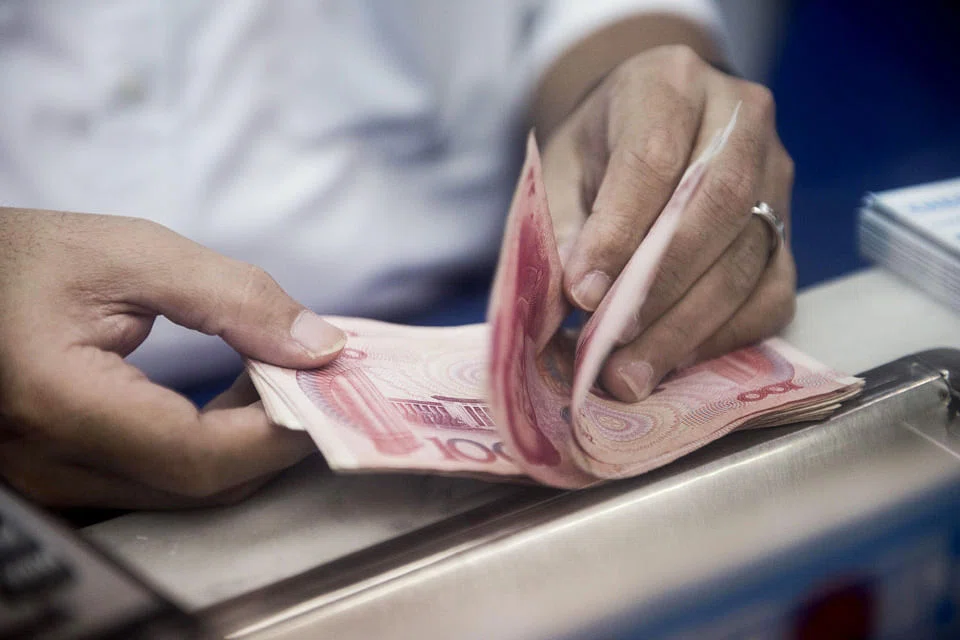
KAREN Chou, a 32-year-old bank worker in Beijing, had a New Year's resolution: sell yuan, buy dollars.
"I'm not optimistic about China's economy," she said, after rushing to exchange some of her savings for US currency as part of heightened demand at some Chinese bank branches in the first weeks of 2016.
Ms Chou first made her call on the yuan after a surprise devaluation last August. Renewed dollar purchases by the likes of Ms Chou highlight China's struggle to restore confidence in the currency - and further swell a record build-up of foreign-currency holdings by Chinese citizens.
The risk for the central bank is that households' currency stashes may join outflows of capital that threaten to destabilise the economy as businesses and individuals bet against the yuan, which is forecast to further devalue this year. The Shanghai Composite Index slid into a bear market on Friday, closing lower than during last year's rout.
More than US$840 billion exited China in the first 11 months of last year in an unprecedented exodus, according to a Bloomberg gauge. Suspicious patterns in export and import data for December, released this week, fuelled speculation that money is flowing out disguised by phony trade invoices - a practice that has happened before.
The "game changer" will be if China suffers broad-based capital outflows, including from households, rather than tactical moves such as companies reducing their dollar liabilities, said Jean-Charles Sambor, Asia-Pacific regional director at the Institute of International Finance. "This would be a significant problem for China and the rest of the world."
While citizens are officially limited to converting US$50,000 per person a year, a range of tools exist for getting around that restriction, from pooling quotas to transactions through so-called underground banks.
Analysts at JPMorgan Chase & Co said in a report last week that outflows have the potential to become "practically boundless" as they broaden, citing examples such as larger foreign direct investment by China and foreign investors exiting Chinese equities and bonds. More than US$110 billion left China last November, the most recent month for which data is available, according to the Bloomberg index, which also takes into account decisions by exporters and direct investment recipients to hold funds in dollars.
It's difficult to gauge demand for dollars from people lined up at banks, since they can convert currency online or from their mobile phones. In addition, demand can increase at the start of each year ahead of the Chinese New Year holiday period and because individuals get fresh annual quotas for exchanging currency.
Still, at a branch of China Merchants Bank Co in Shanghai, the retail business head - who only gave his family name, Shen - said this week that demand for dollars was now the strongest in his two years in the job. No comment was available from China Merchants on Thursday.
"There are far more people who want to convert the yuan into the dollar now than last year," said a Bank of China branch manager who gave his family name, Zhu. "Most of these people have plans to use the money, either buying a property overseas or for their children's education." A Bank of China press officer declined to comment.
The topic has attracted the attention of the state-run Xinhua News Agency, which cited analysts and traders saying that most families probably don't need to buy dollar assets because the risks and returns don't add up for them.
Households are sitting on US$85.2 billion of foreign currency, according to the most recent data, which runs to November last year. The amount increased by US$13 billion over the first 11 months of 2015 - similar to the total increase for the previous five years combined.
"Over the past one or two years, Chinese households and companies have been increasing their foreign-currency deposits, and that will add potential pressure on capital outflows," said Lu Wenjie, an equity strategist with UBS Group AG in Shanghai.
Customs data released on Wednesday showed a spike in December in trade with Hong Kong.
"Any time there is a spike in Hong Kong exports, you go through the list of usual suspects - and fake invoicing is always up there," said Fraser Howie, co-author of Red Capitalism: The Fragile Financial Foundation of China's Extraordinary Rise. "Why would you not be suspicious?"
China has been tightening up on channels for outflows since last year, capping withdrawals at overseas automated teller machines and telling banks to watch out for "ants moving their house" - the term used in Chinese to refer to people using multiple transactions to move money abroad, sometimes using friends' or relatives' quotas.
On Thursday, Hong Kong's Ming Pao newspaper reported that China's regulators had stepped up checks on individuals' use of quotas, prohibiting the "borrowing" of quotas from other individuals. The newspaper cited lawyers dealing with investment and immigration.
While returns are low on foreign-currency bank deposits - Bank of China pays 0.05 per cent on dollar deposits, compared with 0.3 per cent for yuan - some Chinese banks are introducing higher-yield, dollar-denominated investment products to retain customers.
Last August's devaluation contributed to the yuan posting its biggest annual decline against the dollar in more than two decades in 2015, with uncertainty over the People's Bank of China's (PBOC) exchange-rate policy contributing to turbulence in global markets.
The onshore yuan will drop by 1.7 per cent to 6.7 a dollar by the end of 2016, according to analysts' median forecast in a Bloomberg survey.
The central bank has taken on speculators this year, intervening to trigger a spectacular and temporary leap in yuan borrowing rates in Hong Kong this week as the authorities worked to bring together the onshore and offshore yuan rates to limit arbitrage. China's foreign-exchange regulator verbally instructed some banks to limit yuan outflows and reduce offshore yuan positions and liquidity, according to people with knowledge of the matter.
The government's efforts haven't restored the confidence of Ms Chou, the bank worker, who said she and her relatives are sitting on hundreds of thousands of US dollars, money that may go towards travel abroad and overseas insurance policies.
"I'm buying the dollars that I will need over the next few years now, as the yuan's depreciation isn't done yet," she said. Bloomberg