

Warren Buffett steps down as Berkshire chair and names son to replace him
He will remain on Berkshire’s board as chair emeritus
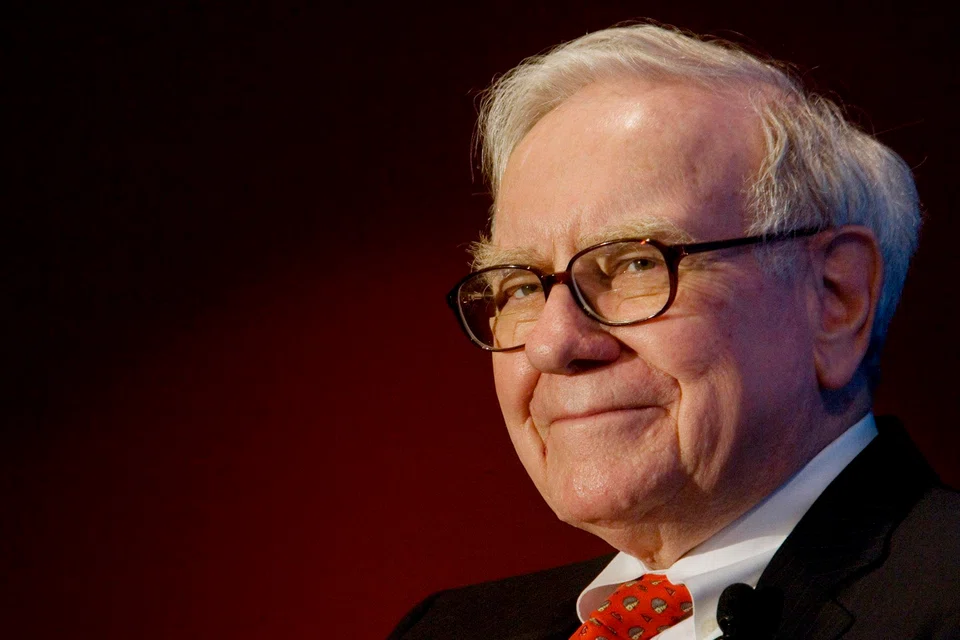
[LONDON] Warren Buffett, who built one of the most successful investment firms in history and became a sage of American capitalism, is stepping down as chair of Berkshire Hathaway, the company said on Friday (Sep 18).
Buffett, who turned 96 on Aug 30, will remain on Berkshire’s board as chair emeritus, effective immediately. His older son, Howard Buffett, will become chair under the company’s succession plan.
“Serving as your chairman has been the privilege of a lifetime, and I have never taken your trust for granted,” Warren Buffett wrote on Friday in a letter to Berkshire shareholders.
The move is the latest step in Berkshire’s long-planned leadership transition. Buffett stepped down as chief executive officer of the company at the end of 2025, and a longtime lieutenant, Greg Abel, took over.
“Father Time always wins,” Buffett wrote in his letter. “He has, however, been generous with me.”
In 1965, when a 34-year-old Buffett first took control of Berkshire, the company was a failing textile manufacturer in Massachusetts. Over the decades, he transformed it into a trillion-dollar powerhouse through a number of acquisitions, often of businesses in unflashy sectors like metal aerospace castings or food distribution.
Berkshire has amassed a cash hoard of more than US$360 billion, and each move it makes with its money is closely watched by investors.
Crucial to Buffett’s success was his mastery of what is known as value investing: ignoring fads and seeking undervalued companies to back long term.
He broke it down into a much-repeated quote: “We simply attempt to be fearful when others are greedy and to be greedy only when others are fearful.”

Today’s Berkshire, now based in Omaha, Nebraska, Buffett’s hometown, runs a wide-ranging empire, whose assets include insurance giant GEICO, BNSF railroad, a major electricity producer and private jet service NetJets.
Just as notably, it oversees an enormous investment portfolio with stakes in blue chip companies such as Apple and Bank of America. It is the largest shareholder in corporate giants including American Express and Coca-Cola.
Those decades of investing success earned Buffett a nickname – the Oracle of Omaha – and a fortune that had made him one of the world’s wealthiest men. (His net worth on paper is estimated to be US$145 billion, according to Bloomberg.)
He also turned an investment offer by Berkshire into the equivalent of a Good Housekeeping seal of approval, an imprimatur that both corporate executives and government officials sought during the 2008 financial crisis.
Buffett has made his share of missteps as well, including backing the merger of Kraft and Heinz, a deal for which he has since said he overpaid. Still, Berkshire’s share price had skyrocketed an astounding 5.5 million per cent from 1965 to 2024.
Buffett’s annual letters to Berkshire shareholders, which mixed investment advice with folksy Midwestern aphorisms, observations about the world and sometimes politics, were widely influential across Wall Street and Main Street.
Tens of thousands of peopled flock to Nebraska every year to ask him questions at Berkshire’s annual shareholders’ meeting, long described as a “Woodstock for capitalists”.
“Warren’s impact on Berkshire and its owners is without parallel in the history of American business,” Abel said in a statement Friday.
Since Abel, who previously oversaw Berkshire’s noninsurance operations, took charge, there has been some scrutiny.
“Warren is obviously a hard act to follow,” Abel wrote in his first letter to shareholders in 2026.
Two years after Charles T Munger, Buffett’s longtime business partner and comic foil, died in 2023, Buffett announced his intention to step down as CEO.
Berkshire’s leadership transition had already been underway. Ted Weschler had been in place for several years as a steward of some Berkshire investments. And Abel had been confirmed as Berkshire’s heir apparent.
Nine months into his tenure as CEO, Abel has largely maintained Buffett’s strategy. He has repurchased billions of Berkshire’s shares and struck one big acquisition: the US$6.8 billion takeover of homebuilder Taylor Morrison.
“My expectations for him were sky high from the start, and he has exceeded them,” Buffett wrote of Abel in the shareholder letter on Friday.
“He has been making the decisions that matter for some time now, and I have not had to think twice about any of them.”
For years, Buffett had planned on pairing whomever would succeed him as CEO with Howard Buffett, his second child, as chair.
The younger Buffett, 71, has been a Berkshire director since 1993. Warren Buffett’s daughter, Susan, is also on the company’s board.
Howard Buffett’s primary job, Warren Buffett has said over the years and again on Friday, was to protect Berkshire’s “culture and values – both worth more than anything on our balance sheet”.
Warren Buffett added in his shareholder letter, “Think of Howard as a policy the shareholders own and hope never to claim against.” NYTIMES
Decoding Asia newsletter: your guide to navigating Asia in a new global order. Sign up here to get Decoding Asia newsletter. Delivered to your inbox. Free.
Share with us your feedback on BT's products and services
TRENDING NOW

DBS, OCBC, UOB rout lops billions off STI as inflation, rate concerns spook investors

Grab CEO’s wife Chloe Tong on life with Anthony Tan and finding her purpose

OCBC sheds S$8 billion in value as shares close nearly 6% down; analysts cautious on banks

Deal between tycoon friends sparks scrutiny of Philippine power sector

