

‘We didn’t want to overthrow government’, says Prigozhin in first comments since mutiny
RUSSIAN mercenary leader Yevgeny Prigozhin said on Monday (Jun 26), in his first public comments since ending a one-day mutiny by his Wagner force on Saturday, that it was his plan to register a protest at the ineffectual conduct of the war in Ukraine, not to overthrow the government in Moscow.
Prigozhin spoke in an 11-minute audio message released on the Telegram messaging app.
He said his aborted revolt was aimed at saving his embattled mercenary outfit and not at ousting the Russian authorities.
“We went to demonstrate our protest and not to overthrow power in the country,” Prigozhin said after calling off the Wagner march at the weekend.
Prigozhin was last seen on Saturday smiling in the back of an SUV as he left Rostov-On-Don, the southern city his men captured, before he ordered them to stand down.
Prigozhin and his fighters had been offered immunity from prosecution in return for their withdrawal. But state news agencies reported on Monday that the criminal case against Prigozhin remained open and was still being pursued.
Senior Russian officials have rallied around President Vladimir Putin on Monday, while state media said authorities were still investigating the mercenary leader whose weekend mutiny appeared to be a major threat to the Russian leader’s 23-year-old rule.
On the first working day after fighters of the powerful Wagner Group seized a military headquarters and marched on Moscow, officials still gave no details about the deal that abruptly ended the mutiny.
Mikhail Mishustin, who leads Putin’s Cabinet as his appointed prime minister, acknowledged that Russia had faced “a challenge to its stability”, and called for public loyalty.
“We need to act together, as one team, and maintain the unity of all forces, rallying around the president,” he told a televised government meeting.
There was no word about the revolt from Putin himself, who had said on Saturday the rebellion put Russia’s very existence under threat and vowed to punish those behind it. The Kremlin released a video from him congratulating participants of an industrial forum, containing no indication of when it had been filmed.
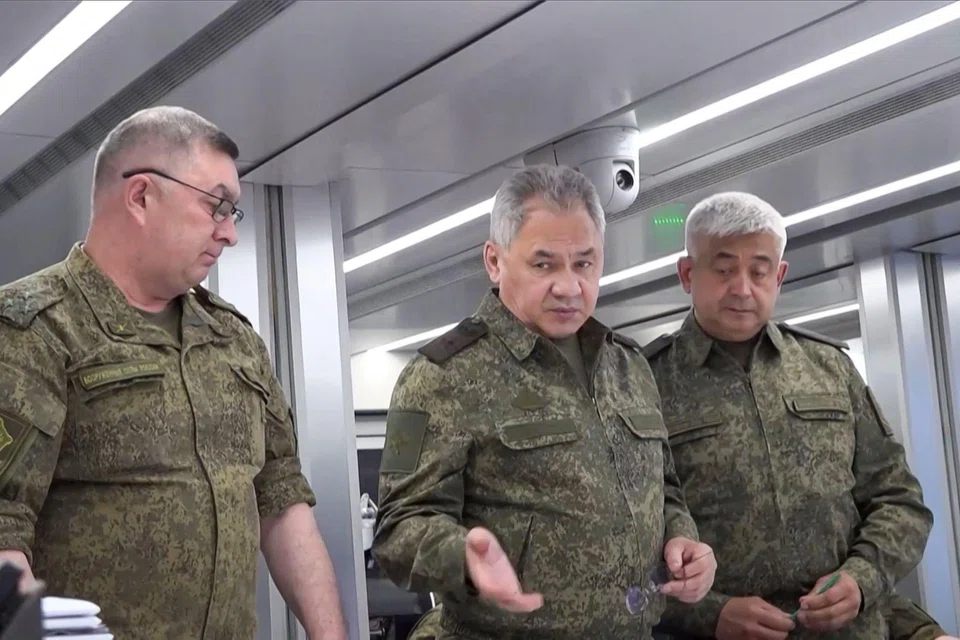
In another move apparently intended to convey normality, authorities released video showing Defence Minister Sergei Shoigu. The mutineers had demanded he be sacked, leading to speculation that his removal might have been part of the arrangement that ended the revolt.
Russia’s national Anti-Terrorism Committee said the situation in the country was stable. Moscow Mayor Sergei Sobyanin, who had told residents to stay indoors on Saturday as the mutinous fighters raced to within a few hundred kilometres of the capital, said he was cancelling a counter-terrorism security regime.
Saturday’s extraordinary events left governments, both friendly and hostile to Russia, groping for answers to what happened behind the scenes and what could come next.
Russia’s ally China, where a senior Russian diplomat visited on Sunday, said it supported Moscow in maintaining national stability. Ukraine and some of its Western allies said the turmoil revealed cracks in Russia.
“The political system is showing fragilities, and the military power is cracking,” European Union foreign policy chief Josep Borrell told reporters in Luxembourg as he arrived for a meeting with ministers from across the 27-member bloc.
German Foreign Minister Annalena Baerbock said the invasion of Ukraine, which Putin calls a “special military operation” to counter threats, was destroying Russia, and the West would continue to back Kyiv.
Prigozhin, whose men had been welcomed on the streets of Rostov, had demanded that Defence Minister Shoigu and the army’s top general be handed over to him. A defence ministry video on Monday showed Shoigu flying in a plane with a colleague and hearing reports at a command post with no indication of when or where it had been filmed.
Valery Gerasimov, the Chief of the General Staff, has also not been seen in public since the events. The Kremlin said the question of personnel changes was the sole prerogative of the president and could hardly have been part of any deal.
Foreign Minister Sergei Lavrov said Russia’s intelligence services were investigating whether Western spy agencies played a role in the aborted mutiny, the TASS news agency reported, without giving any evidence.
Nato said the events showed the scale of the Kremlin’s strategic mistake in waging war on Ukraine, and that the Western defence alliance would not be intimidated into ending its support for Ukraine.
Monday was declared a non-working day in Moscow to allow time for things to settle, and there was little evidence of increased security in the capital.
US Secretary of State Antony Blinken, who spoke with G7 and EU counterparts on Saturday, suggested the turmoil could take months to play out.
Ukranian President Volodymyr Zelenskiy discussed the events on Sunday with US President Joe Biden and Canadian Prime Minister Justin Trudeau, who expressed support.
Prigozhin, 62, a former Putin ally and ex-convict whose forces have fought the bloodiest battles of the 16-month war in Ukraine, defied orders this month to place his troops under Defence Ministry command.
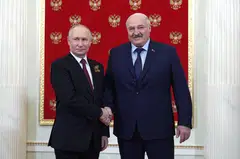
The Kremlin said on Saturday he had agreed to go to Belarus under a deal to end his mutiny, mediated by Belarus President Alexander Lukashenko.
Ukraine hopes the chaos caused by the mutiny will undermine Russia’s defences as Kyiv presses on with a counteroffensive, begun earlier this month, to recapture territory which Moscow claims to have annexed.
On Monday, Ukraine said its forces had recaptured the small southern village of Rivnopil, the ninth village it says it has retaken since launching the counteroffensive, and the first in more than a week. Russia said it had foiled Ukrainian attacks. REUTERS,AFP
Decoding Asia newsletter: your guide to navigating Asia in a new global order. Sign up here to get Decoding Asia newsletter. Delivered to your inbox. Free.
Share with us your feedback on BT's products and services
TRENDING NOW
First Resources blames El Nino, outside fires for Kalimantan hotspots amid haze scrutiny
High Court rules against Julius Baer’s Singapore trust arm in US$50 million family trust dispute
Singapore key exports jump by higher-than-expected 68.4% in September, led by non-electronics
MSCI proposes downgrading Indonesia to standalone market status

