Weed backlash grows in Thailand as kids turn to cannabis
The move to decriminalise the drug is sparking a boom in recreational use that is spreading to children
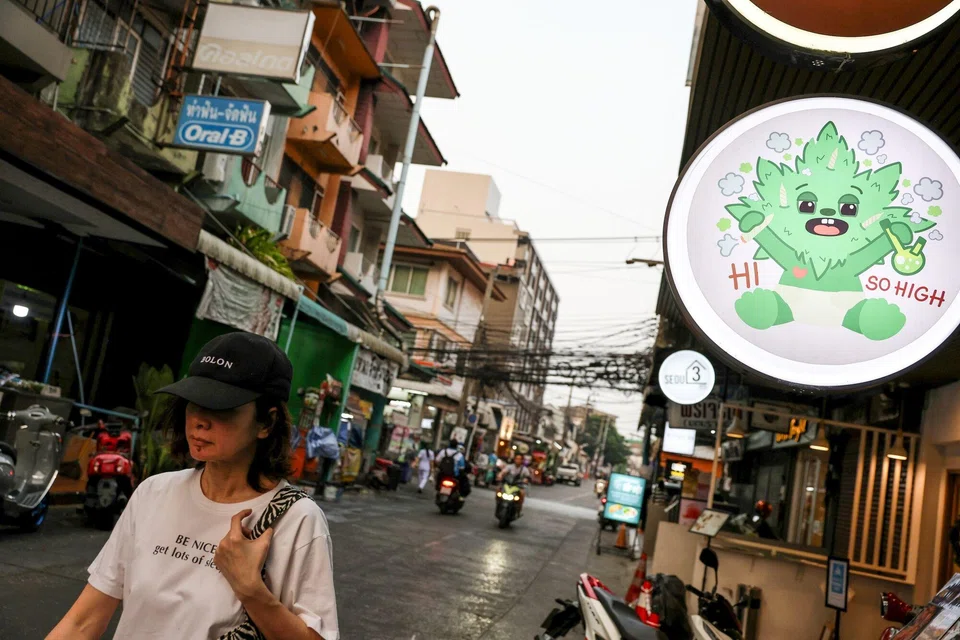
[BANGKOK] It was billed as a saviour to Thailand’s post-pandemic slump, but the runaway cannabis industry has instead sparked a deep domestic backlash that could lead to the plant being criminalised once again after February’s election.
Thailand became the first country in Asia to decriminalise cannabis in 2022. The move was widely supported, and the people were told that the country would emerge as a regional hub for medical cannabis that would expand the health and tourism sector and create a new cash crop for farmers.
But within months, it was clear that the policy had instead sparked a boom in recreational use that spread to children.
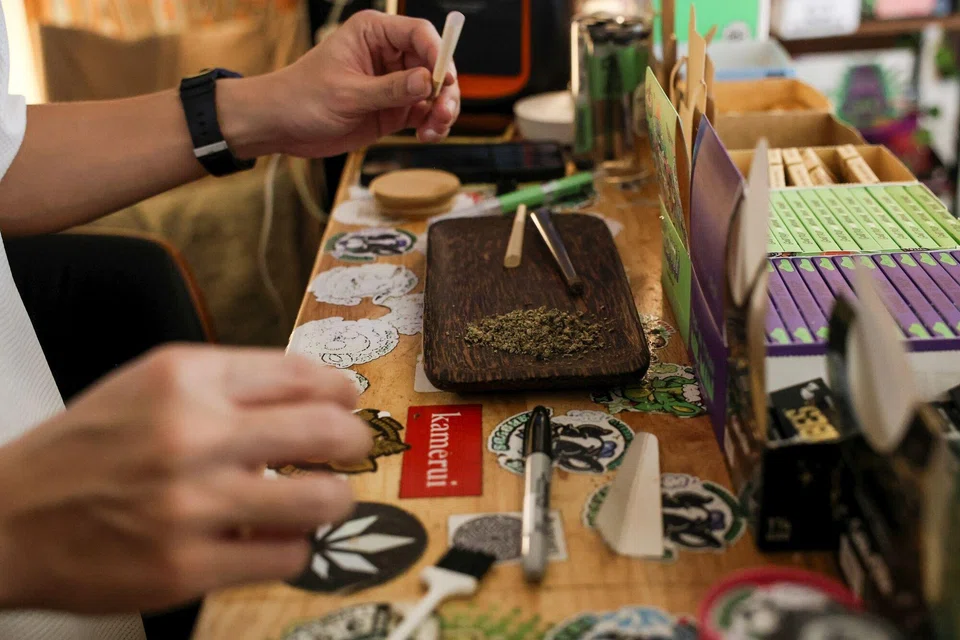
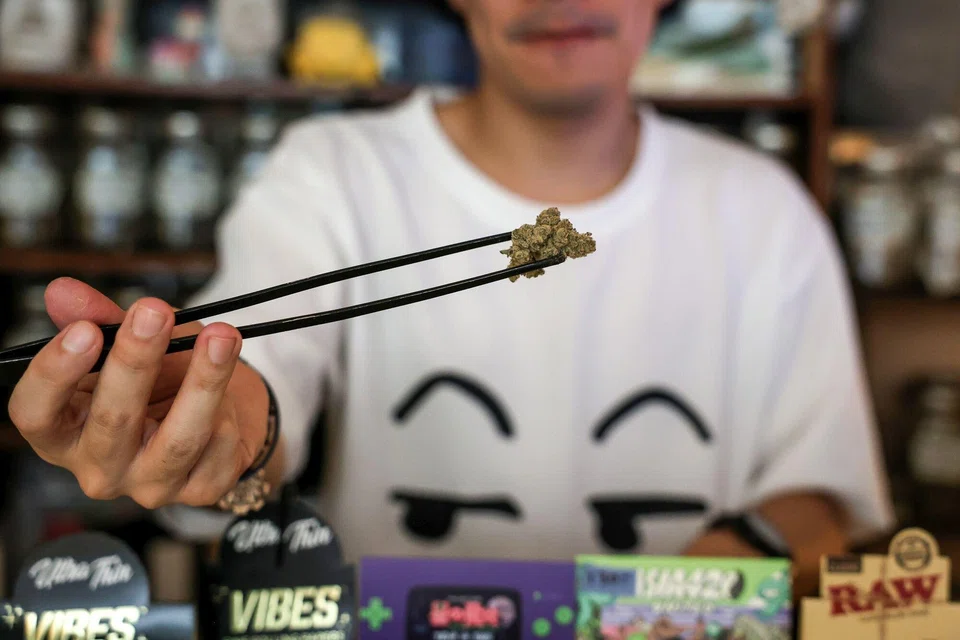
Thousands of shops selling ready-rolled spliffs and fruit-flavoured gummies mushroomed across the country, and the smell of cannabis on city streets became as ubiquitous as grilled pork.
Doctors warned of a spike in hospital admissions, tourism groups feared the loss of high-spending visitors, and foreign governments complained of a rise in drug smuggling.
Studies have also shown growing recreational use among schoolchildren, a major point of contention among many Thais.
Yodsakorn Khunphakdee, coordinator of the Youth Network Against Cannabis, said: “It got out of control and has had a huge negative impact, especially on children and young people under 25, whose brains are still developing.”
The group submitted a petition to the Public Health Ministry in 2025, with 200,000 signatories urging decriminalisation to be overturned.
Although the authorities said the policy was designed for medical use, the lack of clear regulations created a grey area.

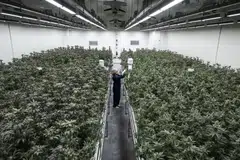
Dispensaries with flashy neon signs dished out the products freely, even after new rules established in 2025 mandated the need for prescriptions.
Patraporn Kinorn, a doctor specialising in child psychiatry and addiction treatment, said she is seeing an increasing number of young patients addicted to cannabis.
Youths are self-administering the plant to treat depression, only to find their conditions worsen, she told attendees at a seminar about cannabis-induced illnesses in Bangkok earlier in January.
“The law may say that children are already protected, but the question is: is it enough?” she said.
Used more frequently for recreation
A study by the Thailand Development Research Institute published in 2024 showed that the number of people who used cannabis for recreational purposes rose nearly 10 times from 1.2 million in 2020 to 11.1 million in 2022.
Those who take the plant for medical reasons grew from 430,000 to just 540,000 during the same period.
Thapanawong Ladkaew, a 38-year-old businessman and father of two, said the normalisation of smoking cannabis worried him as a parent.
He said that flea markets in his small, north-eastern town were openly selling it, and coffee shops had bongs on display.
“My kids were asking about this out of curiosity,” he said, suggesting recreational use should be limited to tourism and party hot spots such as Pattaya. “I certainly do not want my children to try cannabis.”
Ministry of Public Health hospitalisation data analysed by Bundit Sornpaisarn, a staff scientist at the Institute for Mental Health Policy Research in Canada, show that monthly cannabis dependence cases rose sharply – from an average of 162 in the year before decriminalisation to 447 the year after, and 837 the year after that.
The number of cases of cannabis-induced psychosis jumped by five times over the same timeframe.
As many began to question the costs of it to society, the tide of support changed: over two-thirds of Thais polled in 2024 wanted the plant reclassified as a narcotic, the National Institute of Development Administration said.
Left high and dry
The budding industry says it has been left high and dry by major political parties.
Noticeably silent about the issue on the campaign trail is the man who spearheaded decriminalisation – Prime Minister Anutin Charnvirakul.
Once hailed as the “Cannabis King”, he rose to political notoriety in the 2019 election for championing the drug for medical use and as a cash crop.
A deputy leader for his ruling Bhumjaithai Party told Bloomberg News that its cannabis policy had been “distorted heavily”, and was never intended for recreational purposes.
If the party returns to power after the Feb 8 vote, it would push for legislation to allow only for medical use without recriminalising it.
The reformist People’s Party and Pheu Thai Party, two other political parties leading in polls, however have indicated the plant would be back on the narcotics list – although the issue is not featured in their pledges.
“We are deeply disappointed, because the party that unlocked cannabis and our only political ally has now gone down a different path from ours,” said cannabis advocate Prasitchai Nunual, whose hopes have risen and fallen with each new government coalition. “There seems to be no future for an equitable cannabis law.”
Now Prasitchai is running for parliament, hoping to gain support for tighter regulations, including for recreational use.
Although his chances of driving the change in parliament are slim, it reflects the desperation rippling through the community of cannabis advocates and entrepreneurs.
‘No positive economic impact’
Nuttanan Wichitaksorn, a visiting research advisor at the Thailand Development Research Institute, said the policy yielded “no positive economic impact at all”, even though the industry had been tipped to be worth US$1 billion dollars by 2025.
In a study for the institute in 2024, he found out that only a quarter of 177 companies surveyed were profitable.
The lack of a business case is another reason political parties are ignoring the issue during election season, he concluded.
“It is not a hot issue any more. Now they see other things that are more exciting and get more votes,” he said.
The US pot industry has grown into a US$40 billion industry since California first legalised medicinal cannabis in 1996, with weed now legal in 24 states for recreational purposes and in 40 for medical use.
Porlnarong Panor, a home grower of premium-quality buds, says he may soon stop production at his small growing facility in Bangkok and close his dispensary because of the uncertainty.
After selling a Harley-Davidson and pouring his savings into grow lights and a dispensary, he feels betrayed.
“The people who unlocked it did not think things through from the start. They are the government now, and they still did not care,” said Porlnarong, referring to Anutin.
New rules that will soon require dispensaries to become licensed medical facilities and have a medical practitioner onsite are too costly for him to implement.
“They said everyone should be able to grow and sell, but now it is not for everyone,” he said. “Only those with big capital and certified farms can survive.”
The government said 7,000 out of 18,000 shops did not apply to renew their licences at the end of 2025 as a result of the tougher rules.
But some businesses remain optimistic that stricter regulations could elevate the industry by weeding out sub-standard stores.
The owners of Shaggy Buds, a dispensary in one of capital’s busiest commercial districts, said they planned to build a new store for regulatory compliance.
“I do not think 2026 is the beginning of the end for the industry,” said Nitikrist Attakrist, a co-owner. “It is actually an opportunity. If you could pass all the criteria, you would build a strong foundation for the future.” BLOOMBERG
Decoding Asia newsletter: your guide to navigating Asia in a new global order. Sign up here to get Decoding Asia newsletter. Delivered to your inbox. Free.
Share with us your feedback on BT's products and services