Wes Streeting resigns, setting stage for possible leadership challenge to Starmer
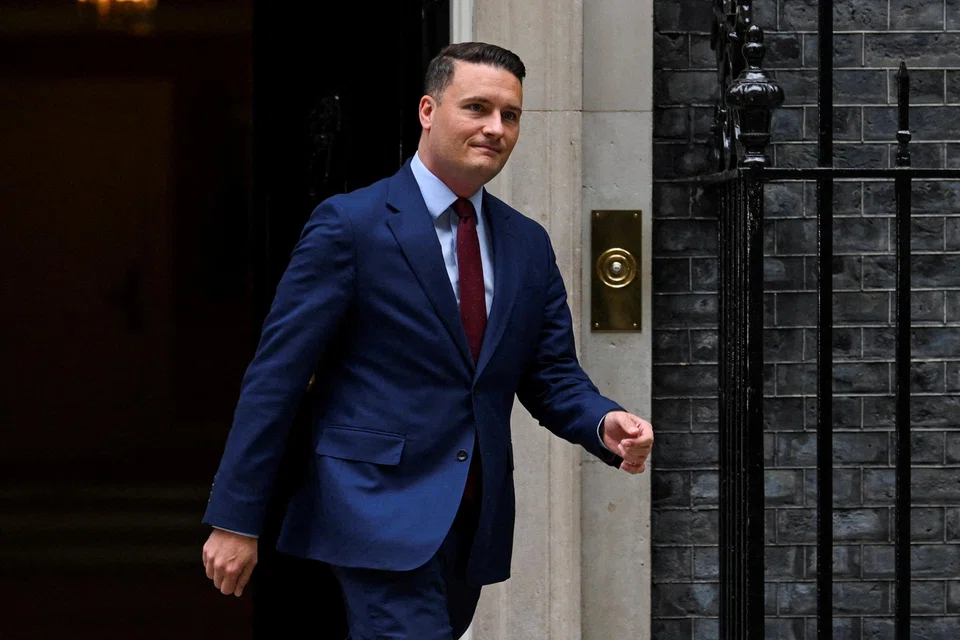
WES Streeting, the British health secretary, said on Thursday (May 14) that he was resigning from the government, setting the stage for him to potentially challenge Prime Minister Keir Starmer for the leadership of the Labour Party.
“Having lost confidence in your leadership, I have concluded that it would be dishonourable and unprincipled” to remain in the post, Streeting wrote in his resignation letter, which he posted to social platform X.
Streeting’s resignation ended days of speculation but left open the question of whether he had gathered enough support from his colleagues to officially trigger a leadership contest in the Labour Party.
Under the party’s rules, once a challenger has been endorsed by 20 per cent of Labour members of Parliament, a leadership election must take place. That would require him to get the support of 81 Labour lawmakers.
In his resignation letter, Streeting hinted that he expected a leadership election to take place but did not say he had yet assembled enough support for it to happen.
“It is now clear that you will not lead the Labour Party into the next general election and that Labour MPs and Labour Unions want the debate about what comes next to be a battle of ideas, not of personalities or petty factionalism,” he wrote, referring to members of the party. “It needs to be broad, and it needs the best possible field of candidates. I support that approach and I hope that you will facilitate this.”
Streeting’s actions could escalate months of doubt about Starmer’s leadership into a full-blown political crisis for the prime minister and his team.
On Tuesday, the prime minister had vowed to fight any challenge to his leadership and dared rivals in his Cabinet to run against him if they had the nerve to do so.
If Streeting does formally challenge the prime minister, other rivals inside the party could also jump into the race, hoping to emerge victorious and become prime minister.
SEE ALSO



Angela Rayner, the former deputy prime minister in Britain, could be one of them after announcing earlier on Thursday that she had been cleared of any wrongdoing in a case involving her failure to pay the correct rate of tax when she bought a seaside apartment.
Rayner is a popular politician on the left of the Labour Party and has been viewed in the past as a possible leadership candidate. But she has not said directly that she intends to challenge Starmer and voiced her support for another possible candidate, Andy Burnham, this week.
In a statement after the party’s dire election results last week, she said that “Labour exists to make working people better off. That is not happening fast enough, and it needs to change – now”.
Rayner resigned from the Cabinet in September after admitting that she had paid the wrong rate of tax on the purchase.
In an interview on Thursday, she said the tax agency had concluded that she had done so inadvertently. A spokesperson for the agency declined to comment, citing the confidentiality of personal tax records.
The possibility of a leadership clash plunges the Labour Party into a place it assured voters it would not be – a chaotic power struggle of the kind that consumed the Conservative Party for its final years in power.
When he was elected in the summer of 2024, Starmer promised stability and calm.
But saddled by a sluggish economy, the prime minister flip-flopped on a series of policy approaches, earning a reputation for weakness and indecision.
He was fiercely criticised for months for appointing Peter Mandelson to be ambassador to the United States despite knowing of Mandelson’s relationship with Jeffrey Epstein, the convicted sex offender.
It was last week’s elections that accelerated the political crisis for the prime minister. Labour candidates were defeated in local municipal elections across England, and were trounced in contests for the devolved parliaments in Scotland and Wales.
Taken together, it was the worst set of local elections for Labour in more than 100 years.
In a speech on Monday, Starmer said he took responsibility for the results, but insisted that resigning to address the anger and frustration expressed by voters would be damaging for the country.
“This hurts, not just because Labour has done badly, but because if we don’t get this right, our country will go down a very dark path,” he said in that speech. “So just as I take responsibility for the results, I also take responsibility for delivering the change that we promise for a stronger and fairer Britain that we must build.” NYTIMES
Decoding Asia newsletter: your guide to navigating Asia in a new global order. Sign up here to get Decoding Asia newsletter. Delivered to your inbox. Free.
Share with us your feedback on BT's products and services