What comes next in the Fed’s fight against inflation?
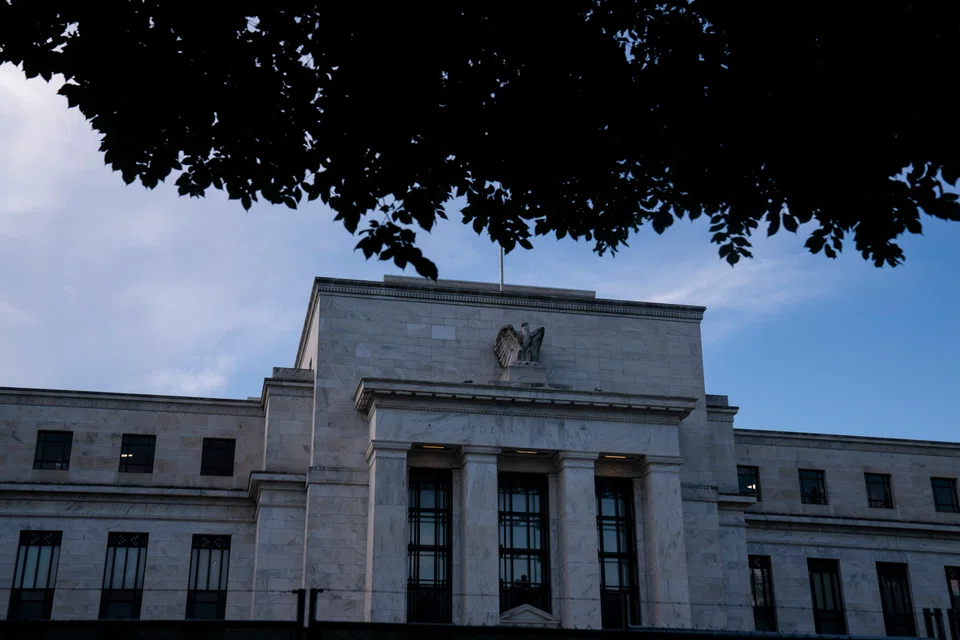
THE Federal Reserve is expected to deliver a third consecutive supersize interest rate increase this week as it wages its most aggressive fight against inflation since the 1980s – and it could signal even more to come.
Central bankers are widely expected to raise interest rates three-quarters of a percentage point at their meeting on Wednesday (Sep 21), and investors think there is even a small chance of a full percentage-point move.
But Wall Street is more focused on what comes next. Officials will release updated economic forecasts for the first time since June after their two-day meeting this week. Those are expected to show a more forceful path ahead for rates than Fed officials previously anticipated as rapid inflation continues to plague America. The question is just how much more assertive the Fed will be.
Central bankers have already raised interest rates considerably in an attempt to slow the economy and temper price increases. Business activity is slowing in response, but it is not falling off a cliff: Employers continue to hire, wages are rising, and inflation has remained stubbornly quick.
That has prompted officials to reinforce in speeches that they are serious about getting price increases under control, even if doing so comes at a cost to growth and the labour market. It’s an inflation-focused tone that many on Wall Street refer to as “hawkish.”
The economic projections could give policymakers the chance to underline that commitment.
“Things are not quite evolving as they had expected – they’re having trouble slowing the economy,” said Gennadiy Goldberg, a US rates strategist at TD Securities. “At the end of the day, there is very little they can do this week but sound hawkish.”
Jerome Powell, the Fed chair, will hold a news conference after the release, and is likely to echo his pledge late last month to do what it takes to wrestle prices lower.
That could be a painful process, Powell has acknowledged. Higher interest rates temper inflation by making it more expensive to borrow money, discouraging both consumption and business expansions. That weighs on wage growth and can even push unemployment higher. Firms cannot charge as much in a slowing economy, and inflation cools down.
If the Fed continues raising rates along the trajectory that economists and investors increasingly expect, the fallout could be painful. In the early 1980s, the last time inflation was as high as it is today, the central bank under Paul Volcker jerked borrowing costs sharply higher and mired the economy in a recession that sent joblessness to double-digit levels. Homebuilders mailed Volcker two-by-fours from buildings they could not build; car dealers sent keys from cars they could not sell.
This year’s rate increases are not as severe. The Fed has raised rates from near zero in March to a range of 2.25 per cent to 2.5 per cent, and this week’s expected move would take that to 3 per cent to 3.25 per cent. If the central bank raises rates as much as investors expect over the coming months, they will end the year well above 4 per cent. In the 1980s, rates jumped to about 19 per cent from 9 per cent.
Still, 4 full percentage points of rate increases in 10 months would be the fastest policy adjustment since Volcker’s campaign – and while Fed policymakers have been hoping that they can let the economy down gently and without causing a painful recession, economists have warned that a benign outcome is less and less likely.
The central bank has emphasised that it has an obligation to get inflation back in check.
The Fed has two economic goals: maximum employment and stable inflation around 2 per cent. While unemployment is very low, prices are increasing at more than three times the target rate based on the Fed’s preferred measure and remained stubbornly rapid and broad in August.
As inflation has lingered month after month, the Fed has repeatedly ramped up its response. It lifted rates a quarter point in March, a half point in May and three-quarters of a point at each of its past two meetings. Like investors, many economists think that a full percentage-point move is possible but not likely this week.
A big reason for raising rates quickly is to convince businesses and consumers that the central bank is committed to reining in rapid price increases. If workers begin to believe that inflation will last, they may push for higher wages to cover their costs, which employers then pass onto customers in the form of higher prices, setting off an upward spiral.
The Fed has recently received good news on that front: Inflation expectations have been edging down. That may be one reason the central bank will opt for a three-quarter-point move rather than a larger adjustment at this meeting, said Michael Feroli, chief US economist at JP Morgan.
That’s why Wall Street is likely to be especially attuned to the Fed’s interest rate forecasts for the rest of 2022 and beyond.
Those projections are often called a “dot plot” because the release shows individual policymakers’ anonymous forecasts arrayed as blue dots on a graphical plot. Officials forecast in June that they would lift interest rates to 3.4 per cent this year – a number they’ve nearly reached already, suggesting that the forecast is in for an upward revision.
They also projected that they would lift interest rates to 3.8 per cent next year before bringing them back down. As inflation has lingered, economists have come to expect that peak rate to move higher.
The new level will send a signal about how forcefully the central bank is planning to clamp down on the economy. Fed officials want to adjust policy with enough vigor to bring inflation under control but without overdoing their rate moves and inflicting more pain on the economy than necessary.
Striking the correct balance could be tough. Fed policy takes time to trickle through the economy. While rate increases have already begun to weigh on the housing market and growth overall is beginning to slow, the full impact of the central bank’s recent moves could take time to be felt.
“The faster the Fed hikes rates, the less likely a soft landing becomes,” Goldberg said, because officials are not waiting to see how their moves play out. “It’s very much akin to realising you missed your exit on the highway a mile back.”
Given that risk and how much rates have already moved this year, many economists expect that the Fed may soon want to slow down the increases.
Goldberg expects one more three-quarter-point move in November, then a pullback to a half-point move in December. Economists at Goldman Sachs wrote in a note this week that they expected the Fed to raise interest rates half a point at each of the next two meetings after this one, so that the federal funds rate will end the year in a range of 4 per cent-4.25 per cent.
The slowdown will come “because the funds rate will be at a higher level, concern about overtightening will eventually rise, and the drop in consumer inflation expectations should reduce concern about unanchoring,” the Goldman economists wrote.
But officials have repeatedly signalled that even after they slow and eventually stop rate increases, they plan to leave borrowing costs at a high and economy-restricting level for some time.
“Monetary policy will need to be restrictive for some time to provide confidence that inflation is moving down to target,” Lael Brainard, the Fed’s vice chair, said in a recent speech. NYTimes
Decoding Asia newsletter: your guide to navigating Asia in a new global order. Sign up here to get Decoding Asia newsletter. Delivered to your inbox. Free.
Share with us your feedback on BT's products and services