
What to know about Trump’s tariff refunds after the US Supreme Court decision
One of the biggest questions is whether companies will have to sue to get a refund from Customs and Border Protection
 Add BT as a preferred source
[NEW YORK] The scramble to get tariff refunds is on. But dissecting what could be a multi-year “mess” in the courts, as Supreme Court justice Brett Kavanaugh put it, is just getting started.
The Supreme Court’s Feb 20 decision struck down a large number of duties US President Donald Trump’s administration imposed under the International Emergency Economic Powers Act, or Ieepa, but it did not directly address refunds. It’s up to the lower US Court of International Trade to determine whether refunds will be available, how they will be doled out, and to whom.
One key question: Will companies that paid the tariffs automatically get a refund, or will importers have to sue at the trade court?
“Whether refunds extend automatically to all importers or are processed first through the existing Court of International Trade docket will depend on how the lower court structures the remedy,” said Mark Ludwikowski, chair of Clark Hill’s international trade practice.
Companies’ procedures for getting a refund could depend as well on whether they have already challenged the tariffs in court or administratively and whether the imports have already been “liquidated”, meaning US Customs and Border Protection has finalised the duty amount owed.
The government will pay refunds to the importer, not the final commercial customer and not individual consumers. Lawyers are also bracing for a spate of litigation from companies that bore the cost of passed-along tariffs but are not in line for refunds themselves and are now trying to get a share of the refund benefits.
Navigate Asia in
a new global order
Get the insights delivered to your inbox.
Much is uncertain about the refund process until the trade court weighs in, which will likely be soon, trade lawyers said.
“In practice, the Court of International Trade will address the refund process,” said Ludwikowski.
He predicted the trade court will clarify refund questions in the coming weeks, “given the volume of entries potentially affected”.
SEE ALSO

Here are some pivotal questions:
Who can get a refund?
The first step on a path to widespread refunds is for the Court of International Trade to decide whether the Feb 20 ruling means all companies that paid Ieepa tariffs are broadly eligible for refunds, or only the few small businesses that brought the case.
Trade lawyers expect the remedy to stretch more broadly. Ted Posner, a partner at Baker Botts, said that he did not expect an argument from the government on entitlement to a refund. “It’s more a question of, mechanically, how do we effectuate it?” he said.
Will companies have to sue to get it?
Leading up to the Supreme Court decision, companies had already filed more than 1,500 suits with the trade court to preserve their right to a refund if the court decided against Trump, according to a Bloomberg analysis. Those suits were driven by the typical 314-day timeline for finalising a tariff payment.
Over the last few months, a flood of lawsuits from companies whose imports had pending liquidation deadlines asked the trade court to make sure they’d still be eligible for refunds while the Supreme Court deliberated. One outcome of those suits was the confirmation that the trade court can order Customs to re-liquidate an entry.
A tariff paid on a more recent import that has not liquidated yet “should be the easiest category”, Posner said. In theory, an importer could simply adjust the value of the Ieepa tariff to zero.
But it’s a “big question” whether Customs would approve those corrections or wait for the court to craft refund procedures, said Luis Arandia, a partner at Barnes & Thornburg.
There are more questions for entries that have already liquidated. There’s an existing Customs process to make changes to a tariff payment after liquidation. But that process is designed to protest decisions made by Customs.
Since the court can order Customs to reliquidate entries when there’s a constitutional challenge to the duties, “the status of whether an entry is liquidated or not may not come into play for the refund procedures”, Arandia said.
What will the trade court do?
One of the biggest questions is whether companies will have to sue to get a refund from Customs and Border Protection.
“We don’t know yet whether the government is eventually going to set up some form of administrative process and direct Customs to make refunds according to that process,” said Janet Whittaker, senior counsel at Clifford Chance, “or whether we are actually going to have litigation in which we will need a determination that refunds are available” and that there’s a process to administer them.
The Court of International Trade could face an influx of lawsuits seeking refunds in the wake of the decision, which would likely be consolidated, said Brett Johnson, a partner at Snell & Wilmer.
The court’s options include creating a “steering committee” composed of small, medium and large companies to represent the spectrum of plaintiffs, he said.
It could also order Customs to come up with a mechanism to return the money companies are owed. Customs records are digital, and the agency moved to administer refunds digitally earlier this month, dropping paper checks.
How long will it take?
A lawsuit against the tariffs Trump imposed on China in his first term, unrelated to the Feb 20 ruling, has still not concluded. Companies seeking refunds in the Ieepa case have reason to hope an outcome will be faster, since the Supreme Court has already ruled.
Still, the process could be drawn out if Customs fights the trade court’s refund procedures, Arandia said.
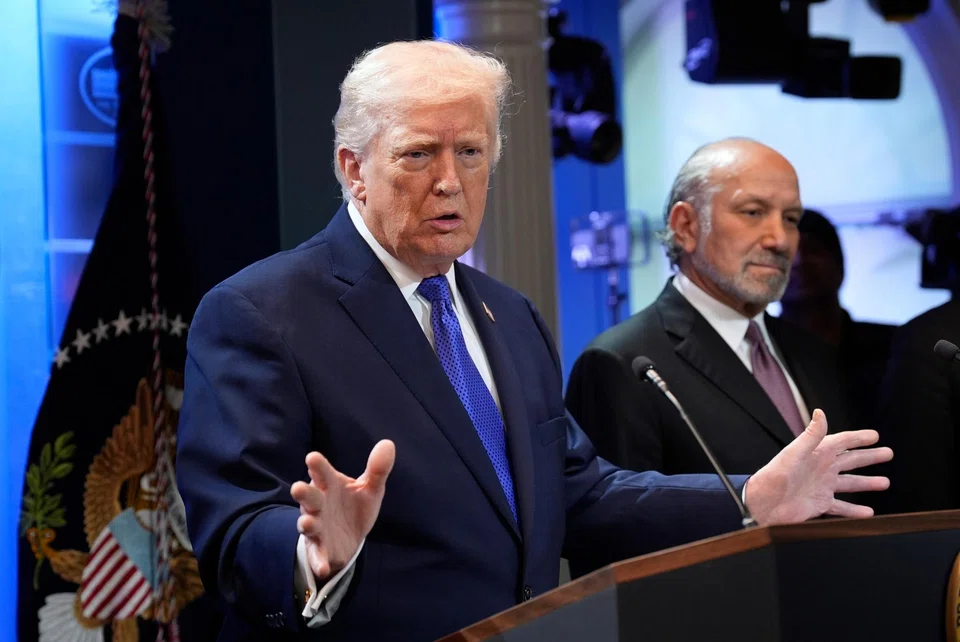
In a press conference, Trump predicted protracted litigation over the refunds. “We will end up being in court for the next five years,” he said. BLOOMBERG
Decoding Asia newsletter: your guide to navigating Asia in a new global order. Sign up here to get Decoding Asia newsletter. Delivered to your inbox. Free.
Share with us your feedback on BT's products and services

