What’s in store for China’s GDP, fiscal policy in 2023
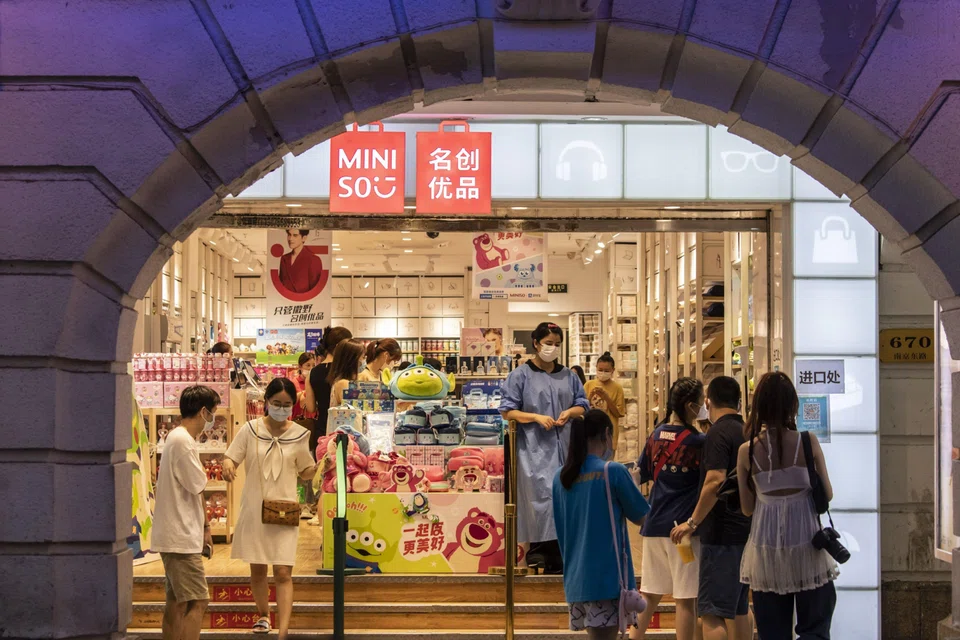
GETTING the economy back on track is the Chinese government’s main priority for 2023, after three years of sluggish growth caused by the impact of stringent controls to contain Covid-19 and a slump in the property market.
Leading officials and policymakers held their annual Central Economic Work Conference (CEWC) on Dec 15 and 16, to set policy priorities for 2023. They agreed to stabilise growth and expand domestic demand, confirming the tone set by China’s top decision-making body, the Politburo, at its meeting on Dec 6.
The official readout from the conference said that next year’s main priorities will include boosting the recovery and expansion of consumption, as well as supporting private businesses, while supporting the property sector to ensure its stable growth. Fiscal policy will be more forceful, and continue to be proactive. Monetary policy will be targeted and forceful while remaining prudent, according to the readout.
Government departments will now be tasked with formulating policies and executing the strategy to revive an economy that has been battered by the Covid-19 pandemic. In October, the International Monetary Fund cut its 2022 growth forecast for China to 3.2 per cent, down from 4.4 per cent in April. This was due to the impact of the “zero-Covid” strategy and the property crisis. Both estimates were well below Beijing’s target of around 5.5 per cent set in March.
Many analysts estimated that gross domestic product (GDP) growth would fall to around 3 per cent this year from 8.1 per cent in 2021, as lockdowns caused severe disruption to economic activity.
Macquarie International Services economists Larry Hu and Yuxiao Zhang said: “Both the Politburo meeting and the CEWC suggest that policy would be more pro-growth and pro-business in 2023.”
“Next year’s top priority for China’s policymakers would be ‘to bring growth back to its potential (more than 5 per cent)‘,” they added.
Economists from Macquarie, Morgan Stanley and the Bank of America said they expect China to set a GDP growth target of above 5 per cent for 2023, while economists at Nomura Holdings projected a higher target of above 5.5 per cent.
For some time, state-backed economic advisers have been calling for more priority to be given to reversing the economic downtrend and getting GDP back to its potential growth rate. The latter refers to the rate of growth that an economy can sustain over the medium term without generating excess inflation.

China’s potential growth rate is now between 5 per cent and 5.5 per cent, said Liu Shijin, a deputy director of the Chinese People’s Political Consultative Conference’s (CPPCC) economic committee and former member of the Chinese central bank’s monetary policy committee. The CPPCC is the government’s top advisory body.
But the economy expanded by just 2.2 per cent in 2020, the first year of the pandemic, and while it recovered to 8.1 per cent in 2021, it only managed 3 per cent growth in the first nine months of 2022.
Heading into 2023, here are some of the key issues analysts are talking about.
GDP growth and consumption
Over the past month, China has been dismantling pandemic restrictions and shifting away from its “zero-Covid” policy. This pivot has raised expectations that GDP growth will recover in 2023 as life returns to normal, consumers increase spending again, and disruptions to ports, factories, shops and restaurants tail off.
Economists’ forecasts for GDP growth next year range from as low as 3 per cent – the latest estimate from London-based Capital Economics – to as high as 5.8 per cent, from Standard Chartered. The consensus forecast in a Bloomberg News survey stands at 4.8 per cent. Consumption will be a major indicator to watch to assess how well the economy will fare.
Covid curbs have crashed domestic demand, as many businesses and factories were forced to close during lockdowns, and uncertainty about jobs, wages and the property market led consumers to cut spending and boost savings. Data from the National Bureau of Statistics showed that in November, retail sales dropped 5.9 per cent year on year, deepening from a 0.5 per cent decline in October.
Although restrictions are being lifted, a wave of new infections may lead consumers to be cautious about going out and spending in the short term, UBS Investment Bank economists, led by chief China economist Wang Tao, wrote on Dec 6.
While there is likely to be a rebound in consumption and services activities, as pent-up savings are used and demand is released, this may not be as strong as it was in mid-2020 during the first wave of the pandemic, they wrote. Covid restrictions over the past two years have likely caused lasting damage to household balance sheets and small companies, which will take time to recover.
In a later report on Dec 15, the UBS economists said that there is “no direct household income subsidy and little consumption stimulus in China, which may limit the rebound in consumption demand following the reopening”. In the same report, they raised their GDP growth forecast for 2023 to 4.9 per cent from 4.5 per cent.
Fiscal deficit
As monetary policy has had only a limited impact on boosting demand and growth, attention is increasingly turning to the role of fiscal policy.
The CEWC pledged to maintain a proactive fiscal policy in 2023 and said that it would be “more forceful”, but the readout suggests there may be no big stimulus and that rising local government debt remains a concern.
“The proactive fiscal policy should be more forceful and more effective, with a better mix of tools including fiscal deficits, special-purpose bonds (SPBs) and interest subsidies,” according to the readout. “While high-quality development should be effectively supported, fiscal sustainability must be ensured and local government debt risks should be controllable,” the meeting noted.
China has traditionally kept its fiscal deficit within 3 per cent of GDP, a level long seen as a ceiling that should not be breached. But the ratio jumped to 3.6 per cent in 2020 from 2.8 per cent in 2019, as the government ramped up spending and investment to shore up economic growth amid the Covid-19 pandemic.
The ratio fell to 3.2 per cent in 2021. The target for 2022, set in March, was for a return to 2.8 per cent, which involved a reduction of 200 billion yuan (S$38.6 billion) in the budget deficit.
Despite the smaller deficit, the central government found the resources to boost spending. It used around 1.4 trillion yuan in unspent funds from previous years’ budgets, and roughly 1.65 trillion yuan in profits handed over by state-owned institutions, such as the central bank, to provide additional fiscal support including value-added tax refunds to businesses.
But with an uncertain economic outlook for 2023, amid expectations of slower export growth and the unpredictability of how households and businesses will respond to the ending of Covid restrictions, economists have estimated the fiscal deficit ratio will rise above 3 per cent again in 2023.
Although the figure will not be released until the National People’s Congress’s annual meeting scheduled for March, analysts expect the government to set a slightly higher deficit-to-GDP ratio to support the economic recovery.
Ding Shuang, chief economist for Greater China and North Asia at Standard Chartered, suggested a fiscal deficit ratio of slightly higher than 3 per cent. Considering that local government coffers have been significantly weakened, the central government should shoulder more responsibilities for fiscal deficit, he said during a seminar held by the China Wealth Management 50 Forum (CWM50) in November.
The Bank of America and UBS both forecast a ratio of 3 per cent, while Capital Economics estimated it could be as high as 3.2 per cent.
“As Covid policy relaxation takes place, we believe Chinese policymakers will be cautious not to ‘over-ease,’ and thus shy away from substantial easing measures in either fiscal or monetary space,” Bank of America economists led by Helen Qiao wrote in a Nov 21 report.
Special-purpose bonds
SPBs have played a key role in supporting economic growth through the pandemic. A tool for local governments to raise money, SPBs are meant to fund infrastructure projects whose debt can be repaid from the cashflow they generate.
The SPB quota for 2022 was the same as in 2021, at 3.65 trillion yuan, although the figure included 200 billion yuan to recapitalise local banks. The total was slightly lower than the record 3.75 trillion yuan allocated in 2020, when the quota surged 74 per cent from 2019 to give local authorities more financial firepower to support their economies amid the first Covid-19 wave.
However, in August this year, the State Council authorised a further SPB issuance of more than 500 billion yuan, allocated from previous quotas that had not been used. This took the total for the year to more than 4.15 trillion yuan.
UBS’ Wang said she expects a small increase in the main SPB quota, to a range of between 3.7 trillion yuan and 3.8 trillion yuan in 2023.
Economists at Citic Securities said they expect the new SPB quota to rise to 4 trillion yuan as stabilising the economy will be a challenge in 2023. Expansionary fiscal policies are necessary to relieve pressure on fiscal revenue at the local government level, the team, led by Ming Ming, wrote in a November note.
But economists at Sinolink Securities said that the expanded SPB issuance in 2022 has worsened debt risks at the local government level. This may push the overall local government debt ratio above the 120 per cent threshold that central authorities see as a red flag. The economists, led by Zhao Wei, said in November that the new SPB quota will be slightly smaller than this year’s as a result.
At the CWM50, Feng Qiaobin, a deputy director of the macro department at the Development Research Center of the State Council, said: “The biggest risk is that local governments will be under huge pressure to repay principal and interest on debts at a time when their income from land sales is declining.”
Some localities, scrambling to find ways to repay SPBs, might try to use funds in the general public budget to fill the gap, she said. She added that authorities should roll out rules to prevent this from happening, and cushion the impact of shrinking land sales on fiscal operations.
Economists and sources involved in local fiscal systems said there is concern about the lack of eligible infrastructure projects for SPBs to fund, which may also lead policymakers to keep the increase in the quota for 2023 low.
Sources told Caixin that proceeds from SPB issuance should be used for projects that meet the government’s criteria and can generate enough income to repay the debt. But many localities dress up their projects and fabricate revenue projections to get approval for an investment, even if it does not fit the criteria, in order to meet targets. This year, some local governments even invested millions and sometimes billions of yuan to build Covid quarantine facilities with little income-generating potential, Caixin reported earlier.
“It’s clear that the impact of SPB investment in 2022 was not good as expected,” Feng said. She noted this was because China’s need for investment in traditional infrastructure has become much smaller, as its economy enters a new phase of development. Investment in new infrastructure centred around the digital economy and the green economy should be led not only by the government, but also by the private sector, she added. CAIXIN GLOBAL
Decoding Asia newsletter: your guide to navigating Asia in a new global order. Sign up here to get Decoding Asia newsletter. Delivered to your inbox. Free.
Share with us your feedback on BT's products and services