

White House says transshipped goods lost up to US$26 billion in tariffs revenue
The decline in China imports due to prior Trump tariffs fuels imports from elsewhere via transshipment, a report argues

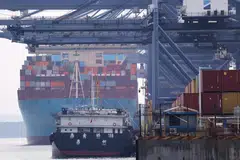
THE White House on Thursday (Aug 13) said in a report the US is losing some US$19 billion to US$26 billion in annual tariff revenue to goods, largely from China, that are transshipped through third countries to avoid US import duties.
The report by White House trade and manufacturing adviser Peter Navarro identifies about 40 countries that have an elevated risk of being sources of illegal transshipments of goods, many of which are linked to minimally processing, relabelling and repackaging of Chinese-origin components.
The Chinese embassy in Washington did not immediately respond to a Reuters request for comment.
The report uses a range of estimates from the private sector and government to try to identify the scale of the problem in terms of the value of transshipped goods: US$34 billion to US$303 billion worth per year.
It uses a “central case estimate” of US$75 billion in transshipped goods, on which the US$19 billion to US$26 billion in lost import taxes is based.
Routing Chinese products through Mexico or Canada could eliminate duties entirely, the report said.
The central US$75 billion case translates to some 450,000 US jobs displaced, both direct and indirect, according to the report.
Imports from China fell to a 16-year low of US$308.7 billion in 2025, but imports from Mexico and Vietnam have risen sharply in recent years, according to US Census Bureau data.
The report argues that the direct China import drop, fuelled by Trump’s prior tariffs, has helped fuel imports from elsewhere through transshipment.
The US Customs and Border Protection agency is now deploying artificial intelligence tools to better detect suspected transshipment of goods, the report said.
Learning models analyse container markx-rayings, packaging patterns and X-ray imaging to detect mismatches between declared and actual cargo, it said. REUTERS
Decoding Asia newsletter: your guide to navigating Asia in a new global order. Sign up here to get Decoding Asia newsletter. Delivered to your inbox. Free.
Share with us your feedback on BT's products and services






