

With little ado, a divided UK casts off into the Brexit unknown
 Add BT as a preferred source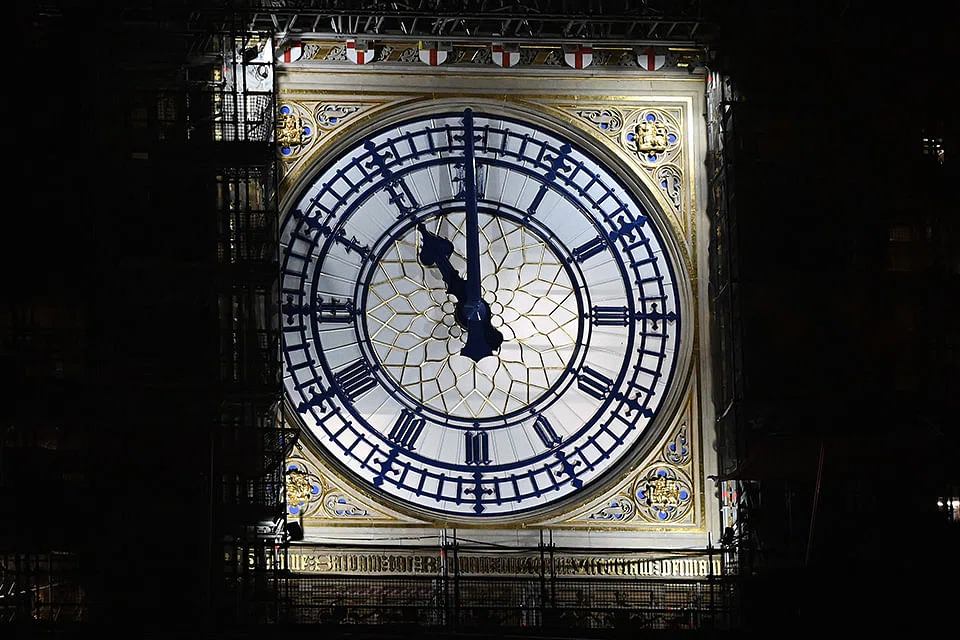
DeeperDive is a beta AI feature. Refer to full articles for the facts.
London
The United Kingdom left the European Union's (EU) orbit on Thursday night, turning its back on a tempestuous 48-year liaison with the European project for an uncertain post-Brexit future in its most significant geopolitical shift since the loss of empire.
Brexit, in essence, took place at the strike of midnight in Brussels (Friday 7am, Singapore time), when the UK ended the de facto membership, known as the transition period, which lasted 11 months after it formally left on Jan 31 last year.
For five years, the frenzied gyrations of the Brexit crisis dominated European affairs, haunted the sterling markets and tarnished the UK's reputation as a confident pillar of Western economic and political stability. After years of Brexit vitriol, one of the most significant events in European history since the 1991 fall of the Soviet Union passed with little fanfare: The UK slipped away, serenaded by the silence of the Covid-19 crisis.
Supporters cast Brexit as the dawn of a newly independent "global Britain", but it has weakened the bonds that bind England, Wales, Scotland and Northern Ireland into a US$3 trillion economy.
"This is an amazing moment for this country," Prime Minister Boris Johnson, said in his New Year's Eve message on Thursday. "We have our freedom in our hands and it is up to us to make the most of it." As EU leaders and citizens bade farewell, Mr Johnson said there would be no bonfire of regulations to build a "bargain basement Dickensian Britain" and that the country would remain the "quintessential European civilisation".
Navigate Asia in
a new global order
Get the insights delivered to your inbox.
But Mr Johnson, the face of the Brexit campaign, has been short on detail about what he wants to build with Britain's "independence" - or how to do it while borrowing record amounts to pay for the Covid-19 crisis. His 80-year-old father, Stanley Johnson, who voted to remain in 2016, said he was in the process of applying for a French passport.
In the June 23, 2016, referendum, 17.4 million voters, or 52 per cent, backed Brexit while 16.1 million, or 48 per cent, backed staying in the bloc. Few have changed their minds since. England and Wales voted out but Scotland and Northern Ireland voted in.
The referendum showed a UK divided about much more than the EU, and fuelled soul-searching about everything from secession and immigration to capitalism, the legacy of empire and what it now means to be British.
Leaving was once the far-fetched dream of a motley crew of "eurosceptics" on the fringes of British politics: the UK joined in 1973 as "the sick man of Europe" and two decades ago British leaders were arguing about whether to join the euro. It never did. But the turmoil of the eurozone crisis, attempts to integrate the EU further, fears about mass immigration and discontent with leaders in London helped Brexiteers win the referendum with a message of patriotic, if vague, hope.
"We see a global future for ourselves," said Mr Johnson, who won power in 2019 and, against the odds, clinched a Brexit divorce treaty and a trade deal, as well as the biggest Conservative majority since Margaret Thatcher, in the 2019 election.
Supporters see Brexit as an escape from a doomed Franco-German project that has stagnated while the US and China surged ahead. Opponents say Brexit will weaken the West, further reduce Britain's global clout, make people poorer and lessen its cosmopolitanism.
When Big Ben tolled 11 through a scaffold, there were few outward displays of emotion in Britain as gatherings are banned under coronavirus pandemic restrictions.
After the UK leaves the Single Market or the Customs Union, there is almost certain to be some disruption at borders. More red tape means more cost for those importing and exporting goods across the EU-UK border. After haggling over a trade deal for months, the British government published 70 pages of case studies just hours before its departure advising companies on what rules they would have to follow at the new UK-EU border.
The Port of Dover expects volumes to drop off in early January. The most worrisome period, it says, will be in mid- to late January when volumes pick up again.
Support for Scottish independence has risen, partly due to Brexit and partly due to Covid-19, threatening the 300-year-old political union between England and Scotland.
Scottish leader Nicola Sturgeon has said an independence referendum should take place in the earlier part of the devolved Parliament's next term, which begins next year. "Scotland will be back soon, Europe. Keep the light on," she added. REUTERS
Decoding Asia newsletter: your guide to navigating Asia in a new global order. Sign up here to get Decoding Asia newsletter. Delivered to your inbox. Free.
Share with us your feedback on BT's products and services
TRENDING NOW

Shelving S$5 billion office redevelopment plan proved ‘wise’ as geopolitical risks mount: OCBC chairman

Eurokars Group introduces rental car franchises Enterprise Rent-A-Car, National Car Rental, and Alamo to Singapore
20 photos that show how dramatically Singapore has changed in two decades
Singapore’s key exports up 15.3% in March from electronics surge, exceeding forecasts

