

World Bank adopts new framework for social and environmental protection
It aims to ensure development projects don't harm people's livelihoods and the environment
Tokyo
THE World Bank has launched what it says is an unprecedented exercise aimed at ensuring that people's livelihoods and lifestyles, as well as the environment, are not damaged by development projects financed by the Washington-based development institution.
This review of safeguards against possible threats to populations and to the environment from economic development has "involved the most extensive consultation ever conducted by the World Bank", a statement said.
"It concludes nearly four years of analysis and engagement around the world with governments, development experts, and civil society groups, reaching nearly 8,000 stakeholders in 63 countries."
The safeguards - which are likely to be copied by some longer-established institutions such as the Asian Development Bank (ADB) - follows the inauguration last year of the China-sponsored Asian Infrastructure Investment Bank (AIB) and the BRICS bank or the "New Development Bank".
The launch of these "newcomers" provoked a rare concerted response from existing development banks, plus the International Monetary Fund, who warned that this could lead to dilution of social and environmental safeguards as banks compete to finance infrastructure projects.
But AIIB president and chairman Jin Liqun countered that while the new Beijing-based bank would be be "leaner" and more efficient in its operations than many existing multilateral development institutions, it would also be "clean" in terms of its environmental impact.
"The World Bank Group's mission is to end extreme poverty and reduce inequality in the world," the bank said in a statement.
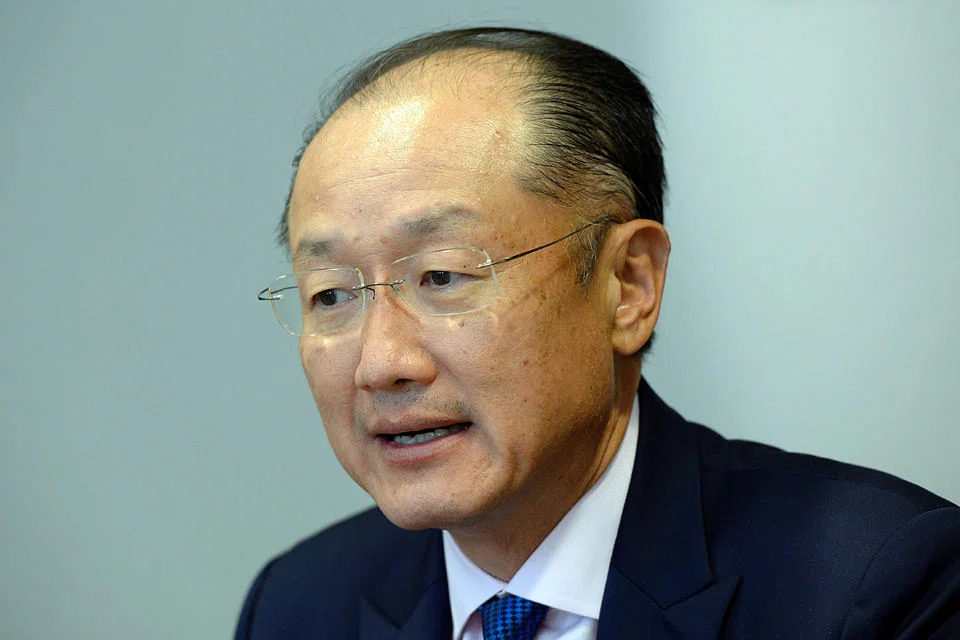
"This new framework will be critical in helping us reach those goals," World Bank Group president Jim Yong Kim said on the launch of the new policy
"These new safeguards will build into our projects updated and improved protections for the most vulnerable people in the world and our environment.
"We also will substantially increase our financing of the safeguards to make sure this works as intended - with enough funding for both implementation and building capacity in countries so that they can a play a more active role in protecting people and the environment," said Dr Kim.
The policy "brings World Bank environmental and social protections into closer harmony with those of other development institutions, and makes important advances in areas such as transparency, non-discrimination, social inclusion, public participation, and accountability - including expanded roles for grievance redress mechanisms".
The Environmental and Social Framework "introduces comprehensive labour and working conditions protection; an overarching non-discrimination principle; community health and safety measures that address road safety, emergency response and disaster mitigation; and a responsibility to include stakeholder engagement throughout the project cycle".
The World Bank said it would now begin an intensive preparation and training period of 12-18 months to prepare for the transition to the new framework, which is expected to go into effect in early 2018. Meanwhile, current safeguards will run in parallel with the new ones for around seven years.
The AIIB, which has attracted more than 50 member countries in addition to China, has argued that overheavy bureaucracies, mission confusion and burdensome rules and regulations have slowed project approval by many development banks and set back economic development in the process.
AIIB president Mr Jin has argued that "economic development is the fundamental solution for poverty reduction, as attested by China and a number of fast-growing Asian countries.
"While poverty reduction is a laudable cause for development banks, it does not go very far in and of itself. I believe in broad- based economic and social development, as the ultimate solution for poverty reduction. Taking poverty reduction as an overarching objective will do nothing but restrict the intervention of a development bank."
TRENDING NOW

Simba admits exceeding spectrum limits amid failed M1 deal; parent company Tuas’ full-year profit surges 277%

He built the Vingroup empire. Now South-east Asia’s richest man is handing some key roles to his sons
What’s on the agenda when Xi and Trump meet in Washington

Ex-execs of CW Group, Allied Tech charged with offences linked to lawyer’s S$76 million misappropriation

