
World needs to prepare for Covid downsides, says IMF deputy chief
 Add BT as a preferred source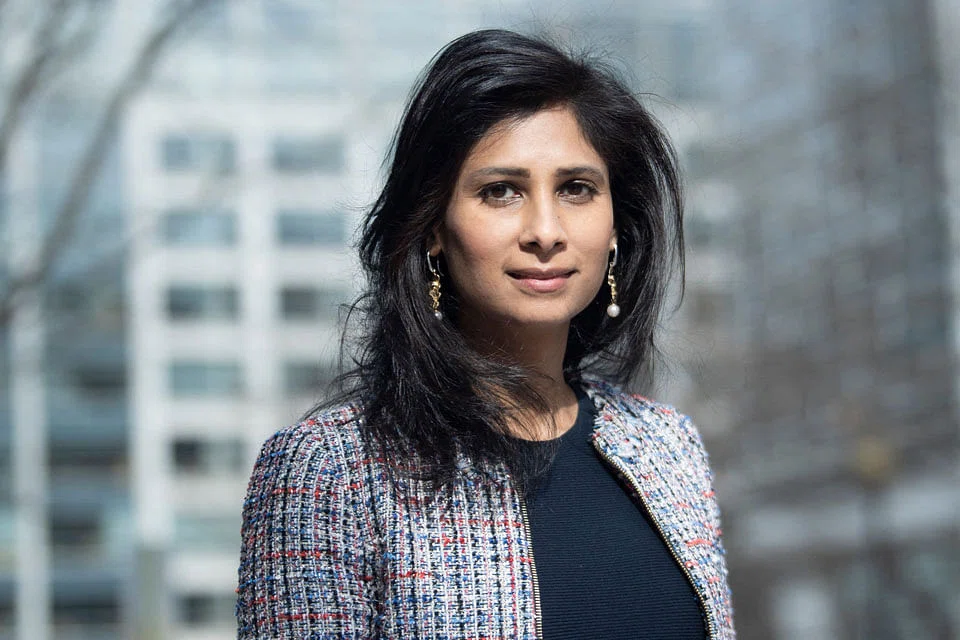
New York
THE world needs to be preparing for downside scenarios relating to Covid-19, the deputy chief of the International Monetary Fund (IMF) said, calling for billions of dollars in grants to bolster pandemic preparedness.
"What I'm worried about is that everybody's hoping for the best-case scenario, which is that this is a mild, endemic virus - but what the experts tell us is that we could have much worse downside scenarios, and we need to prepare for that and that's the part where I think more needs to be done," IMF First Deputy Managing Director Gita Gopinath said in an interview with Lisa Abramowicz and Tom Keene on Bloomberg Television on Thursday (Apr 14).
Gopinath repeated the fund's call earlier this month for additional funding to fight pandemics and to strengthen health systems, saying this would require about US$15 billion in grants this year and US$10 billion annually after that.
The IMF is in the process of updating global economic-growth forecasts, and is set to publish the results in its World Economic Outlook scheduled for April 19 during its spring meetings in Washington.
The fund in January said the global economy would expand 4.4 per cent this year, down from an estimate of 4.9 per cent in October.
Navigate Asia in
a new global order
Get the insights delivered to your inbox.
"What is true is that we will have a significant downgrade to our growth projection," Gopinath said, citing the effects of hot inflation, the pandemic and the war in Ukraine as reasons for the cut.
"We will remain in positive territory for global growth. That said, we are in very, very difficult times - the pandemic is not over."
Tighter financial conditions, as the US Federal Reserve and other developed-world central banks raise interest rates, will be a "big shock" for many countries, IMF Managing Director Kristalina Georgieva warned in March.
About 60 per cent of low-income countries are in "debt distress" or close to it, double the number that the fund was worried about back in 2015.
To date, markets have so far been able to absorb losses from the shock of low-income, small nations being in debt distress "fairly well," Tobias Adrian, director of the IMF's monetary and capital markets department, said on Bloomberg Television.
"But of course, with the economy potentially growing lower and potentially more adverse shocks, we could see a broader debt crisis," he said.
For now, the fund has focused on smaller countries in Africa, the Middle East, Latin American and the Caribbean, but there could be "more wider stress" in other countries, Adrian said. BLOOMBERG
Decoding Asia newsletter: your guide to navigating Asia in a new global order. Sign up here to get Decoding Asia newsletter. Delivered to your inbox. Free.
Share with us your feedback on BT's products and services

