

World order changing, not rupturing, finance chiefs say
Canadian Prime Minister Mark Carney had called on nations to accept that a rules-based global order is over
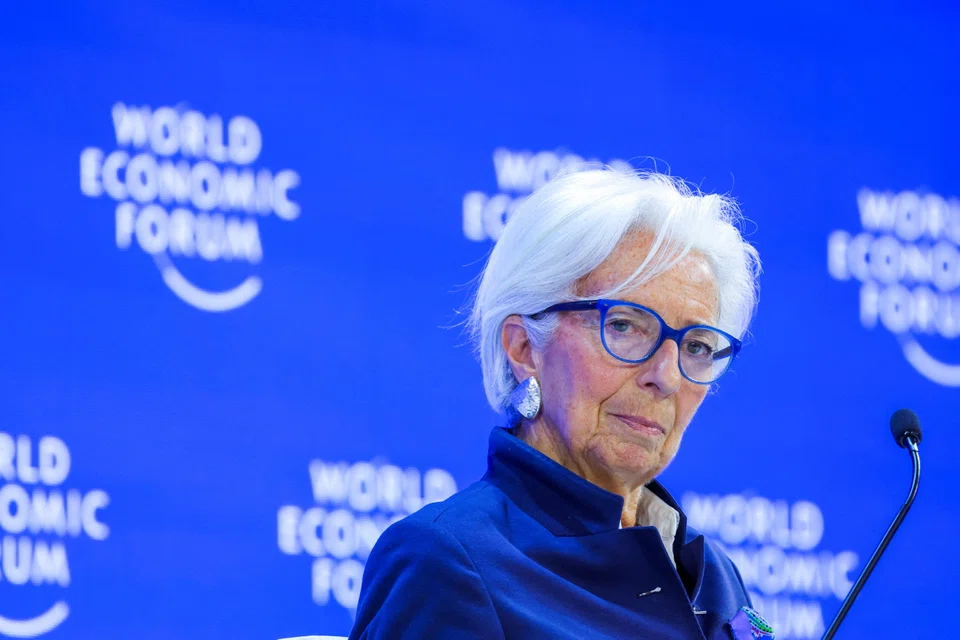
[DAVOS] The world order is changing but not enduring a rupture, finance leaders said on Friday (23 Jan), pushing back on Canadian Prime Minister Mark Carney’s narrative that a new order, driven by major power coercion, was taking shape.
In his speech at Davos, Carney called on nations to accept that a rules-based global order was over, and great powers were abandoning even the pretence of following international agreements.
Quoting ancient Greek historian Thucydides, Carney said the world was entering a period in which “the strong can do what they can, and the weak must suffer what they must”.
“I am not exactly on the same page as Mark,” European Central Bank (ECB) President Christine Lagarde told the World Economic Forum in Davos, just days after Carney’s appearance. “I am not sure that we should be talking about rupture.”
“I think we should be talking about alternatives. We should be identifying, much more so than we have probably in the past, the weaknesses, the sore points, the dependencies and the autonomy,” she said.
‘We are not in Kansas anymore’
World Trade Organization chief Ngozi Okonjo-Iweala said that uncertainty was unlikely to remain as high as in January, when US President Donald Trump threatened to take over Greenland from North Atlantic Treaty Organization ally Denmark.
But the old order was also not going to return, uncertainty would linger and countries must invest in their own resilience, she said.
“I do not think we will go back to where we were. But they will not be as bad, and maybe we will have a slightly better, steady state for the future,” Okonjo-Iweala said.
“If I was running a country, I would be trying to strengthen myself and my region, and I would be looking at my region, and then building resilience.”

Kristalina Georgieva, the International Monetary Fund’s director, argued that change was natural and has been happening for years, and it was time to embrace this because shocks would keep happening.
“We are not in Kansas, anymore,” she said, referencing a line in The Wizard of Oz, meaning that the comforts of familiar surroundings were gone for good.
Lagarde, who walked out of a Davos dinner during a speech critical of Europe by US Commerce Secretary Howard Lutnick, was in a more forgiving mood on Friday.
“We have heard quite a lot of European-bashing in the last few days, but if anything, it has been good, and we should say thank you to the bashers because I think it has given us a complete realisation of the fact that we have to be more focused – we have to work on those plan Bs.” REUTERS
Decoding Asia newsletter: your guide to navigating Asia in a new global order. Sign up here to get Decoding Asia newsletter. Delivered to your inbox. Free.
Share with us your feedback on BT's products and services
TRENDING NOW

Once staunchly pro-China, Malaysian Chinese businesses are now distancing themselves from Beijing

Looking beyond looming CEO succession, should UOB potentially pursue a transformative merger?

Could stablecoins be the future of money?

Grab CEO’s wife Chloe Tong on life with Anthony Tan and finding her purpose

