Worst of US inflation may be over if Iran peace deal sticks
The details of what Washington and Teheran are calling a memorandum of understanding have yet to be released
[WASHINGTON] The peace agreement between the US and Iran, if it holds, suggests the worst of the war-driven inflation has likely passed, but the outlook for American consumers and the broader economy remains far from certain.
Economists warned it will likely take time for normal shipping through the Strait of Hormuz to resume and for petrol prices to return to where they were before the US and Israel attacked Iran nearly four months ago. Still, inflation – which accelerated in May to the fastest pace in more than three years – has likely peaked, they say.
“If there’s one thing that we learned over the last three months, it’s really hard to forecast dynamics in energy markets and in oil markets,” said Andrew Hollenhorst, chief US economist at Citigroup. “But in terms of the direction, I think everybody would agree the direction is down.”
The details of what Washington and Teheran are calling a memorandum of understanding have yet to be released. A formal signing ceremony is planned for Friday (Jun 19). The news of an interim agreement drove a decline in oil prices and a boost in equities.
“The markets have jumped to the conclusion that the deal is done and everything is great and we are essentially going back to something close to the pre-conflict status quo,” said Stephen Stanley, chief US economist at Santander US Capital Markets. “That seems to me we are already pricing in pretty close to the best-case scenario.”
Stanley compared the reopening of the Strait of Hormuz to an airport recovering from a major weather-related disruption: Even after the storm ends, it takes time to get planes back to their proper locations and restore normal operations.
The annual inflation rate jumped to 4.2 per cent last month – surpassing 4 per cent for the first time in years. More than half of the monthly increase in consumer prices were due to energy costs.
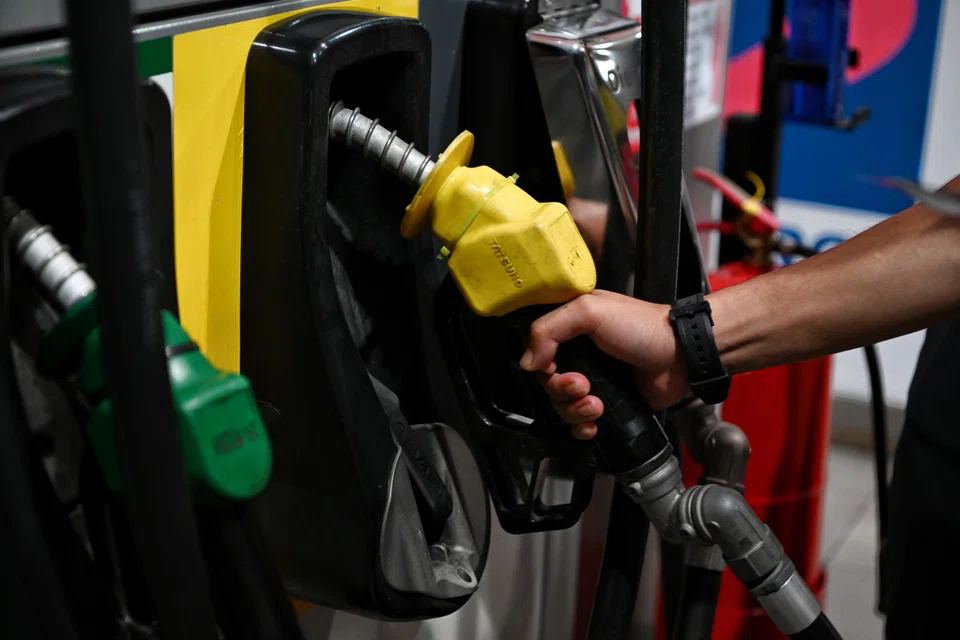
With prices at the pump already off a peak reached in late May and now expected to decline further, albeit gradually, the overall rate of inflation is also bound to come down.
Another cooling factor is the impact on other commodities, according to Anna Wong, chief US economist at Bloomberg Economics.
SEE ALSO



“Second-round effects from the war – from crude oil into other commodity prices – also appear to have peaked,” Wong wrote in a note. “We previously identified jet fuel, fertiliser, plastics, aluminium, polymers, natural gas, and steel as commodities adjacent to an oil-price shock. Inflation in all these categories except steel has peaked, and is now falling.”
While news of the deal comes too late to affect this week’s meeting of Federal Reserve officials, it does take some pressure off policymakers after rising inflation bolstered investors’ bets for an interest-rate hike this year. It could also open the door to more discussion about cutting interest rates at future meetings, economists said.
Trump was elected to a second term in part on his promise to lower prices “on day one”, and rising costs, especially petrol prices, have contributed to driving down his approval rating. Petrol prices now average US$4.07 a gallon in the US, based on American Automobile Association data.
That’s down from a year high of US$4.56 last month, but still well above the US$3.13 a gallon Americans were paying when Trump returned to office.
‘Not over the hump’
Many questions remain unanswered, including how fast trade can resume on the Strait of Hormuz.
Christiane Baumeister, an economics professor at the University of Notre Dame who studies oil markets, said even if all goes according to plan, shipping volume will likely be lower than before the war until the end of the year. There’s a risk for higher petrol prices during the next couple of months if oil inventories are not replenished because of the damage to infrastructure, she said.
“We are not over the hump yet,” Baumeister said.
Consumer spending has remained resilient despite the run-up in petrol prices and other costs due to the war. But the rise in prices has eroded incomes, with annual inflation outpacing wage growth for two months in a row.
An end to the conflict in the Middle East will not necessarily prompt consumers to spend more, but it will maintain their buying power.
“I would not expect a rapid turn in consumers’ spending,” Neil Dutta, head of economics at Renaissance Macro Research, said in a note. “The drop in oil prices will now allow households to replenish those buffers as real incomes recover.”
Some of the relief is already reflected in recent surveys that capture optimism that a peace deal was within sights. The consumer sentiment gauge from the University of Michigan rose in early June for the first time in four months, mainly because of the decline in petrol prices.
With income growth slowing, consumption is not likely to rebound even if price pressures ease, said Marc Giannoni, chief US economist at Barclays.
“If anything, we continue to anticipate a slowing of consumer spending for the rest of the year,” he said. BLOOMBERG
Decoding Asia newsletter: your guide to navigating Asia in a new global order. Sign up here to get Decoding Asia newsletter. Delivered to your inbox. Free.
Share with us your feedback on BT's products and services