Xi flexes power by tying Starmer’s China trip to embassy ruling
Since taking power in 2012, the Chinese president has made it his mission to show Beijing could no longer be pushed around by foreign powers
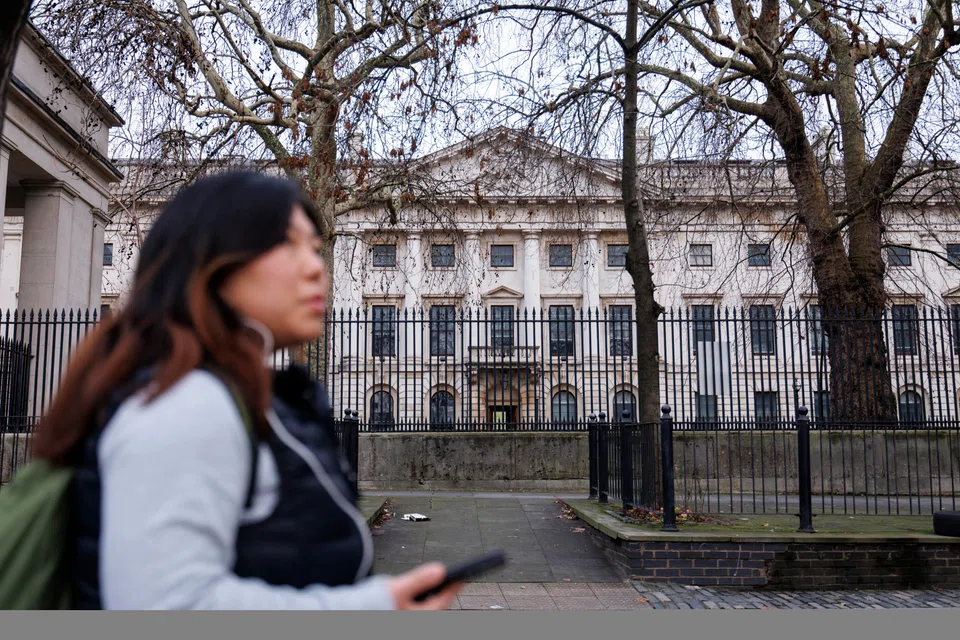
ON A spring afternoon in 2018, Chinese ambassador Liu Xiaoming held a small ceremony outside the Royal Mint Court (RMC) to celebrate Beijing’s £255 million (S$439 million) purchase of a London landmark. Playing with the building’s acronym, he declared that RMC now had a new meaning: The Right Monument of China.
The symbolism could not have been clearer. Beijing was declaring its coming of age as a global power by turning a building that once minted the British pound, the world’s reserve currency when the British empire plunged China into its “century of humiliation”, into a sprawling embassy. Since taking power in 2012, President Xi Jinping has made it his mission to show Beijing could no longer be pushed around by foreign powers.
“The diplomatic dream fought for by generations of diplomats has never been so near,” Chinese officials wrote the following month.
Seven years and five British leaders later, Prime Minister Keir Starmer’s government is locked in a bitter dispute over whether a heritage building at the epicentre of a key Five Eyes nation should serve as a monument to growing Chinese diplomatic power, amid longstanding concerns the site could serve as a spy hub. A final government decision on the embassy is due Tuesday (Jan 20), with Starmer’s trip to Beijing this month resting on the outcome.
Ramping up the pressure, China has tied the approval of Britain’s application for a £100 million reconstruction of its own dilapidated base in Beijing to the fate of the London mega-embassy. Chinese officials want to resolve both applications before setting dates for the first visit of a British leader to Beijing in nearly eight years, according to sources familiar with the matter. China’s Foreign Ministry earlier warned of “consequences” if the proposal is rejected.
“This is about symbolism and prestige, if you are a very big and very important country, you want a big, important embassy,” said Charlie Parton, a former diplomat who since 1981 has worked on China matters with the UK Foreign Office and European Union. Built in the mid-20th century, the British embassy in Beijing is “falling apart”, added Parton, who last served there about a decade ago. “It’s not a pleasant place to work anymore. It needs completely redoing.”
Business Secretary Peter Kyle last September asked Beijing to “allow Britain to have facilities that are fit for the moment”, amid reports of water supply disruption and infrastructure issues. The Foreign Office described its embassy as “outdated and not suitable for managing a diplomatic relationship with a country as important to UK and global interests as China”.
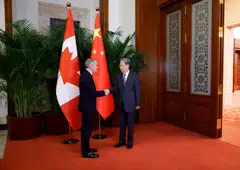
The debate comes as a parade of foreign leaders join Starmer in making diplomatic trips to China this year to rebuild trade ties in the wake of the US becoming a less reliable partner. After Xi successfully stared down President Donald Trump in a sweeping trade war last year, securing a massive compound in Europe’s financial heartland would further project Chinese influence in a Western democracy.
“Do I welcome the symbolism of all this?” said Parton. “No. But they are a powerful country. What are we going to do?”

Diplomatic footprint
China has the most expansive diplomatic network in the world, with more embassies than even the US, according to the Lowy Institute’s 2024 Global Diplomacy Index, which made its tally before the Trump administration’s recent push to downsize America’s global footprint.
The Asian nation’s first diplomatic mission was established in London, when Qing leaders dispatched an envoy to apologise to Queen Victoria following the killing of a British diplomat in China. Its current building at 49 Portland Place was secured shortly after in the late 1870s, but in recent years has become a magnet for protests over Beijing’s alleged human rights abuses in Hong Kong and Tibet.
That site has become “crowded and unsafe”, said Wang Yiwei, a former Chinese diplomat in Europe, adding that space for specialist personnel serving the digital and financial sectors is needed at the new facility, which covers close to 10 times the floor area of China’s existing London missions.
Due to limited public data, it’s unclear if the new Chinese embassy would be its biggest globally. When Beijing opened an Islamabad compound in 2015, state media hailed it as China’s “largest overseas” outpost and a symbol of the “all-weather” friendship with Pakistan. While there’s no official information on the size of that complex, a Chinese construction firm involved in the project said it spans some 150,000 square metres.
Similarly, China’s outpost in Moscow sprawls over some 110,923 square metres, according to official data. The London site covers 20,000 square metres, still a considerable footprint.
“China attaches greater importance to its embassies in countries that it deems to be global players,” said Jeremy Chan, a former US diplomat who currently works as a senior analyst at Eurasia Group. “As one of the permanent members on the UN Security Council, the UK qualifies as one of the most geopolitically significant countries for China, even if the UK’s most important years are likely behind it.”
After years of searching, China finalised its purchase of the Royal Mint Court in 2018, catching the tail-end of the so-called golden era in bilateral ties. Around that time, before Xi’s crackdown in the former British colony of Hong Kong soured relations, Chinese companies were snapping up property in the City of London. Months after the RMC deal, a Fosun International affiliate acquired the iconic Royal Exchange, steps away from the Bank of England, for £45 million.
The embassy complex was an ideal reflection of China’s “role and influence in the world”, said Liu, China’s then ambassador in London. Once built, it would outsize the new American embassy in Nine Elms that opened just months before the Communist Party’s purchase.
Yet since then, planning application attempts have hit several roadblocks, including an initial rejection by Tower Hamlets council on safety and security grounds in 2022. While Starmer has sought to thaw ties with China, some in Westminster are still demanding Chinese capital in critical sectors pass a much higher bar.
In a sign that the embassy has also become embroiled in US-China rivalry, the Times of London reported that the White House warned Westminster against the embassy, alleging it will give China access to nearby cables critical to the UK’s financial-services industry.
“The UK government is now caught in an awkward position,” said Wang, currently a professor at Renmin University. “Starmer wants to improve ties with China, yet he also can’t ignore the US, as it is part of the Five Eyes. It will be a test for Starmer’s balancing act.”
A Daily Telegraph report this week claimed an underground chamber in the embassy will sit alongside fibre-optic cables transmitting data between the City of London and Canary Wharf, posing a spy risk. British ministers who oversee the country’s security agencies signalled satisfaction with Chinese efforts to resolve their concerns late last year.
China’s Foreign Ministry has blasted the spy allegations as “pure fabrication.” Parton, the former British diplomat, said Chinese espionage would be unlikely to operate from such an obvious base.
Most people in the UK support a “pragmatic, reasonable relationship with China, rather than constant confrontation and argument”, said Kerry Brown, who once served at the British Embassy in Beijing and is now director of the Lau China Institute at King’s College London.
“Seeing as the British security services have already said clearly enough they do not regard this as a major security issue, then the only grounds to turn it down would be political,” he added. “And that will inevitably carry costs for Britain.” BLOOMBERG
Decoding Asia newsletter: your guide to navigating Asia in a new global order. Sign up here to get Decoding Asia newsletter. Delivered to your inbox. Free.
Share with us your feedback on BT's products and services