

Xi gains upper hand before Trump summit after US tariff reversal
The removal of tariff threats will make it harder for the American leader to press his Chinese counterpart for larger soybeans purchases
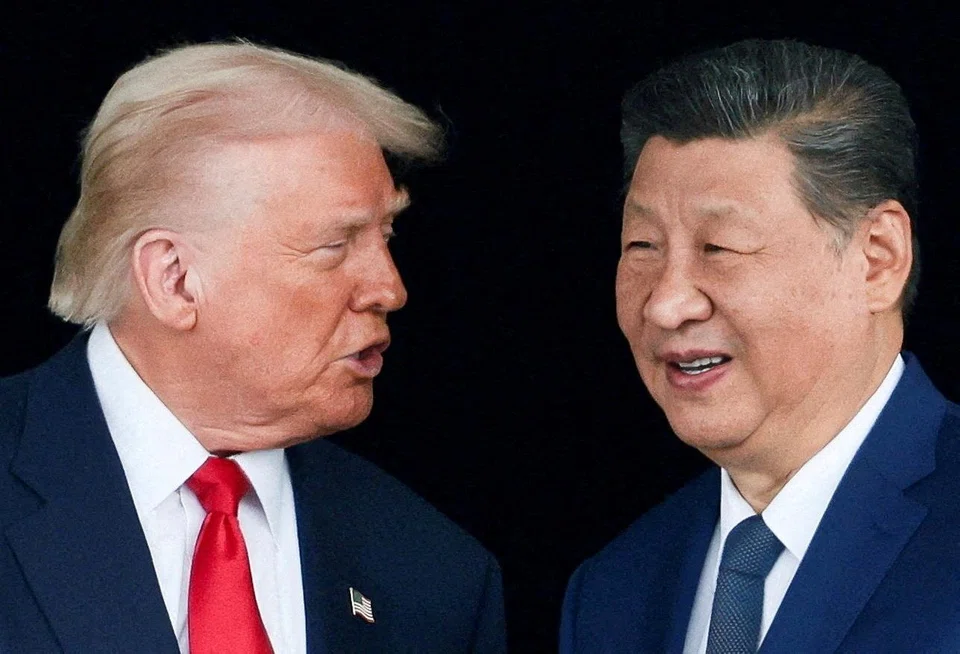
CHINESE President Xi Jinping is heading to the negotiating table with US President Donald Trump with a boost in bargaining power, after the latter lost his ability to quickly raise tariffs for nearly any reason.
Weeks before Trump lands in Beijing on Mar 31, the first trip by an American president since his last visit in 2017, the US Supreme Court invalidated his broad emergency tariffs – a key point of leverage over China.
That has eliminated Trump’s second-term levies on China and left Beijing facing the same 15 per cent global fee applied to US allies, a rate that comes with a 150-day expiry date.
The removal of tariff threats, which last year escalated up to 145 per cent, will make it harder for Trump to press Xi for larger purchases of soybeans, Boeing aircraft and energy. It also leaves him without a key weapon to strike back if Chinese negotiators make fresh demands in return for allowing a steady flow of rare earth metals that are vital to US manufacturing.
“Ultimately, this Supreme Court ruling puts China in a much stronger bargaining position,” said Wu Xinbo, director at Fudan University’s Center for American Studies, citing the example of China’s commitment to buy some 25 million tonnes of soybeans, which was predicated on previous tariff negotiations.
“If those tariffs are now deemed illegal, the ‘soybean card’ is back in China’s hand.”
Xi’s team will also likely push harder for access to advanced semiconductors, the removal of trade restrictions on Chinese companies and reduced US support for self-ruled Taiwan, where Beijing’s focus is on arms sales and stronger language around opposing the island’s independence, added Wu, who previously advised the Foreign Ministry in Beijing.
The Chinese Communist Party considers democratic Taiwan its own territory, despite never having ruled it.
While Trump’s setback is a win for Xi, Chinese officials, like others around the world, have been cautious in their reaction. The Foreign Ministry in Beijing did not reply to a request for comment during a long public holiday, and state media has been measured in its reporting of the ruling.
SEE ALSO


China is likely to continue honouring the current bilateral trade consensus rather than forcing the US to make immediate corrections, said Shen Dingli, an international relations scholar in Shanghai.
“Chinese officials are likely to keep a low profile to ensure Donald Trump’s visit to China in April goes smoothly,” Shen said. “While the Chinese public may celebrate, the authorities will likely exercise a degree of control over the narrative.”
Trump can also rely on Sections 301, 232 and 122 of the Trade Act to push forward his tariff regime, said Wendy Cutler, senior vice-president at the Asia Society Policy Institute and a former acting deputy US trade representative.
The 15 per cent global rate that Trump has set falls under Section 122. The other two powers permit the president to unilaterally impose tariffs, but only following investigations that typically last months.
China is still facing a Section 301 investigation on its compliance with the Phase One trade agreement from Trump’s first term, when Beijing failed to meet purchase agreements. That investigation could be a “major feature of the back-up plan for Beijing”, Cutler said.
Additionally, Trump could expand the use of export controls if China restricts rare-earth magnets. Beijing’s agreement to restore flows of the vital materials came after the US cut off sales of chip design software, jet engines and spare aeroplane parts.
While the Chinese side may have more room to bargain, Trump has threatened new tariffs to gain leverage ahead of key meetings, and did so before his last summit with Xi in October 2025. Though it didn’t manifest, his initial threat of an additional 100 per cent tariff on China roiled equity markets and commodities.
The Supreme Court ruling will not result in a fundamental reversal of China‑US economic and trade relations, said Zhou Mi, a senior researcher at a think tank affiliated with the Chinese Ministry of Commerce.
“Of course, such a ruling does not prevent the Trump administration from using other forms of executive authority to achieve its trade and other policy goals,” said Zhou. Still, “this serves as a reminder to all countries that executive power cannot, under any circumstances, be exercised beyond its originally authorised scope.”
Chinese trade officials are set to meet US Treasury Secretary Scott Bessent before Trump’s visit to hammer out deliverables for the trip, although no date or location has yet been made public.
Even as the White House looks to reconstitute the levies in another form, the court’s removal of the 10 per cent fentanyl tariff, along with the so-called “reciprocal” duties, gets rid of a key sticking point between the nations.
They have begun to peel back national-security restrictions in rounds of talks last year, reaching a deal over TikTok’s operations in the US as the Trump administration green-lighted the sale of Nvidia’s H200 chips, a more advanced version than previously allowed.
In the run-up to the Trump-Xi talks, Ford Motor’s top executive spoke to senior Trump administration officials about a potential framework in which Chinese carmakers could build cars in America while offering some protection for domestic companies, Bloomberg reported earlier this month.
While such a move is likely to face congressional opposition as the midterm elections approach, any agreement to allow more Chinese investment in the US would mark a significant breakthrough on a sensitive topic.
Chinese exporters may choose to expedite shipments to the US while tariffs are low and before more changes come, said Zhiwei Zhang, chief economist at Pinpoint Asset Management.
“The US administration will likely seek alternative ways to keep tariffs on imports from China high,” Zhang said. “But searching and implementing such alternative tariffs may take time. If that’s the case, in coming months we may see firms front-load their exports to the US to take advantage of lower tariffs, as these may be low only temporarily.”
Zheng Tao, a Chinese export trader of car parts with more than 70 per cent revenue from US companies, said that while the ruling is “good news” and will spur more orders, he’s uncertain if there is more bargaining power on prices after he lowered them last year to retain American clients.
Others viewed the Supreme Court’s decision as the latest stir in a year of policy ambiguity and tumult.
Lin Qian, who runs factories making toys mainly for American clients in the southern China boomtown of Shenzhen and Vietnam, was indifferent to the Supreme Court ruling.
He said the constant change in policies is confusing to businessmen. While his China plants are still processing the bulk of orders, he boosted production in his new Vietnamese factory last September as Sino-US tensions linger.
“We have to have Plan A, B, C for such dynamic conditions,” he said. BLOOMBERG
Decoding Asia newsletter: your guide to navigating Asia in a new global order. Sign up here to get Decoding Asia newsletter. Delivered to your inbox. Free.
Share with us your feedback on BT's products and services
TRENDING NOW

GCash parent Mynt rises in market debut after South-east Asia’s top 2026 IPO

In the age of AI, what is a university education for?
Singapore to use ‘every legal and regulatory lever’ against companies linked to haze: Shanmugam
‘IPOs are not the only vehicle’: KKR heads for record exits even as firms stay private for longer

