

Xi takes Davos spotlight as unlikely champion of trade-based global order
Chinese president's speech on Tuesday will be a "blueprint for the future progress of human society", says top diplomat
Hong Kong
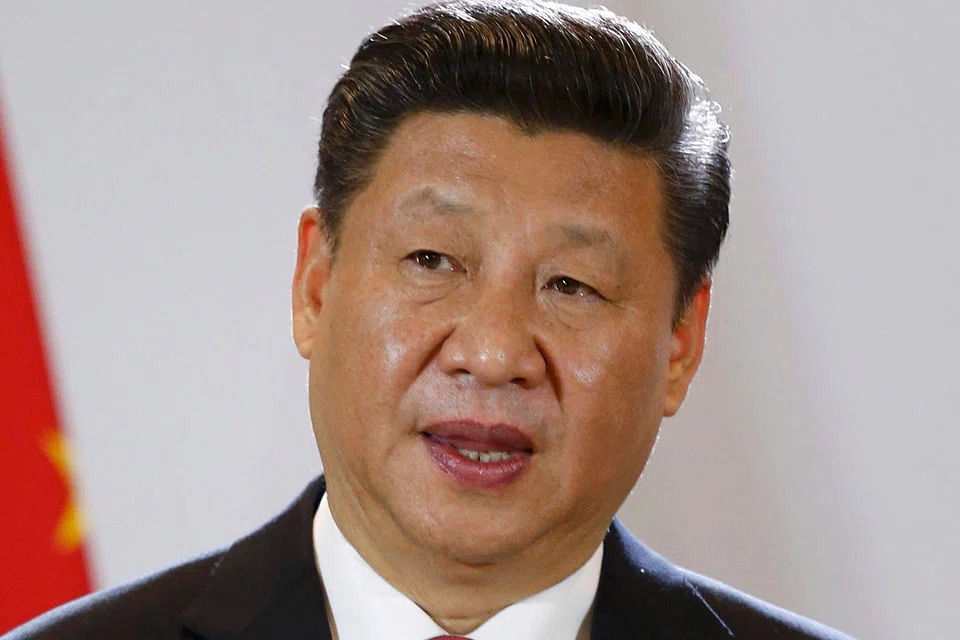
WHEN Xi Jinping addresses business elites at Davos, the Chinese president will find himself an unlikely champion of the trade-based global order Donald Trump has derided. His new role could prove to be one of his biggest tests.
On Tuesday, Mr Xi will become the first Chinese head of state to address the World Economic Forum (WEF), a speech a top diplomat said would give a "blueprint for the future progress of human society". His remarks in the Swiss ski town come days before Mr Trump's inauguration as US president, after an election that called into question America's commitment to free trade and threw the business world into a bout of soul-searching.
Mr Xi's presence marks a chance to cement China's clout after decades of US economic and military dominance. Facing a more protectionist, inward-looking Mr Trump administration and a disruptive British exit from the European Union (EU), Mr Xi has been offering assurances that the world's largest trading nation will defend the structures that have fostered globalisation and economic growth.
What remains to be seen is how far Mr Xi will go toward filling any gap left by Mr Trump on the world stage.
Even Mr Xi, with his regional trade initiatives and goal of a "great rejuvenation of the Chinese nation", has hewed closely to his predecessors' policy of avoiding foreign entanglements. China also lacks experience in global governance to back up its economic heft, leaving it without potential tools to match any bigger ambitions.
"They have to take advantage of it," James Goldgeier, dean of the School of International Service at American University and a former director of Russian, Ukrainian and Eurasian affairs at the National Security Council, told a recent forum in Singapore. "They have to be in a position where they can take advantage of that. And we have yet to see whether that will prove to be the case."
Mr Xi faces two big distractions in presenting China as trade's most reliable defender. Mr Trump's attacks on China's trade and currency policies may compel him to retaliate with protectionist measures and hurt foreign investment. He must also navigate domestic challenges, including mounting corporate debt and a looming reshuffle of his top leadership ranks that could spur a more nationalistic response to US prodding on issues like Taiwan.
The imperative is high: economic growth has been relatively weak around the world and China's days of supercharged expansion are over. A major trade spat between the two biggest economies would only slow things further. Global trade has grown by just over 3 per cent annually since 2012, according to the International Monetary Fund. That's less than half the average expansion rate in the previous three decades.
Mr Xi's speech comes as Mr Trump preaches economic nationalism with promises to build walls, tear up trade agreements, raise tariffs and upend core security alliances. In an interview published on Sunday by Germany's Bild and The Times of London, Mr Trump called the North Atlantic Treaty Organization obsolete and portrayed the EU as a tool of German domination.
In contrast, Mr Xi plans to stress openness and international cooperation. Doing so accentuates China's role in global economic and political affairs for his domestic audience. Vice Foreign Minister Li Baodong told reporters last week that Mr Xi may even get a bit philosophical.
"He will tackle some major questions such as: 'Where did mankind come from? Where are we? Where are we going?'" Mr Li said. "And he will draw a blueprint for the future progress of human society."
While Mr Trump's moves such as rejecting a US-led Pacific trade pact have helped China promote competing measures, the country must overcome wariness among its neighbours about its territorial ambitions. That could create a PR problem for Mr Xi in filling a power vacuum if the US pulls back in Asia, even as China pours money into infrastructure in the region.
Yan Xuetong, a member of the Chinese Commerce Ministry's consultation committee, doubts Mr Xi could usurp American authority during Mr Trump's term. "Trump will be a big, big challenge for China to become a global leader," said Mr Yan, also director of the Institute of International Studies at Tsinghua University in Beijing.
Still, business leaders in Davos, fatigued by populist headwinds across Europe and the US, will be eager for Mr Xi's reassurances about keeping the capitalist lines humming. Mr Xi will bring with him the biggest-ever delegation of Chinese executives to visit the WEF gathering.
"We're absolutely thrilled because if there's one leader that all of our CEOs and international leaders are wanting to hear from is his excellency, President Xi Jinping," the WEF's China representative David Aikman told a briefing in Beijing. China has been sending delegations since 1979.
"China is taking advantage of the geo-strategic vacuum, but the world should definitely not expect too much from Beijing," said David Shambaugh, director of George Washington University's China Policy Program. "China remains a very self-interested power, with minimal means and willingness to get involved in addressing and solving the world's chronic and pressing problems." BLOOMBERG
TRENDING NOW
Temasek’s Wan Chee Foong to helm PIL, Lars Kastrup to be board adviser
Chagee, Mixue and Luckin won the market. Sustaining their edge is the harder part

He built the Vingroup empire. Now South-east Asia’s richest man is handing some key roles to his sons
One-third of Singapore-listed firms at risk in severe AI downturn: MAS

