

Xi’s consumer boom thwarted by secret stock trades, debt misuse
 Add BT as a preferred source
DeeperDive is a beta AI feature. Refer to full articles for the facts.
PRESIDENT Xi Jinping’s push for a consumer-led economic recovery has hit a new barrier: Chinese citizens misusing cheap consumer loans.
As banks flood the market with a variety of lending products after pressure from Beijing for them to pump up the world’s second largest economy with cheap loans, some borrowers are taking advantage of the low interest rates to prepay mortgages or invest in stocks instead of buying goods.
The practice, which is banned by regulators, risks undermining Beijing’s attempt to engineer an economic recovery tied to consumption as the nation tries to regain its footing after years of stringent Covid Zero policies.
Sally, 37-year-old financial worker, just used two consumer loans totalling 798,000 yuan (S$155,361) to pay off a mortgage on her home. She got the loans at an annualised rate of 3.2 per cent and 3.65 per cent respectively, which compares with her mortgage rate of 5.65 per cent.
“That’s too high compared with all consumer loans that banks offered to me, which are all priced below 4 per cent,” said Sally, who asked that only her first name be used as the practice is prohibited. “I plan to apply for business loans to cut borrowing for my other home too, given the interest is as low as 3.2 per cent.”
Feeling insecure
Xi and his top economic aides have encountered a psychological barrier in their drive to boost consumption as people remain reluctant to open their wallets due to the uncertainty over China’s growth outlook, according to Shen Meng, a Beijing-based director of investment bank Chanson & Co.
Navigate Asia in
a new global order
Get the insights delivered to your inbox.
Consumer confidence in China has taken a hit in the wake of Covid, with outstanding short-term consumer credit plunging from its peak at the end of 2019. In contrast, households have amassed a huge pile of savings.
“You can’t just put people up to consume, when they don’t even know what tomorrow will look like,” said Shen. “And when people feel insecure about the future, it’s only natural that they should take precautions in the present to prepare for a rainy day.”
The mortgage prepayment rush, which began last year, has gained momentum as Beijing struggles to restore confidence in the slumping property sector. The real estate bust upended the long-held belief in the nation that property was a surefire way to build wealth and created a desire to quickly pay off mortgages.

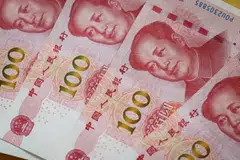
Citigroup analyst Judy Zhang estimated Chinese homeowners likely prepaid 4.68 trillion yuan worth of mortgages in 2022, according to a note last week. The cheap rates on consumer and business loans may also trigger some people to borrow large amounts to repay mortgages, she said.
Higher returns
China’s banking regulator last month asked lenders to beef up oversight of the usage of personal loans and to make it clear to borrowers they’ll be held accountable by law if they breach contracts by misusing the funds for other purposes. Penalties for borrowers include early collection of loans or suspension of credit.
Despite this, Frank, a 29-year-old tech worker, just took out a 300,000 yuan consumer loan so he can double down on his A-share investment, which he said yielded a return of 20 per cent-30 per cent annually in the past few years. China’s benchmark CSI 300 Index has gained more than 6 per cent this year, after slumping 22 per cent in 2022.
“The interest rate is just so low so I figured why not take advantage of that?” said Frank, who declined to share his full name for fear of reprisal from his bank. “The bigger the principal, the more returns.”
To qualify, he just submitted a form of basic personal information on his bank’s mobile app and paid a visit to a physical counter for an identity check. Hours later he was notified with a text message that he’d been cleared for the loans, with the money arriving in his account a few minutes later. The application was so smooth that he could hardly recall if the lender asked him to declare that he wouldn’t use the money for purposes other than consumption.
Jack, a Shenzhen-based financial worker, who also declined to give his full name, is planning to invest his 200,000 yuan from consumer credit in stocks. The banks kept pestering him about their loans, cold calling him 10 times in one day.
“I actually don’t have a strong borrowing demand, but banks kept on promoting their cheap loans.”
Crackdown
Authorities have in recent years stepped up efforts to crack down on the misuse of bank loans and have penalized lenders for failing to prevent such practices. The banking regulator fined some of the nation’s largest banks a combined 12.2 million yuan in September last year, for violations including their failure in checking personal business loans and consumer loans that led to misuse of the funds in the property market.
To be sure, Citigroup’s Zhang said she doesn’t think misuse of consumer loans will account for a big portion of the total mortgage repayment as banks have been “extra-vigilant” about the practice.
But for Chanson’s Shen, the bigger issue lies in whether China can motivate its people to spend, as the exploiting of consumer credit funds reflects a pessimistic view towards the economy’s prospects.
“People will only be willing to consume when the economy really begins to pick up with wages growing steadily,” he said. BLOOMBERG
Decoding Asia newsletter: your guide to navigating Asia in a new global order. Sign up here to get Decoding Asia newsletter. Delivered to your inbox. Free.
Share with us your feedback on BT's products and services
TRENDING NOW

StarHub hands Ensign InfoSecurity control back to Temasek in S$115 million deal, books S$200 million gain
Singaporeans can now buy record amount of yen per Singdollar

Air India asks Tata, Singapore Airlines for funds after US$2.4 billion loss

Keppel DC Reit posts 13.2% higher Q1 DPU of S$0.02833 on strong portfolio performance

