

Xi’s export machine gets lift from US move to strongarm allies
Beijing is also pushing to revive the EU-China Comprehensive Agreement on Investment
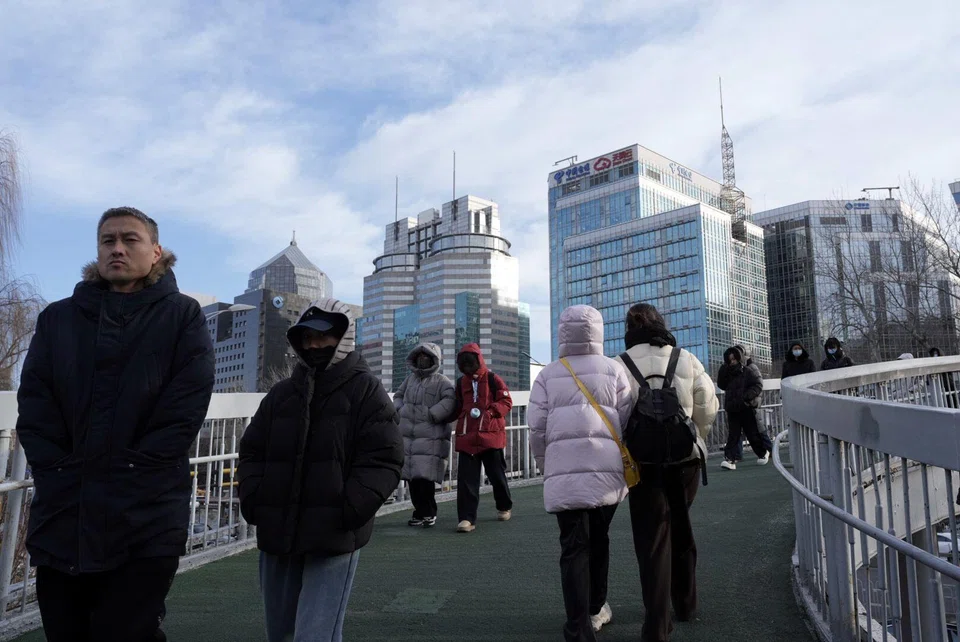
AS XI Jinping battles unprecedented deflation and shrinking investment, he’s betting that China can sell more and more goods to the world to drive growth. To that end, US President Donald Trump’s threats against key US allies are coming at a good time.
China’s world-beating export juggernaut played a key role in helping Xi hit his 5 per cent growth target for 2025, accounting for the largest share of expansion since 1997, according to data published on Monday (Jan 19). That papered over deep cracks in the domestic consumer economy: The country’s property market remains moribund, deflation marked its longest slump since the 1970s and investment posted its first-ever annual decline.
While Trump’s tariffs prompted China to find other markets for its goods, spurring some countries such as Mexico to put new duties on certain Chinese products, the US leader’s latest threats against Europe are providing some breathing space for Xi.
Last week, Canadian Prime Minister Mark Carney signed a deal with China that rolled back electric vehicle tariffs and talked about moving close to Beijing in the “new world order”.
Xi will seek similar wins on trade when UK Prime Minister Keir Starmer and German leader Friedrich Merz head to Beijing in the coming weeks. Trump himself is set to visit China in April, the first of four scheduled meetings this year with Xi.
“China’s trade friction risks will decline significantly this year,” said Larry Hu, head of China economics at Macquarie Group, citing the US-China trade detente as another stabilising factor. “It’s precisely because we think exports will stay strong we don’t think China will significantly boost stimulus for domestic demand,” he added. Hu forecasts Chinese shipments to expand 6 per cent from a year ago in 2026.
Chinese investors were unmoved by Monday’s growth numbers, with the benchmark CSI 300 Index of onshore stocks closing flat. Economists largely expect Beijing to dole out only modest stimulus this year, with a Bloomberg survey in December forecasting just 20 basis points of cumulative policy interest rate cuts.
Although Trump’s moves may buy Xi some time to tackle problems such as the yearslong housing crash, the risk is policymakers in Beijing take their foot off the gas when it comes to rebalancing the economy more towards consumption. Furthermore, if Trump pushes his expansionist foreign policy too far and uses force to take Greenland, the ensuing shockwaves in geopolitics could bring market volatility that Beijing will hardly welcome.
Germany’s Finance Minister underscored the changes unfolding on Monday, declaring that a “limit has been reached” on how much provocation the European Union could take from Trump, after the Republican leader announced new tariffs.
SEE ALSO


In a sign the bloc is calibrating its stance towards Beijing, too, it’s now weighing a plan to accept minimum prices on electric cars in place of tariffs. That’s a potential boon for domestic giants such as BYD, which are locked in bitter price wars intensifying China’s fight with deflation.
Beijing is also pushing to revive the EU-China Comprehensive Agreement on Investment, which was frozen in 2021 amid growing tensions over human rights issues and then US president Joe Biden’s push for transatlantic cooperation on China. That deal would expand European companies’ access to the Chinese market and break down investment barriers for Beijing in the bloc, although EU officials have shown little public interest in resurrecting it.
“The Chinese are putting a lot of pressure,” said Alicia Garcia Herrero, chief Asia-Pacific economist at Natixis. “Maybe the EU will give it to them because they are desperate now with Trump.”
When Starmer becomes the first British leader to visit Beijing in nearly eight years later this month, Xi will also be pushing for more market access. Illustrating the opportunity, Chery Automobile’s Jaecoo brand only launched in the UK in January 2025, but now already sells more than Honda, Citroen or Porsche.
Policy pivot
The impact of China’s unstoppable export machine on domestic policy was on display last year, when shipments defied America’s steepest tariff regime since the 1930s to drive a record trade surplus.
Authorities initially vowed to take “extraordinary” measures to defend the world’s No 2 economy as Trump returned into office, and followed through by raising the official budget deficit to the highest in more than three decades. But as Chinese exports found new markets, officials shifted to paying down local government debt, contributing to a rare decline in infrastructure investment.
“In the next five years – or at least in the foreseeable future – exports will still be an important pillar of growth,” said He Wei, China economist at Gavekal Dragonomics, saying this was partly due to strong demand in the global economy. “This transition from external to domestic demand will be a mid- to long-term one.”
With only incremental steps on offer to boost consumer spending, economists expect the GDP deflator – which measures economy-wide prices – to stay negative in 2026, or recover to zero, with domestic demand too sluggish to generate big reflation. That means corporate revenue and workers’ wages will remain under pressure, and China will help cool inflation overseas via cheaper exports.
So far, the improvement in prices is driven by temporary factors. While the decline of consumer prices has bottomed out in recent months, that’s largely down to a surge in gold prices, and more recently, cold weather conditions driving up the cost of fresh vegetables. A handful of commodities targeted by a policy campaign to crackdown on overcapacity has seen a modest rebound, such as polysilicon, a key raw material for making solar panels.
The underlying fundamentals causing China’s economic problems have not shifted, with the property crash still yet to find a floor.
For China, Trump’s treatment of US allies has improved Beijing’s situation from a couple of years ago, but plenty of issues also remain on the world stage, said Dongshu Liu, an assistant professor focusing on Chinese politics at the City University of Hong Kong.
That creates risks of more trade barriers down the line.
“Even if you cooperate with China, the factors that made you cautious in the first place haven’t disappeared,” he added, citing distrust over Xi’s support for Russia after its invasion of Ukraine. “We won’t see a massive turnaround but it’s definitely an opening.” BLOOMBERG
Decoding Asia newsletter: your guide to navigating Asia in a new global order. Sign up here to get Decoding Asia newsletter. Delivered to your inbox. Free.
Share with us your feedback on BT's products and services
TRENDING NOW

OCBC customers face difficulties accessing online, mobile banking services

SGX CEO Loh Boon Chye to step down; succession planning under way

Waymo founder predicts ‘landslide’ robotaxi adoption in Singapore, driven by high car costs

Vietnam’s northern provinces, not Hanoi or Ho Chi Minh City, are powering near 10% GDP growth

