

Young leaders must venture abroad to play a global role: Jabil’s May Yap
Those who want to be at the helm should experience the world first-hand, says the manufacturing giant’s CIO

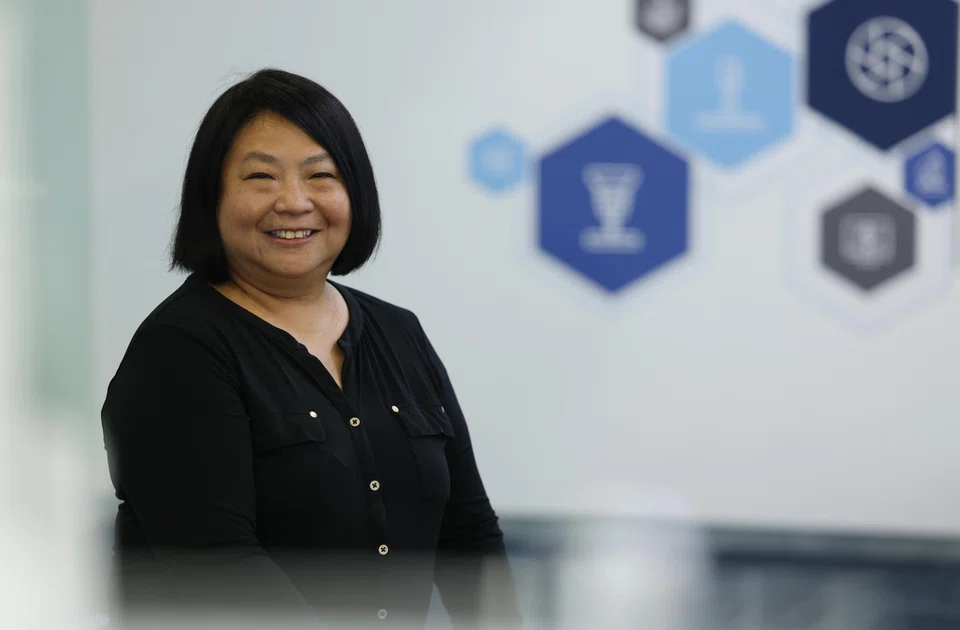
[SINGAPORE] In the early 1990s, May Yap’s fiance from Hong Kong offered her a life-altering choice: Would they settle down in Singapore, her hometown? Or would they move to Hong Kong – an unfamiliar land to Yap – but one that offered her a chance to explore the world?
Despite the potential challenges, it was an easy decision for Yap, who is now chief information officer (CIO) at global manufacturing company Jabil.
“Hong Kong is a little more dynamic. It’s more robust. Hong Kong speaks a different language. It’s always very ‘hustle and bustle’,” she remembered thinking. “I wanted that kind of environment.”
All in all, she has spent half of her 34-year career overseas.
Reflecting on this path – which began with being a tech consultant for Singapore’s defence ministry in 1992 and took her through stints at PricewaterhouseCoopers Management Consultants and IBM – Yap said she did not chase bigger titles or promotions.
Instead, the CIO picked roles that helped her career progress in breadth or depth, she said.
New lands, new perspectives
Yap’s first overseas position at PricewaterhouseCoopers gave her access to various experiences and a close-up view of the Asia’s growth and development. She embarked on this new consulting career in 1995, working with government clients and conglomerates in the Greater China area.
This was an “interesting time”, she said, recalling conversations with legislators, who were shaping policy as they prepared for the handover of Hong Kong to China in 1997.
During this time, Yap often travelled to Shanghai, and was awed as expressways were built in months and high-rise buildings quickly cropped up. This shaped her perspective about how swiftly change could happen.

One notable character she met in those early years of her overseas career was Tung Chee-hwa, who would go on to become Hong Kong’s first chief executive. As a business leader, he often spoke about leadership, change management and helping people grow.
Subsequently, in the early 2000s, Yap gained fresh perspectives on companies’ transformation journeys during the dot.com days. As companies moved from brick and mortar stores to online, they had to contend not only with strategic changes but leadership transformation.
Wealth of experience
Over the years, Yap’s job scope at PricewaterhouseCoopers and IBM in Hong Kong expanded to cover the Asia-Pacific, even as she moved back to Singapore.
Still at IBM in 2007, May relocated to Singapore, where she continued to oversee the wider region.
Her jurisdiction there continued to widen, taking in global operations outside of the Asia-Pacific.
From 2013 to 2014, Yap moved to work for IBM in the UK and travelled extensively. Her family stayed in Singapore, so her children’s education would not be disrupted.
After joining American firm Jabil in 2014, she first served as a segment CIO before working her way up to take on the role on a global scale, splitting her time between the US base and Asia.

These stints gave her valuable insights into the nature of leadership, Yap said.
“When you study (leadership) in a textbook, it talks about: ‘What kind of leader are you?’,” she said. “‘Are you a consultative leader? Are you an authoritative leader?’ But I don’t think it works that way.”
Leadership is about context, she continued.
Part of this is understanding culture, whether that is in the company, the industry or the country, and part of it is about building trust.
This was exemplified in one incident when Yap took control of an Australian team at IBM.
“Being Singaporean… we focus on the task, right? We get things done,” she said. But after a few weeks, a manager approached her and told her that she was “overly crude and overly direct”.
“That’s not how we work in Australia,” she remembered him saying. She had not yet proven her credentials nor formed close relationships with her new team.
For Yap, who had viewed her own demeanour as professional, this was a “moment of truth”. She realised that a “cookie cutter” approach to leadership would not cut it.
This incident also taught her to pay attention to her team.
Reflecting on the experience, May said she might have remained unaware of the offence she caused, if this issue had arisen in a country with an Asian business ethos.
“They probably don’t like it, but they will not say it to your face,” Yap said, musing that culturally, they would likely be more accommodating.
“So you learn to be sensitive,” she continued. “I think I learned to be a better leader by being more empathetic.”
Applying lessons learnt
These takeaways have carried through into Yap’s work at Jabil today.
As CIO of the NYSE-listed company with a market capitalisation of some US$36 billion, she handles IT operations across the company’s 100 locations in 25 countries.
This includes smooth operations at factories and peak conditions for network infrastructure. She also assesses and introduces new technologies, such as Internet of Things and artificial intelligence, to increase efficiency and competitiveness.
Any tech rollouts are global in scale and Yap is keenly aware that she needs to keep in mind how each branch of the company will react. Change management needs to account for the people involved and help them understand, she said.
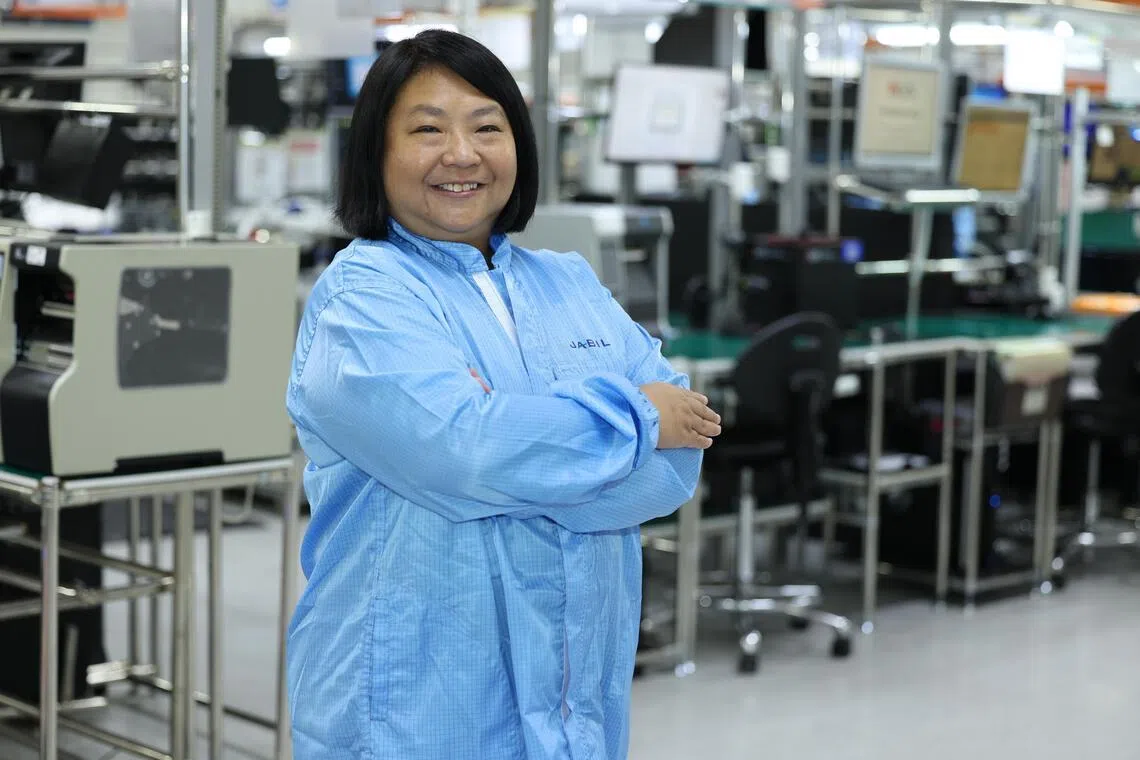
Yap believes she could still have built a meaningful career staying in Singapore, given its global economy.
But she might not have gained a global perspective, and expanded her worldview, she reflected, adding that working in a global company lets her experience different kinds of challenges, people and cultures.
That is not to say that venturing overseas was without its challenges.
After leaving her family and friends behind during her first move in the mid-1990s, Yap had to rebuild her support system abroad when she first went to Hong Kong.
After her return to Singapore in 2007, assimilating also posed its own challenges, especially for her children, who grew up overseas.
Laughing, Yap recollects an incident where her nine-year-old daughter, who was in a local school after years of international schooling in Hong Kong, corrected how her teacher addressed her.
While it might be common practice to call children “boy” or “girl” in Singapore, this was unfamiliar for her daughter, Yap said. “She actually turned to the teacher and said: ‘Hey, ma’am, I have a name. My name is Angela. I’m not called girl.’”
Still, Yap believes that her children have also benefited from growing up in different countries, as they learned to be independent and to adapt.
She acknowledged that Singaporeans may be comfortable with the opportunities and stability of home, and may have practical considerations for not venturing abroad.
“But if you think about it…Singapore is a global economy. So if you actually do want to be a global leader, it is best that you experience it first-hand,” she encouraged.
As a mentor in the Economic Development Board-backed Singapore Leadership Network, she supports Singaporeans aspiring to venture abroad, helping them to seize opportunities when they occur.
And there are many more opportunities today than before, she said, with local companies expanding overseas, and global multinational corporations setting up here.
The government is also supporting efforts to help workers go international.
Young leaders must overcome their fear to take the first step out, if they want to grow, she added.
“You need to actually learn how to be comfortable in an uncomfortable or unfamiliar place.”
Yap offered three tips for those thinking about taking the plunge.
- Make instability part of your stability: Adopt the mindset that things will not be the same, and be prepared for that.
- Be curious, and keep learning: Don’t make assumptions – be open minded.
- Build trust and relationships: When you become more empathetic, you become a better leader.
This is the second in a series profiling Singaporean executives working overseas and what drives them
Decoding Asia newsletter: your guide to navigating Asia in a new global order. Sign up here to get Decoding Asia newsletter. Delivered to your inbox. Free.
Copyright SPH Media. All rights reserved.






