

Young S'porean workers at risk of shortfall in retirement income
 Add BT as a preferred source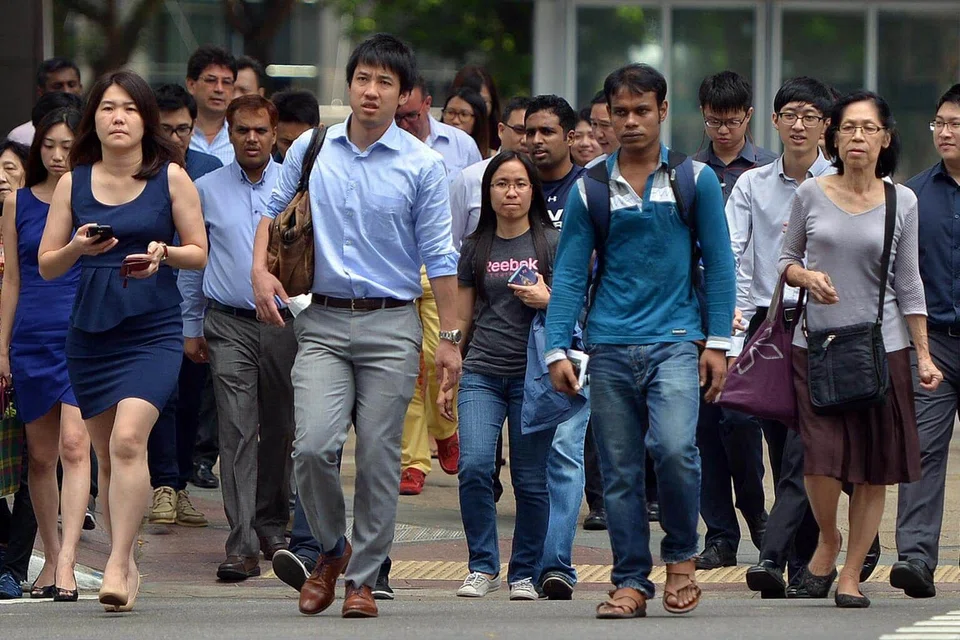
DeeperDive is a beta AI feature. Refer to full articles for the facts.
YOUNG workers in Singapore are at risk of a shortfall in retirement income, despite widespread and high levels of private savings, according to findings by the International Longevity Centre - UK (ILC-UK).
In the report The Global Savings Gap supported by Eastpring Investments, Prudential's asset management business in Asia, the average earner in Singapore faces one of the largest shortfalls in retirement income. This is due to the pension system "failing to provide adequate retirement incomes", the report said.
It revealed that young workers entering the workforce today in Singapore will have to save 12 per cent of their annual earnings, in addition to what they are already saving through mandatory and personal contributions.
However, data showed that over 90 per cent of the population in both economies make some form of savings contributions, significantly higher than in the US, UK and France. In Singapore, almost a quarter save more than 30 per cent of their annual income.
But not all the money will go into a retirement fund. In Singapore, only 29 per cent of respondents claimed to be saving for retirement, while 26 per cent were doing so to pay for social care.
ILC-UK pointed out that Singapore performed particularly poorly because of a "complete lack of support from the state". Workers in Singapore have to rely solely on private savings to support them in old age, said the report.
Navigate Asia in
a new global order
Get the insights delivered to your inbox.
However, the report acknowledged the difficulty in increasing state support considering the demographics of Singapore, as huge improvements to life expectancy coupled with low fertility rates will see the proportion of older people rise dramatically over the next few decades.
Dean Hochlaf, co-author of The Global Savings Gap report and assistant economist at ILC-UK said: "Singapore and Hong Kong have shown that it is possible to promote universal saving, but private saving alone will not be sufficient to generate adequate retirement incomes. Those with low earnings throughout their working life are particularly vulnerable to poverty in retirement. While the pension systems of Singapore and Hong Kong have fostered a culture of saving, some form of targeted state safety net will be required to ensure everyone can enjoy an adequate income in old age".
Copyright SPH Media. All rights reserved.
TRENDING NOW

From 1MDB to ‘corporate mafia’: Is Malaysia facing a new governance test?

Higher costs, lower returns: Why are Singaporeans still betting on real estate?
South-east Asian markets account for 8.8% of global capital inflows from 2021 to 2024: report

Richard Eu on how core values, customers keep Singapore’s TCM chain Eu Yan Sang relevant

