

Facebook's Libra project: a timely wake-up call
The current monetary system does not serve the needs of society as a whole
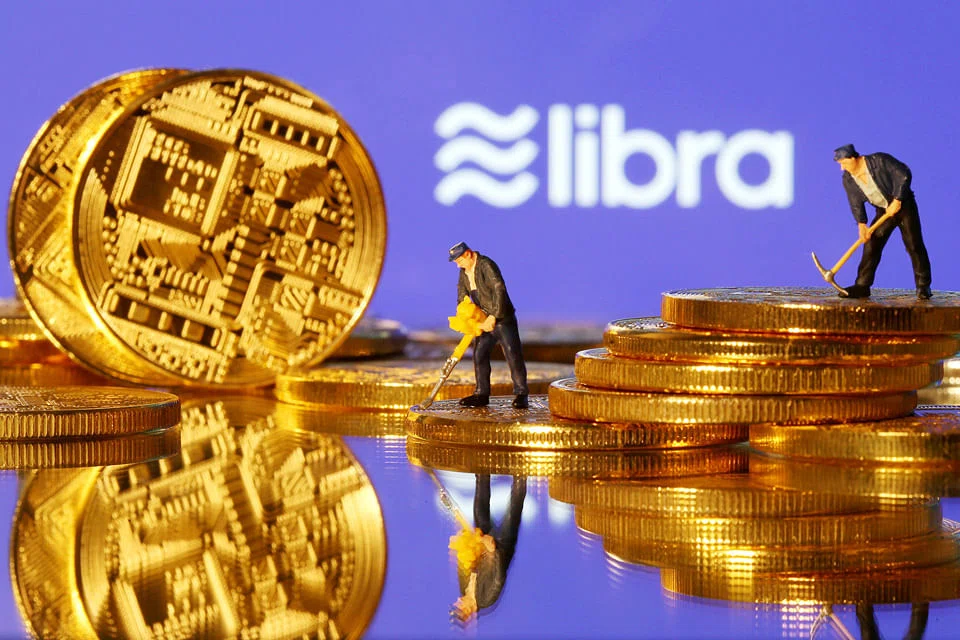
FACEBOOK'S Libra (digital currency) project has attracted enormous attention, not all of it positive. Some of the deeply critical reactions were on display recently when Libra representative David Marcus appeared before the US Senate Banking Committee and the Financial Services Committee of the US House of Representatives.
The scepticism is fully understandable. Libra upsets many paradigms, chief among them the virtually unchallenged dominance sovereign states have held in currency matters throughout history.
But Libra also represents a timely opportunity - and a critical wake-up call - to reflect on the monetary system as it is currently constructed. Does it actually serve the needs of society as a whole?
The answer to my mind is a clear and resounding no.
Why? Here are three reasons, though they are hardly comprehensive:
The unbanked and underbanked
The current system excludes 31 per cent of the world's adult population. Roughly 1.7 billion people are unbanked. In Ethiopia, Nigeria, and Pakistan, 60 per cent or more of the adult population fall into this unserved cohort. And the unbanked aren't the only ones being shortchanged. Many, many more are underbanked.
Payment privation
Payments, especially across borders, can be costly, inefficient, and slow. "For the end-user," a US Federal Reserve paper noted, "the frictions include the predictability of settlement timing and costs, as well as the general opaqueness of correspondent banking networks."
To put it in plain language, customers often do not know and cannot find out how long a cross-border payment will take, how much it will cost, or which banks will be involved. International payments depend on correspondent banking, a system pioneered by Medici bankers in Renaissance Florence more than six centuries ago. It may have been a great innovation then, but isn't it time to move on?
And even this inefficient and outdated payment infrastructure is beyond the reach of many of the unbanked and underbanked. They have no choice but to rely on services with exorbitant and exploitative fees. Overseas workers, for example, can be charged 5 per cent or more to send remittances to support their families back home.
Add the foreign exchange conversion fees imposed by banks that routinely overcharge small customers, and the picture becomes even grimmer.
The almighty dollar
The US dollar is the world's reserve currency and the principal medium through which global trade is conducted. Why is that a problem? Because there is no governing framework to address the legitimate interests of dollar users outside the United States. They have no choice but to rely on the goodwill of the United States and have neither a forum to air their concerns nor an effective redress mechanism.
I could go on.
For a more exhaustive exploration of how those who place their trust in a national currency as a store of value have been duped, through devaluations and high inflation, among other forms of financial repression, I recommend the masterful This Time Is Different: Eight Centuries of Financial Folly by Carmen M. Reinhart and Kenneth S Rogoff.
The message is clear: As far as the monetary system is concerned, we do not live in the best of all possible worlds. Far from it.
And that's where Libra comes in.
The concepts underlying Facebook's currency experiment are not new. In The Denationalisation of Money, for example, Friedrich Hayek proposed a similar, if much more radical, solution, declaring that "price level stability can be achieved only by removing from national governments their monopoly of money creation."
Indeed, while the Libra Association is a private entity, Libra will be backed by a basket of fiat currencies. This, too, is not especially novel. Hélie d'Hautefort and I explained the rationale for such an approach and proposed a currency basket representing more than 80 per cent of the world economy that was introduced in 2009. In 2018, the GLX stablecoin, which is based on this basket, was launched by the Globcoin Group and went live on the Ethereum blockchain.
What distinguishes Libra is that Facebook is entering the fray along with an impressive array of companies that compose the Libra Association. Not one of these firms is a bank. Together, the Libra Association has the resources and customer base that no startup could even dream of. Because of that, it could have a truly momentous impact.
The appropriate response to Libra or the larger crypto phenomenon is not a binary yes or no. Rather, it's to engage in a wide and deep debate on how to create technology-enabled monetary solutions that better serve humanity. So far at least, the traditional banking sector has not been up to the challenge, preferring instead to use compliance requirements as a fig leaf to protect what is an all but entrenched oligopoly.
This debate must consider and address governance, client protection, and systemic risk, among other factors. Such a discussion will be poorly served, however, by intellectual taboos and overreliance on "orthodox" theory. Taking ideas for granted - including well-received ones about the underlying necessity of conducting monetary policy - can be problematic. After all, though I am not offering a judgment on his ideas one way or another, Hayek did title a chapter of The Denationalization of Money "Monetary Policy Neither Desirable Nor Possible."
Fixating solely on a necessary objective - say, combating money laundering - without accounting for the proportionality principle through a detailed cost-benefit analysis will not be helpful either. We need to assess whether the harm inflicted by proposed regulations or restrictions on the monetary system's architecture is justifiable relative to the benefits accrued by achieving the objective.
The point is not whether Libra is a solution or a counterproductive step backward. My hope is that competing proposals emerge and that a true marketplace of ideas opens up that surfaces and tests the best among them.
The genie is now out of the bottle. Money's status quo has failed much of the world, and incremental improvements will not suffice.
Human ingenuity can create solutions that help money better serve the global community.
TRENDING NOW

He built the Vingroup empire. Now South-east Asia’s richest man is handing some key roles to his sons

Why the best annuity in Singapore may not be enough

In a super-aged Singapore society, we must learn to differentiate independence from dignity

Despite the de-dollarisation debate, demand for dollar liquidity in Asia is growing

