

The worst market timer can still be a good investor
We must look at the long-term trajectory of the markets rather than short-term fluctuations.
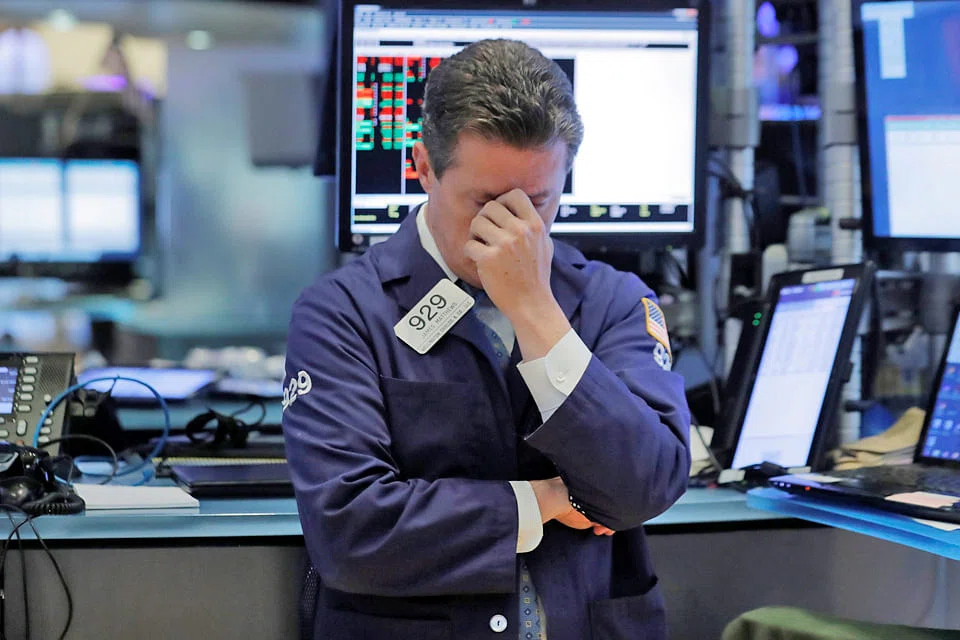
MARKET pummelling resumed after a brief hiatus in the stomach-churning month of October. Historically, October is a positive month for investment returns but it is also known as the "jinx" month with October 2008 and 1987 pretty hard to forget. Nasdaq has now officially entered correction territory, wiping out its gains for the year, with volatility spiking, and Chinese stocks are trading near a four-year low.
All these could be due to escalating trade war spats or concerns about peaking earnings, or a rotation out of growth into value. The truth is, there is really no knowing of the cause. Markets are humbling, and they chew and spit out savvy and experienced traders every day. But perhaps it's okay to admit that we can't time the markets.
Meet Lee - the investor we all try not to be. He's the worst market timer in the world, and only invests right before the market crashes. Lee wanted to start investing - but only after he was confident in the market's upward trend - which in his case meant a big market run-up. After saving for several years, he decided to start investing with $100,000 at the end of 1972, right before the market, in this case the MSCI World Index, fell almost 40 per cent over the next year. He was too nervous to invest for the next 15 years, and instead continued to save diligently every month. He finally decided it was time to try his luck again after a bull market run and invested $100,000 in 1987. Unfortunately this was right before Black Monday, and the market subsequently lost 20 per cent in the following three months.
String of bad luck
Lee thought that the third time would be the charm. He saw the astronomical rise of tech stocks and decided to invest $100,000 at the end of 1999. Unfortunately his string of bad luck continued, and he invested just in time to see the tech bubble burst and the market lose a third of its value.
Lee kicked himself for being the world's worst investor. But he couldn't possibly be that unlucky right? So he decided to make one final investment before he retired in 2007, when he invested a final $100,000 he had been saving since 2000. The markets delivered him a loss of over 50 per cent loss through the global financial crisis.
Poor Lee was also unlucky in life. At the beginning of 2009, after the markets were down 53 per cent since his last investment, Lee went hiking on Bukit Timah Hill and had a bad fall. He needed to have a hip replacement, and when he got home, he found out that his apartment had burned down. Lee looked to his investment portfolio and was surprised to discover that he was actually a millionaire - $1.56 million to be exact. He made 3.9 times his money despite his terrible luck, with a 6.3 per cent annualised return (IRR).
Lee wanted to leave an inheritance, so he decided to move in with his children, use his Medisave for his hip replacement, and not touch his investments. As of end-September 2018, Lee's portfolio was worth $5.56 million, 13.9 times his initial investment, with a 8.25 per cent annualised return (IRR).
Turns out, Lee didn't fare so badly as an investor. Despite only investing right at the market peaks, his saving grace was staying invested and diversified, instead of trying to time the markets. His extended time in the markets allowed the power of compounding to work for him. In fact, despite being the worst market timer in the world, Lee did a lot better than most of us. According to JP Morgan's Guide to Markets, the average investor had a 20-year annualised return of 2.6 per cent as of June-end 2018. The chief reason for our poor performance is unfortunately our own poor behaviour. We all know that we are supposed to "buy low and sell high", but our behavioural biases lead us to do the opposite. It's a cold hard truth from investment guru Benjamin Graham: "The investor's chief problem - and even his worst enemy - is likely to be himself."
Market timing is the holy grail of money-making. But unfortunately, trying to time when the market has hit a bottom or top is impossible to get right consistently, and the only people making money off this are the brokerages collecting your commissions. You are investing for the next decade or two, not the next month or year. When the powerful financier JP Morgan was asked what the stock market would do next, his answer was simply: "It will fluctuate."
We must look at the long-term trajectory of the markets rather than short-term fluctuations. Markets have historically rewarded discipline. If you invested $1,000 in the MSCI World Index in 1970, this would have grown to over $62,000 as of September-end 2018, despite numerous crises and black swan events that occurred in between.
Sometimes, boring is beautiful - it's about time in the markets rather than timing the markets.
We should focus on what we can control and create an investment plan that fits our needs and risk tolerance, and position ourselves in the markets for the long-term to give ourselves the greatest chance of success. When the markets do inevitably turn against us, no amount of Warren Buffett quotes and investing euphemisms will help keep our emotions in check if we do not have a plan that allows us to stay disciplined through market swings.
TRENDING NOW

Britain’s mansion tax shows the difficulty of targeting wealth

Once staunchly pro-China, Malaysian Chinese businesses are now distancing themselves from Beijing

The only common thing in S-E Asia is that we all eat rice: Cisco’s Asean president

Singapore data centre operator DayOne opts for US IPO at likely US$20 billion valuation

