



Japan’s yen has hit a 40-year low. Here’s what you need to know
For Singapore investments in the country, the weakening currency is a double-edged sword

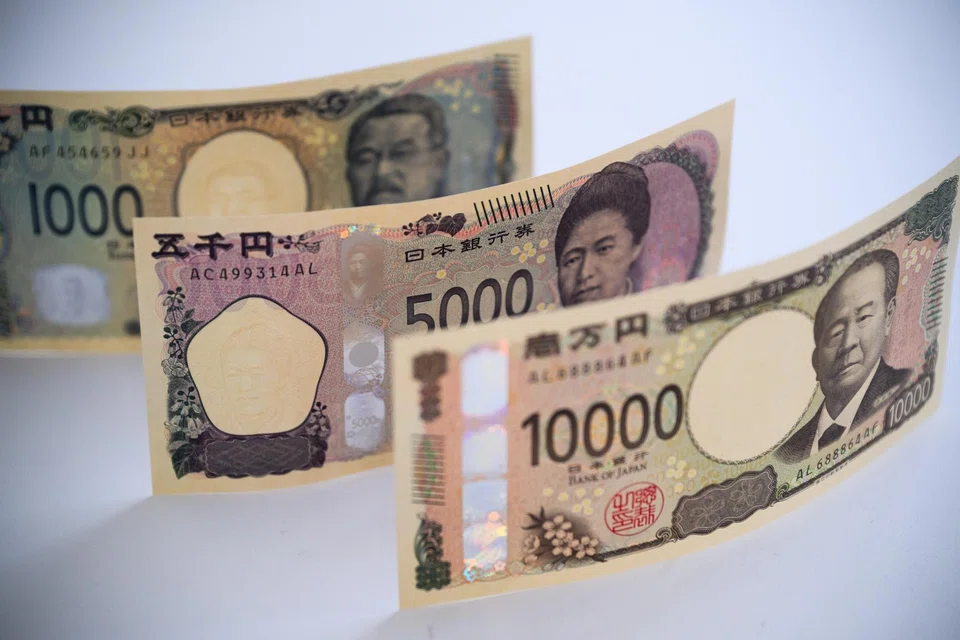
[SINGAPORE] The yen has plunged to its weakest level against the US dollar in decades, sliding to a 40-year low on Monday (Jun 29).
The currency depreciated as much as 0.2 per cent to touch 161.98 against the greenback, breaching the 161.95 mark touched in July 2024 during an earlier campaign by Japan to shore up the exchange rate.
As at 12.49 pm on Tuesday, the US dollar was trading at 162.1885 yen. Against the Singapore dollar, the yen also continued its long decline, weakening to 125.3054 per Singdollar.
The Business Times looks at the driving forces behind the slide and what the drop means for Singapore investors.
Why is the yen falling?
The yen has been falling more dramatically since 2022 amid inflation fears and low interest rates by the Bank of Japan (BOJ).
This year, the currency’s downtrend has been exacerbated by the war in Iran, which drove oil prices and inflation sharply higher, hitting energy importers such as Japan hardest.
The latest drop occurred despite BOJ raising its policy rate to 1 per cent – the highest level in three decades – on Jun 16 to arrest the currency’s fall.
Some analysts argue that the move was too “passive” to stem the yen’s slide, as the rate increase did little to narrow the interest rate gap with the US.
Others feel that the recent upward trajectory of the US dollar against the yen is driven more by widespread greenback resilience than renewed weakness in the yen.


The US Federal Reserve’s hawkish shift has also given a fresh boost to the US dollar against major currencies.
“Clearly against the backdrop of a more hawkish Fed, the yen is vulnerable,” said Chris Scicluna, the head of economic research at Daiwa Capital Markets in London.
Meanwhile, BOJ’s move failed to dispel pessimism in the currency.
The move lacked a stronger signal regarding the pace or scale of future tightening, LGT Private Banking Asia said on Monday.
“The lack of guidance on a faster or larger tightening cycle disappointed yen bulls, leaving the US dollar’s exchange rate against the yen largely driven by rate differentials between the currencies after a much more hawkish Fed,” LGT said.
Echoing a similar sentiment, OCBC currency strategist Sim Moh Siong said that higher Japanese bond yields reflect concerns over inflation and the country’s fiscal outlook, rather than confidence in the central bank’s policies.
Relative to the rising US real yields, Japan’s real rates remain too low, he said.
“We would need the BOJ to exceed already priced-in tightening expectations to turn more constructive on the yen,” Sim added.
Impact on Singapore investments in Japan
The weak yen is a double-edged sword for Singapore’s Japan-focused investments, analysts said.
On the one hand, the weak currency makes Japanese companies or real estate attractive for foreign acquisition.
“The yen’s sharp depreciation to multiyear lows should stir foreign investor interest in Japanese real estate and Japanese assets,” DBS FX and credit strategist Chang Wei Liang said.
“Visitor arrivals should be supported, boosting hospitality and services, while commercial properties could also be buoyed with confidence improving on strong Japanese exports due to a weak yen. Such a trend should bolster Singaporean asset managers with exposure to Japanese properties,” he added.
On the other hand, the weak yen drags down the translated Singapore-dollar value of income, such as dividend payouts or rental income from unhedged Japanese assets, said OCBC’s Sim.
Thus, while the weaker Japanese currency can provide an attractive point to invest in the country, investors would need to “hedge the income earned against ongoing currency weakness”, said Saktiandi Supaat, head of FX research at Maybank.
He added that a weaker yen can also support the case for investing in the Nikkei index.
“Both the yen and the Nikkei exhibit a negative correlation with each other (a weaker yen coincides with a stronger Nikkei). This is driven by companies being able to benefit more from higher earnings arising from cheaper exports. Therefore, as long as the returns are hedged, Singapore investors could reap good rewards from an investment in the Nikkei,” he said.
What’s to come?
Analysts continue to see high intervention risks by Japanese authorities and a likely BOJ rate hike later this year.
Overnight index swap markets have fully priced in an additional 25 basis point hike by December, said LGT.
LGT expects the yen to gradually strengthen over the coming year, forecasting that one US dollar will buy 158 yen in three months, 156 yen in six months and 155 yen in a year’s time.
A perceived weaker yen and negative real interest rates continue to push Japanese retail investors towards overseas investments.
Persistent balance-of-payments outflows and limited incentives for investors to raise their hedge ratios will likely continue to weigh on the yen, despite any further BOJ hikes, LGT said.
Decoding Asia newsletter: your guide to navigating Asia in a new global order. Sign up here to get Decoding Asia newsletter. Delivered to your inbox. Free.
Copyright SPH Media. All rights reserved.
TRENDING NOW

DBS, OCBC, UOB rout lops billions off STI as inflation, rate concerns spook investors

Grab CEO’s wife Chloe Tong on life with Anthony Tan and finding her purpose

OCBC sheds S$8 billion in value as shares close nearly 6% down; analysts cautious on banks

Deal between tycoon friends sparks scrutiny of Philippine power sector

