Taking ideas to new highs
Mile High Club? Too passe. The cool thing to do now on board a flying aircraft is speed date, discuss ideas - or even invest in the next billion-dollar startup
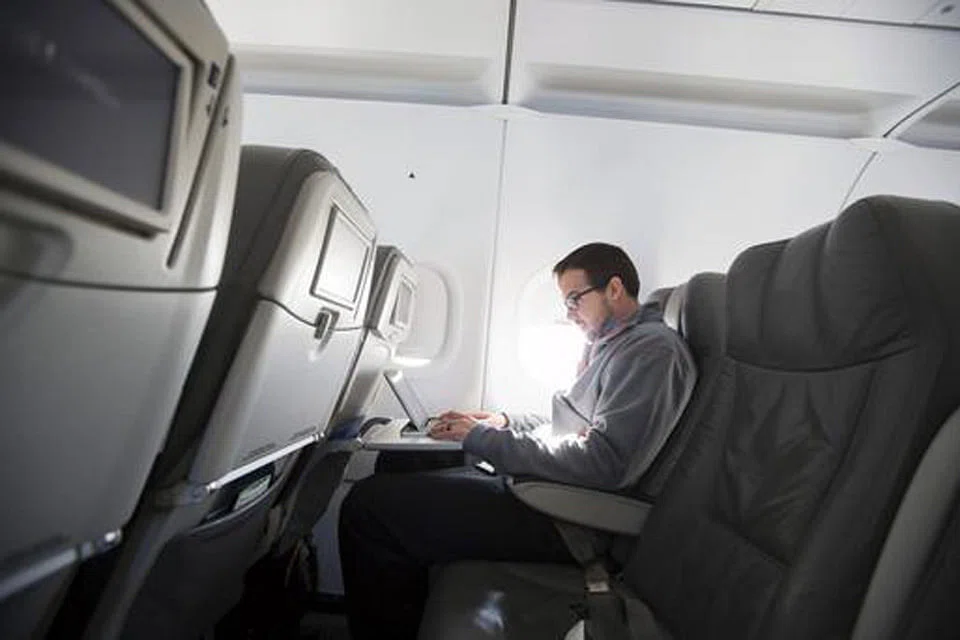
LAST Friday, while on board a Jetstar Asia flight to Bangkok for a weekend getaway, I had my nose buried in the airline's inflight magazine. It was routine for me: I believe that beneath the wrinkled wornness of every magazine's cover, there is always something to be learnt.
That day, I discovered the "High Altitude Conference". It read like a standard tech conference at first, boasting the usual hallmarks such as a keynote speaker segment, quick-fire speeches, and a pitching and networking session.
Only it was way cooler than that.
The High Altitude Conference will be hosted on board a Jakarta-Singapore flight, at 36,000 feet in the air! The hour-long programme - believed to be Asia's first inflight conference - is a partnership between Jetstar Asia and homegrown startup news platform Tech In Asia.
Happening on May 14, it will be an exclusive, complimentary flight for 120 conference attendees travelling from Jakarta to Singapore for the 2018 Tech in Asia Singapore conference, which will take place over the following two days on May 15 and 16. Inflight conference attendees will be carefully chosen to ensure a good mix of startups and investors, said a Tech In Asia spokesman.
More than 120 applications have been received to date, she added.
The key objectives of the conference include demonstrating that innovation can be born anywhere, and to connect startups to investors, the spokesman noted.
"It is to cater for startups which aim to gain company traction, have their ideas validated by investors, seek advice, or get connected."
Notably, the conference will feature a "speed dating-inspired" pitch session. Startups will be seated by the windows, while investors will take their places along the aisle. After the startups have pitched their ideas to investors who are seated in their row, the investors will move on to the next row to meet a new set of startups.
Jacob Chee, vice-president of business at Tech in Asia, said: "Tech in Asia is in the business of connecting Asia's tech ecosystem, and we are thrilled to partner Jetstar for the region's first-ever conference in the skies.
"This novel initiative is just one of many unique ways we can bring like-minded people together, and we hope to continue bringing more events like this to the community."
Asked why Jakarta, the Tech In Asia spokesman said that the annual Tech In Asia Singapore conference has always attracted a good number of delegates from Indonesia.
"In addition, we believe that we have a strong presence in the Indonesian market that can help make our first-ever inflight conference a success."
Jan-Paul Jeffrey, Jetstar's regional manager for marketing and public relations for South-east Asia, added: "With thousands of attendees flying into Singapore from all over Asia, we saw a unique opportunity to create something innovative and exciting, literally getting the conference off to a flying start.
"We hope that by encouraging people to think creatively in an entirely different setting, fresh new ideas can take flight."
Airlines may finally be grasping that they can do much more to engage their passengers. Surely the latter - essentially a bored, captive audience who are physically bound to their seats - are eager to accomplish something in the air other than just consume movies or champagne.
In the case of the High Altitude Conference, Jetstar said: "Why waste your time sleeping on board when you can learn and engage with industry experts?"
Today, as innovation processes are continually being theorised, refined and redefined all over again by academics, design thinkers and creators, airlines can do their part by reimagining the concept of flight, and the use of aircraft space, to deliver more meaningful and invigorating experiences for their customers.
This could in fact be a lesson for all businesses that manage spaces. Think airlines, co-working space operators and even restaurants. The quesion is: Why limit a space to just one core use? With the advent of the Internet of Things, businesses can create flexible, reconfigurable spaces that learn how to respond to people who are inhabiting them. It is certainly not hard to imagine that one day, we will have living, tailored spaces that are constantly moulded to its inhabitants' needs, characters and desires.
Share with us your feedback on BT's products and services