

Five key milestones in Singapore's sustainability journey as it turns 55
The highly-urbanised Republic has been on the sustainability road for many years - long before environmental issues became a global priority.
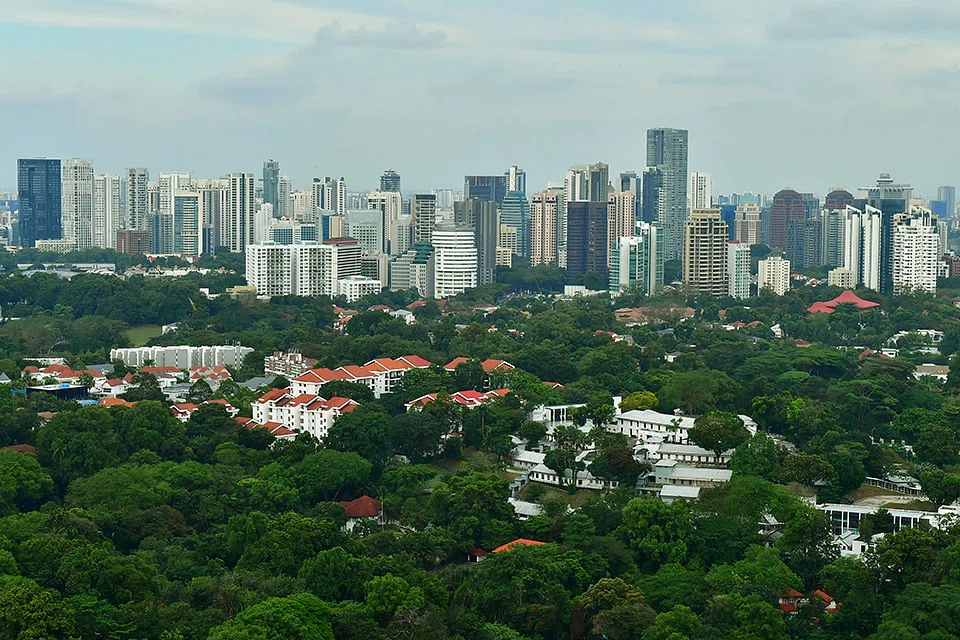
WITH climate change increasingly threatening our existence, sustainability has taken on a mainstream role in society and economy. The last few years have seen quite a buzz in the sustainability field. Sustainability as a notion is not static and will evolve with time. Nonetheless, let us consider the significant milestones that have occurred in our short history over the last five decades or so.
Garden city programme
This was the launchpad for Singapore's sustainability journey. Introduced by then-Prime Minister Lee Kuan Yew in 1967 at a time when many of our Asean peers were struggling to invigorate their economies, the garden city programme aimed to transform Singapore into a liveable city with lush greenery. Initially implemented in the form of an intensive tree-planting exercise supported by legislation on air pollution and vehicle standards, the programme has since had a profound impact on Singapore's built environment with the emergence of garden precincts, the establishment of park connectors and green corridors and the setting up of dedicated nature reserves to protect national heritage.
The foresight resulted in the programme being a bedrock for Singapore's evolution to a tourist and business hub in its early years post-independence. Today, Singapore is aptly known to the world as a City in a Garden where nature and the built environment co-exist. The green movement will continue to be a cornerstone of Singapore's value proposition to the world and its fight against climate change.
NEWater
In 2003, NEWater was first launched to the public. Then, it became Singapore's third national tap besides imported water and water from local catchment areas. A giant stride in Singapore's environmental movement, NEWater ensures Singapore's self-sustenance over water resources. With cutting edge membrane technology, used water was reclaimed to produce ultra clean, high grade potable water. This was the culmination of years of research and development that dated back to the 1970s.
This illuminated Singapore's position on the world map with many nations gleaning lessons from its success story and striving to replicate its integrated water framework. In 2014, NEWater was awarded the "Water for Life" United Nations Water (UN-Water) Best Practices Award for exemplary public communications and education efforts on its use and acceptance by the public. Today, there are five NEWater plants supplying up to 40 per cent of Singapore's current water needs. By 2060, NEWater is expected to meet up to 55 per cent of Singapore's future water demand.
Carbon Pricing Act
Introduced for the first time in 2019, the carbon tax was crucial to sustain Singapore's green environment and help in its transition to a low-carbon economy especially at a time when Singapore needed to take concrete steps to act on its climate pledge of capping its emissions by 2030 and halving it by 2050 with an aim of achieving net zero emissions by the latter half of the century.
The tax is to be applied on facilities that emit 25,000 tCO2e or more of greenhouse gas (GHG) emissions annually and cover the six GHGs that Singapore currently reports to the United Nations Framework Convention on Climate Change as part of its GHG inventory. The tax started at S$5/tCO2e for the period of 2019 to 2023, with a review slated at the end of it to possibly increase it to about $10-15/tCO2e by 2030.
The game-changing tax enables collective action towards climate change where companies are pushed towards improving their carbon efficiency by developing and deploying low-carbon technology. In turn, the carbon tax revenue will aid in funding measures by industry to reduce emissions and provide appropriate means to ease the transition. This will allow more opportunity for the growth of green and clean technology sectors and pave the way for resource-efficient and resilient businesses to emerge.
Resource Sustainability Act
The Resource Sustainability Act which was passed in 2019 represents an integral aspect of Singapore's strategy to build a resource-efficient and climate-resilient nation. The Act has set out regulatory measures targeting the following three waste streams which generally have high generation and low recycling rates. They are electrical and electronic, food, and packaging waste. Ad-hoc measures have not been successful in boosting recycling rates for these streams, which as of 2018, stood at 6 per cent, 17 per cent and 4 per cent respectively.
The regulatory teeth offered by this Act will help to extend the lifespan of Singapore's only landfill, Pulau Semakau, beyond 2035 by slashing the amount of waste sent there by approximately one-third. As part of the Act, large companies will have to re-use and recycle their waste more and extract more value from waste. The Act supports Singapore's zero-waste ambition and represents a systemic shift away from traditional linear production and consumption patterns to a more circular economy. More importantly, it will ensure Singapore's long-term resource resilience and protect it from global supply shocks.
Ministry of Sustainability and Environment (MSE)
Perhaps the icing on the cake. Previously known as the Ministry of Environment and Water Resources (MEWR), it was re-branded the Ministry of Sustainability & Environment (MSE) recently after Prime Minister Lee Hsien Loong unveiled his Cabinet post-General Election 2020. It highlights the challenges facing the new generation and sustainability becoming an integral part of the national agenda. The change also highlights Singapore's evolving environmental priorities that once used to address pollution control and public health protection but now extend to include issues of food safety and security and climate change mitigation and adaptation.
Environmental issues in Singapore have clearly become more complex over the years and require a more all-hands-on-deck approach with interdependency between other ministries and active citizenry participation. The ministry will play a crucial role in rallying and steering the nation towards meeting its climate goals while empowering communities and businesses to take greater ownership of climate action.
Decoding Asia newsletter: your guide to navigating Asia in a new global order. Sign up here to get Decoding Asia newsletter. Delivered to your inbox. Free.
Share with us your feedback on BT's products and services
TRENDING NOW

Indonesia stocks suffer worst plunge in nearly 30 years as MSCI proposes standalone status
The grid is the transition: Why Asean’s next energy challenge is coordination
Firms linked to haze pledge cooperation in meeting with Shanmugam; government to table changes to haze law

If Europe goes to war, the fallout will be felt in East Asia

