

India says Koh-i-Noor diamond belongs to Britain
 Add BT as a preferred source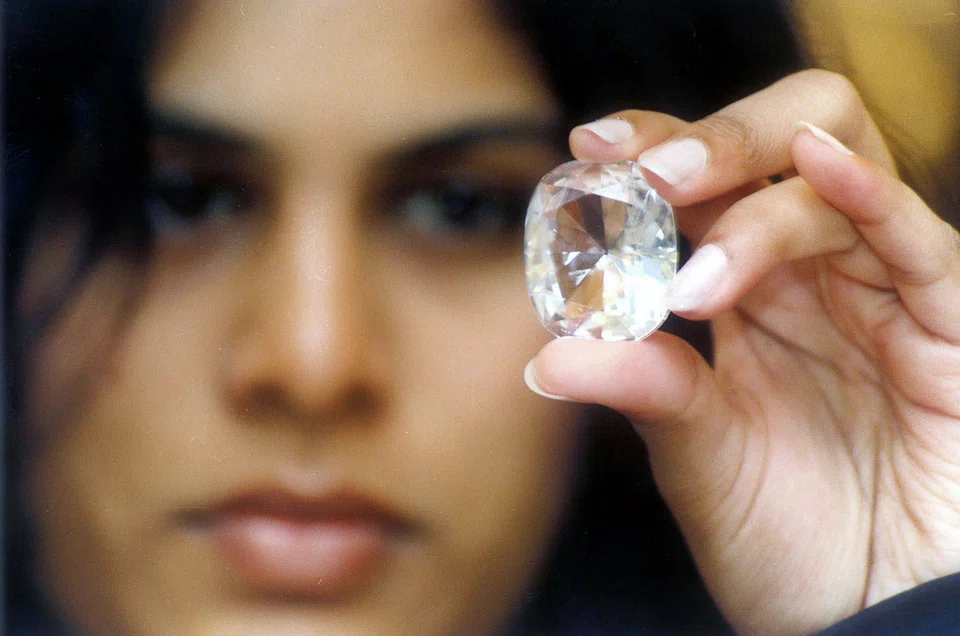
DeeperDive is a beta AI feature. Refer to full articles for the facts.
[NEW DELHI] A priceless diamond that is part of Queen Elizabeth's crown was given to Britain and not stolen, India's government on Monday told the Supreme Court, which is hearing a suit seeking its return.
The 108-carat Koh-i-Noor gem, which came into British hands during the colonial era, is the subject of a historic ownership dispute and has been claimed by at least four countries including India.
But India's Solicitor General Ranjit Kumar said the 19th-century Sikh king Ranjit Singh had given the stone to the British.
"It was given voluntarily by Ranjit Singh to the British as compensation for help in the Sikh Wars. The Koh-i-Noor is not a stolen object," he told the Supreme Court.
The court was hearing a suit filed by the All India Human Rights & Social Justice Front, a non-governmental organisation, seeking the diamond's return.
It asked the solicitor general to file an affidavit giving the government's stance on the issue.
Navigate Asia in
a new global order
Get the insights delivered to your inbox.
The stone was presented to Queen Victoria in 1850 after the Anglo-Sikh wars in which Britain gained control of the Sikh empire of the Punjab, which is now split between Pakistan and India.
Singh in turn had taken it from an Afghan king who had sought sanctuary in India.
The diamond had been an heirloom of the Afghan monarchy and before then was in Persian royal hands, but its true origins remain a mystery.
Its name translates as "Mountain of Light" and it is traditionally worn by a queen - it is said to bring bad luck to any man who wears it.
In 1976 Britain refused a request to cede the diamond, citing the terms of the Anglo-Sikh peace treaty.
"I could not advise Her Majesty the Queen that it should be surrendered," said Jim Callaghan, prime minister at the time.
Britain's Prime Minister David Cameron has also said he would oppose returning the diamond.
"If you say yes to one you suddenly find the British Museum would be empty," he told NDTV television in 2010.
"It is going to have to stay put."
AFP
Share with us your feedback on BT's products and services
TRENDING NOW

From 1MDB to ‘corporate mafia’: Is Malaysia facing a new governance test?

Higher costs, lower returns: Why are Singaporeans still betting on real estate?

South-east Asian markets account for 8.8% of global capital inflows from 2021 to 2024: report

Richard Eu on how core values, customers keep Singapore’s TCM chain Eu Yan Sang relevant

